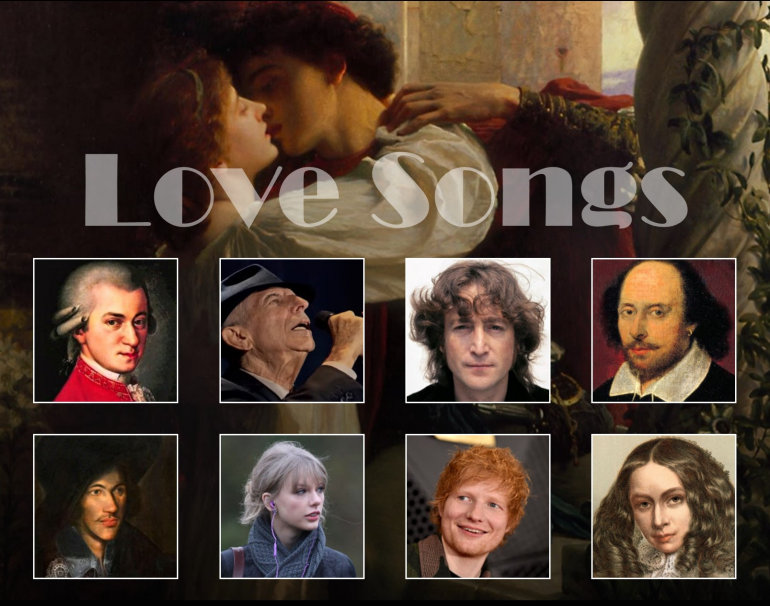
GO TO: [A–C] [D–F] [G–K] [L–N] [O–R] [S–U] [V–Z]
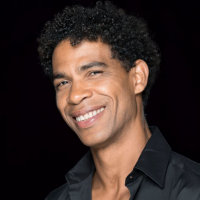
Born in Havana as the 11th child of an impoverished family, he was enrolled by his father in the state-funded National Ballet School. His energy, althleticism, and grace brought him to prominence in his teens, and after five years with the Houston ballet, he joined the Royal Ballet in 1998, rising quickly to the rank of principal artist. He resigned from the company in 2015 (bequeathing his Carmen as a farewell gift) to pursue an internation career as choreographer and guest artist. In 2020, he was appointed Artistic Director of the Birmingham Royal Ballet. 4.
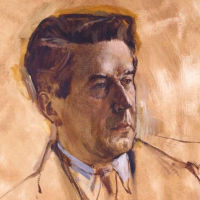
Like most choreographers, Sir Frederick Ashton began as a dancer, and continued performing even as his fame blossomed as a choreographer. He became artistic director of the Royal Ballet in 1963, but had worked with the company and its various predecessors since 1935, responsible for creating many of the works that are the foundations of English ballet today. 3, 5.
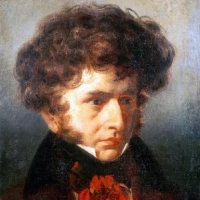
The leading French composer of the Romantic era, Berlioz was a master of orchestration and dramatic effect. A fervent admirer of Shakespeare (and a Shakespearean actress, Harriet Smithson), his works often have a strong literary quality that can obscure their musical craftsmanship. He was unable to get a full performance of his operatic masterpice, The Trojans (1863), but it has come into its own in recent years. 2, 3.
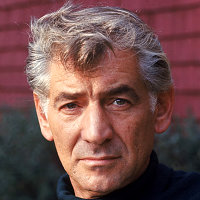
Winning fame relatively young as conductor of the New York Philharmonic, Bernstein also reached wide audiences with his music lectures on television. His work as a composer ranges from Broadway musicals such as West Side Story (1957) through symphonies, operas, and his multi-media Mass (1971). 2.
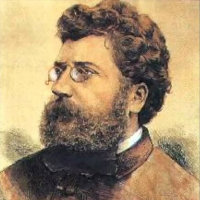
Bizet's teenage Symphony in C (1855) remains a concert staple, and his winning of the pestigious Prix de Rome in 1857 promised a brilliant future. And indeed he wrote a string of works, mainly for the stage, that ensured his continued popularity, though only his music for Arlésienne and his opera The Pearl Fishers are frequently performed. That is until his final work, Carmen, one of the most popular operas of all time. Ironically, though, he died a few weeks of its premiere in 1875, believing that it had been an abject failure. 4.
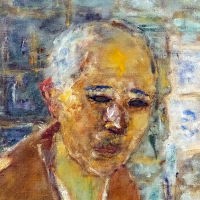
Bonnard was one of the original Nabis (Hebrew for "prophets") in 1889, basing themselves on the example of Gauguin. In later years, he painted numerous pictures of his wife at home and especially in the bath, using a rich palette that dissolved forms in colored light, much as her body was immersed in and refracted by the water. 5.

Born to a wealthy Puritan family in England, Bradstreet was well educated. She emigrated to Massachussetts shortly after her marriage to an official in the colony. Her collection, The Tenth Muse Newly Sprung up in America (1650), shows her love for her husband, her modest pride in her abilities as a woman, and her delight in the natural world. 5.
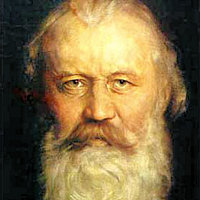
Although writing music whose harmonies and colors eiptomized the Romantic age, Brahms was a classicist at heart, developing the traditional forms of symphony, sonata, quartet and so on, and avoiding program music and opera. A master of virtually every genre, he is often listed together with Bach and Beethoven as the third of the "Great Bs." 1.
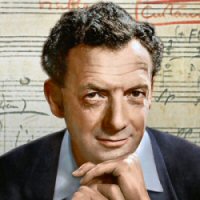
Arguably the leading opera composer of the mid-20th century, Britten's major operas have included Peter Grimes (1945), Billy Budd (1951), Gloriana (1953), A Midsummer Night's Dream (1960), and Death in Venice (1973), plus many stage works for smaller forces. He was equally active as a composer of instrumental music and text settings, and latterly as a conductor and accompanist. 1.

Elizabeth Barrett had established herself as a poet well before she met Robert Browning, whom she eventually married at the age of 40, and was disinherited by her father for doing so. Her sequence of love-letters to Browning, Sonnets from the Portuguese (1850) have been widely influential. 5.
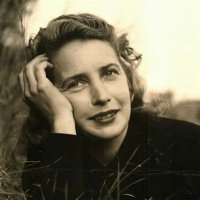
Brown's children's books, The Runaway Bunny (1942) and Goodnight Moon (1947) are surely known to every American parent of small children, but they are only a fraction of her output for various publishers under various pseudomyms. After graduating from Hollins College in 1932, she taught at the famous Bank Street School in New York, where she began her writing. She never married, and died of an aneurysm at age 42. 5.
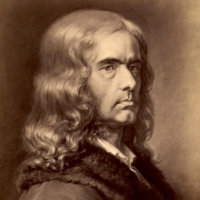
After an undistinguished career in the Prussian army and a failed attempt to launch a literary magazine, Chamisso joined the circle of the exiled Madame de Stael in Switzerland at the age of 29. It was there that he began the botanical research that would ultimately seal his professional reputation. Meanwhile he was writing poetry, including the cycle Frauenliebe und Leben set by Schumann and others, and his masterpiece, the novel Peter Schlemihl (1814). 5.

Cocciante was born in Saigon to an Italian father and French mother, though completed his education in Rome. He launched his career as a pop singer, but has parlayed that fame into a number of mega-musicals composed by him, including Notre-Dame de Paris (1998) and Giulietta e Romeo (2007). 2.
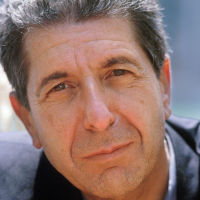
Wikipedia notes: "Cohen pursued a career as a poet and novelist during the 1950s and early 1960s, and did not begin a music career until 1966." He may be unique among popular artists in that his songs often refer directly to his Jewish faith, as in his most famous number, Hallelujah (1984). He is a holder of the Order of Canada and the international Prince of Asturias Prize. 5.
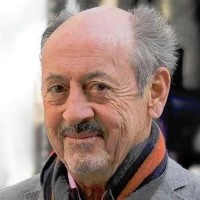
One of the best-known and most approachable contemporary American poets, Collins was Poet Laureate of the United States between 2001 and 2003. 1.
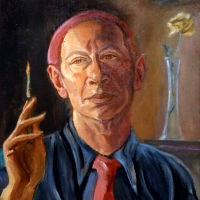
In addition to several thousand poems, Cummings also wrote four plays and two novels; he painted his own portrait in the National Portrait Gallery. A leading modernist, he was known for radical experiments in orthography and punctuation, frequently including the elimination of upper-case letters, but he deprecated the use of this style for his own name. 1.
GO TO: [A–C] [D–F] [G–K] [L–N] [O–R] [S–U] [V–Z]

Born near London, John ("Johnny") Dankworth studied clarinet at the Royal Academy of Music, where his jazz interests were frowned upon. Nonetheless he formed a series of bands in the 1950s and quickly became a leader in the British jazz scene. In 1958, he married his frequent collaborator, jazz singer Cleo Laine, who worked with him in his performing and edicational activities to the end of his life. Both Dankworth and Laine were separately honored as Knights or Dames. 2.
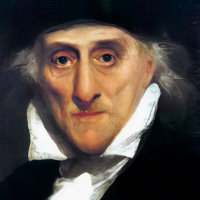
Da Ponte's lasting claim to fame is as librettist for Mozart's Marriage of Figaro, Don Giovanni, and Così fan tutte. But he also wrote for numerous other composers, including Salieri. He spent the last years of his life in New York, trying to etablish an opera company. 4.
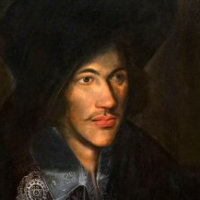
Though classed with the Metaphysical Poets of the early 17th century, he had an immense range, from erotic to sacred, characterized by an extraordinary intensity. He took holy orders later in life, and was appointed Dean of St Paul's Cathedral. 1, 4.
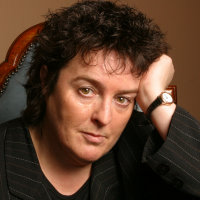
Dame Carol Ann Duffy was Poet Laureate of the United Kingdom from 2009 to 2019, the first woman, the first Scot, and the first openly gay person to hold that position. "Her poems address issues such as oppression, gender, and violence in accessible language." [Enc. Brit.] 5.
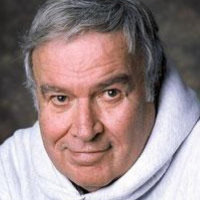
Armed with degrees in English from NYU and Columbia, Ebb nonetheless went into a different kind of writing, as a playwright and lyricist on Broadway. He is best remembered for the shows he wrote with John Kander, including Cabaret (1966) and Chicago (1975), two of the longest-running and most often revived musicals in Broadway history. 4.
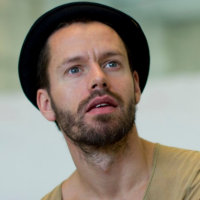
After five years as a professional dancer in Sweden and Holland, Ekman began a free-lance career as a choreographer when he was 21. His works, which move beyond traditional ballet technique in startling and inventive ways, have been created for or taken up by companies all over Europe. 3.
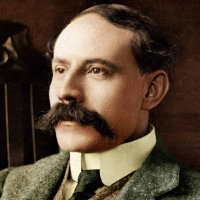
Elgar was the leading figure in English music during the late Victorian and Edwardian eras. With works such as the Enigma Variations and his concerti for violin and cello, he was one of the first English composers after Purcell to achieve an international reputation. 5.
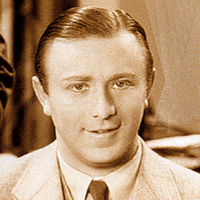
Born in NYC in a showbiz family, Fain made a name with a string of individual hit songs. He is best known today, however, for Calamity Jane (for which he received an Oscar) and Disney animated films such as Alice in Wonderland and Peter Pan. 3.
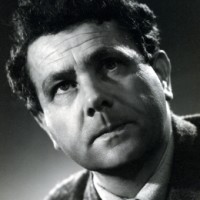
Although he composed in other genres, Finzi is best known for his vocal works, such as the cantata Dies Natalis (1939), his Shakespeare cycle Let Us Garlands Bring (1942), and many settings of Thomas Hardy. 2.
GO TO: [A–C] [D–F] [G–K] [L–N] [O–R] [S–U] [V–Z]

Gabriel came to prominence as the original frontman of the British band Genesis. He left the group in 1975 to pursue a solo career, achieving platinum status with his album So in 1986. That same year, he began a lifelong partnership with Amnesty International, appearing in or highlighting every one of their Human Rights concerts. 1.

Born in Michigan to Italian-American parents, Gizzi has carved a path for himself as a poet. After high school, he worked for a while in a treatment center for emotionally-disturbed adolescents, while publishing a niche journal for poetry by himself and others. He has taught at Brown, the Universities of California and Massachussetts, and Cambridge (England). 1.
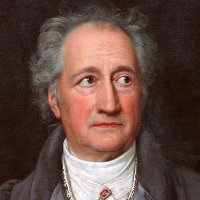
One of the great universal geniuses of the 18th century, Goethe epitomizes the transition between the Age of Reason and the Romantic era. His scientific works are still studied today, the two parts of his Faust hold a special place as an expression of moral philosophy, and his poems provided inspiration for Schubert and many other composers. 4.
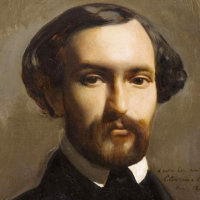
Gounod was the leading French opera composer in the third quarter of the 19th century, achieving fame with Faust and Roméo et Juliette His Philémon et Baucis, which came in between these in 1860, is a lighter opéra comique based on Ovid's story. 2.
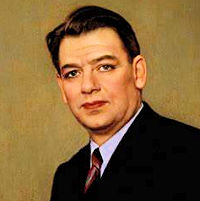
Oscar Hammerstein's father, a German immigrant, was manager of the Metropolitan Opera and active also on Broadway. His son quickly established a career as lyricist, working with Rudolf Friml, Sigmund Romberg, Jerome Kern (Show Boat, 1926), and a very long partnership with Richard Rodgers from Oklahoma! (1943) to The Sound of Music (1959). 3, 4.
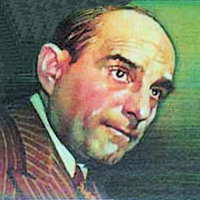
Wikipedia quotes a contemporary as saying Hart was "so uncomfortable in his own skin that the way he probably got through life was he knew he had to be the funniest, smartest guy in the room." Which he was, in a series of brilliant but often melancholy songs with intricate multisyllabic rhymes that have become American standards. Until he basically sabotaged his career with alcoholism, Hart collaborated notably with Richard Rodgers on such shows as On Your Toes (1936), Babes in Arms (1937), The Boys from Syracuse (1938), and Pal Joey (1940) 4.
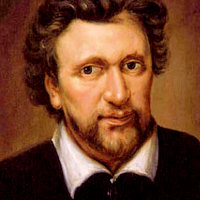
Like Donne (his elder by two decades), Herrick was a priest in the Church of England as well as a poet of amatory verse. And like Marvell (three decades his junior), many of these poems have a carpe diem message, as in his celebrated quatrain: Gather ye rosebuds while ye may, Old Time is still a-flying; And this same flower that smiles today, Tomorrow will be dying. 4.
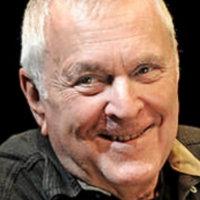
While working as a rehearsal pianist on West Side Story, he took Jerome Robbins' suggestion that he compose dance music. After doing just that as a collaborator on Gypsy (1959) and Irma la Douce (1960), he struck off on this own, notably with lyricist Fred Ebb, on such mammoth successes as Cabaret (1966) and Chicago (1975). 4.

Before he was even in his teens, Kreisler studied at both the Vienna and Paris Conservatories, winning the top prize at the latter when he was only 12. For a while, though, he gave up the violin to study medicine. He returned to music in 1899, soon triumphing in Berlin and touring America, where he met his wife, remaining with her until his death. Although the couple lived in Europe between the Wars, Kreisler returned to America in 1939 and became a citizen in 1943. A composer himself, he also commissioned the Elgar Violin Concerto in 1910. 1.
GO TO: [A–C] [D–F] [G–K] [L–N] [O–R] [S–U] [V–Z]
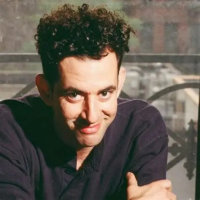
Wikipedia notes: "Larson was an American composer, lyricist and playwright, most famous for writing the musicals RENT and Tick, Tick... Boom!, which explored the social issues of multiculturalism, substance use disorder, and homophobia. He worked on both musicals throughout the late 1980s and into the 1990s. RENT began an off-Broadway run in early 1996, though Larson died from an aortic dissection the day before its first preview performance. The show transferred to Broadway that April, becoming one of the longest-running productions ever. Larson posthumously received three Tony Awards and the Pulitzer Prize for Drama." 5.
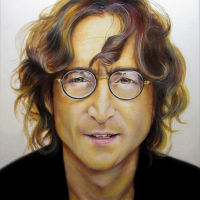
Born in Liverpool, Lennon formed The Quarrymen in 1956, a group that evolved into The Beatles in 1960. Working with Paul McCartney, Lennon was the principal songwriter for the group, making the pair the most successful writing duo in history. Lennon married his second wife, Japanese multimedia artist Yoko Ono, in 1968. When the Beatles broke up in 1970, he moved with her to NYC, engaging in numerous projects, musical and otherwise, including opposition to the Vietnam War. He was assassinated at the entrance to the Dakota Apartments near Central Park on 8 December, 1980. 5.
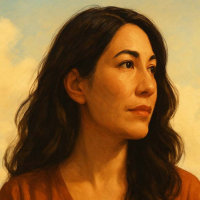
Mexican-American Ada Limón was appointed US Poet Laureate in 2022, the first Latina to hold the honor. Born in Sonoma CA, she attended the University of Washington and NYU before working for various style organizations such as Condé Nast and GQ to fund her work as a poet. Her three-year tenure as Poet Laureate included an environmental project in collaboration with the National Parks Service to solicit poetic responses to America's natural wonders. 5.
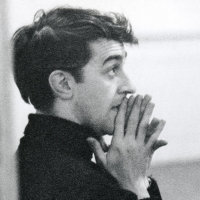
Beginning as a dancer with the Royal Ballet, MacMillan gave up performing while still in his 20s to concentrate entirely on choreography. He succeeded Sir Frederick Ashton as Artistic Director of the company from 1970 to 1977, but also held positions in Berlin, Stuttgart, New York, and Houston. His best-known work is probably Romeo and Juliet, a setting of the Prokofiev score created for the Royal Ballet in 1965. 2.4.
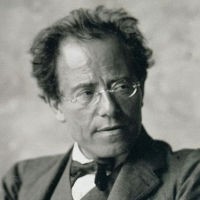
In the summers during his appointment as director of the Vienna State Opera, he completed nine symphonies, numerous songs, and his masterpiece, the "song-symphony" Das Lied von der Erde (The Song of the Earth, 1909). His works typically use very large orchestras and incorporate a wide range of musical styles. 5.
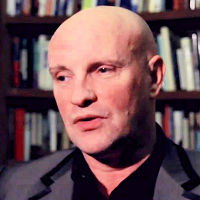
Born in Tours, Maillot trained as a dancer, and at the age of 18 joined John Neumeier's company in Hamburg. An accident in 1983 forced him to abandon dancing for choreography, first in his native Tours, and then, since 1993, as asrtistic director of Les Ballets de Monte Carlo. His version of The Taming of the Shrew was originally created for the Bolshoi in Moscow. 3.
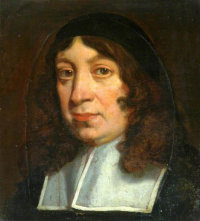
The son of a clergyman, but not one himself, Marvell entered a career in politics as well as writing poetry, and was elected several times to the House of Commons. After spending most of the years of Cromwell's Commonwealth abroad, he was able to obtain good patronage for himself, and also to advocate for his friend John Milton. His best-known poem is probably To His Coy Mistress with its carpe diem eroticism, but he also wrote heroic or satirical genres. 4.
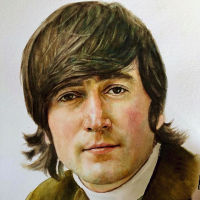
Sir Paul McCartney gained global fame with the Beatles, playing as their bassist, and sharing the leas singing with John Lennon. With Lennon, he wrote both words and music for most of the Beatles' song, one of the most successful partnerships in history. His eclectic interest in other styles and technical innovation was largely responsible for the evolution of the group's studio recordings. He continued this exploration later with his own band, Wings, and in a range of compositions that even overlap with classical music. 1.
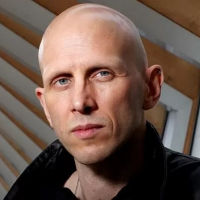
McGregor is the first Resident Choreographer of the Royal Ballet to come from a contemporary dance rather than classical background. He has also worked in theater and film, and runs his own company in addition to his work with the Royal Ballet. 3.
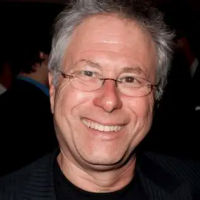
Menken's primary claim to fame are the scores he wrote for Disney movies, including The Little Mermaid (1989), Beauty and the Beast (1991), and Aladdin (1992), all of which went on to become Broadway successes, as did his Little Shop of Horrors in 1982. 3.

Merritt was the founded and leading songwriter of the indie band The Magnetic Fields. He has an intellectual interest in writing songs that pursue a technical challenge rather than emotional confession. One example is the three-album 69 Love Songs (1999), almost none of which are conventional romantic ballads, though one of them, "The Book of Love," has inspired numerous cover versions and is a favorite for weddings. 1.
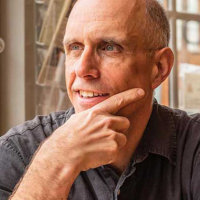
Mills grew up in Indiana, and holds degrees from the Universities of Chicago, New Mexico, and California-Davis. He currently teaches at the University of North Carolina School of the Arts. His poems, written in accessible language approaching speech, spring from "daily life and personal memory" [Poetry Magazine]. 5.
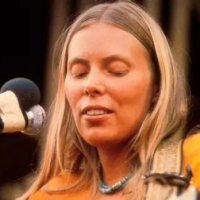
Emerging from the folk music scene of the 1960s, Mitchell moved to California and made a name for her very personal lyrics and a musical style that gradually expanded to include elements of rock and jazz. She has won 11 Grammy Awards and numerous other accolades. Her 1971 album Blue has aften been cited as a turning-point in American popular music. 1.
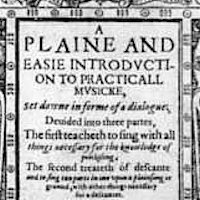
Organist of St. Paul's Cathedral, and the leading madrigal composer of the Elizabethan era, Morley was a friend of Shakespeare's and set songs from several of his plays, although it is not known if these were used in performance. [The portrait may or may not be genuine; it least it's from the right period.] 2.

A child prodigy as both performer and composer, Mozart produced an extraordinary body of work in all genres over a relatively short life. He wrote the greatest of his many operas after moving to Vienna: three collaborations with Lorenzo da Ponte—The Marriage of Figaro (1786), Don Giovanni (1787), and Così fan tutte (1790)—framed by two German Singspiels: The Abduction from the Seraglio (1782) and The Magic Flute (1791). 4.
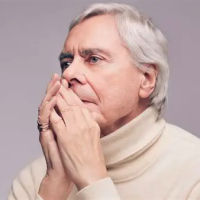
Neumeier trained and began his dancing career in the US, but moved to Europe in 1961. He has been especially associated with companies in Germany, in Stuttgart, Frankfurt, and espcially Hamburg, whe he was principal choreographer and later director from 1973 to 2024. His roster of over 170 works include many adaptations from literary sources such as Dumas, Ibsen, Chekhov, Thomas Mann, and especially Shakespeare, though he has often found unusual ways to enter the narrative through a side door, so to speak. 3.

Born in Prussia, Nicolai first established himself as a composer in Italy; all his operas except the most famous, Die Lustigen Weiber von Windsor (1849) were writen in Italian. In the 1840s, he moved to Vienna, where he also worked as a conductor and was a co-founder of the Vienna Philharmonic. 2.
GO TO: [A–C] [D–F] [G–K] [L–N] [O–R] [S–U] [V–Z]

Born in California in a strict Calvinist household with a controlling father, Olds spent much of her youth finding ways to rebel against that background. She won the 1984 National Book Critics Circle Award and the 2013 Pulitzer Prize for Poetry, and at least until recently was teaching at NYU. 1.
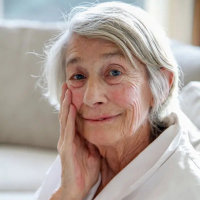
Winner of the National Book Award and Pultizer Prize, Oliver's work is "inspired by nature, rather than the human world, stemming from her lifelong passion for solitary walks in the wild [and] characterised by a sincere wonderment at the impact of natural imagery, conveyed in unadorned language." [Wikipedia] 5.
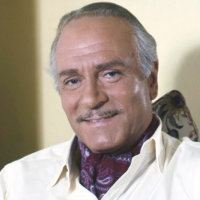
Olivier was arguably the leading actor in Britain in the mid-20th century, and her preeminent Shakespearian. After some years as Director of the Old Vic in London, he was appointed Director of the new National Theatre in 1963, launching its national success. He was also a veteran of films, including a Shakespeare trilogy he produced shortly after WW2, and is the winner of four Oscars. 2.
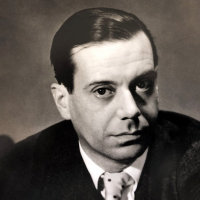
Unlike many Broadway composers, Porter wrote not only the music but the lyrics for his songs, and these are notable for their wit, clever rhyming, and encyclopedic range of reference. In addition to numerous standalone songs that became standards, he also wrote musicals such as Anything Goes (1934), Kiss Me, Kate (1948), and Can-Can (1953). 1, 3, 4.
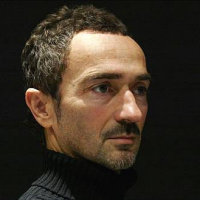
The son of Albanian parents who emigrated to France to escape communism, he trained as a dancer, but made his name primarily as an historian of classical ballet and creator of modern dances on timeless subjects. His film, Polina, about a young dancer who wants more for herself than just to be a cog in the Bolshoi machine, was an official French entry at the 2016 Venice Film Festival. 4.
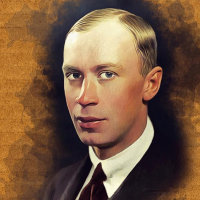
With Igor Stravinsky, he is surely the greatest Russian composer of the earlier 20th century, but with two major differences: he returned to Russia, and produced most of his work in traditional forms such as sonatas, symphonies, and concertos. 2.
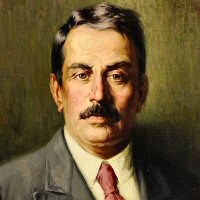
Puccini took up the mantle of Verdi as the dominant opera composer of the late 19th century, and developed an international popularity that is unrivaled to this day. His principal works include: Manon Lescaut (1893), La bohème (1896), Tosca (1900), Madama Butterfly (1904), and the unfinished Turandot (1926). 1, 3.
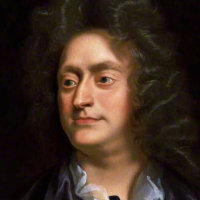
Not only was Purcell the greatest composer of the Restoration period, writing music for occasions ranging from a royal coronation to an opera to be performed in a girls' school (Dido and Aeneas), he was the last indisputably great English composer for almost three centuries. Among many other qualities, he is renowned for the rhythmic acuity of his settings of English texts. 2.
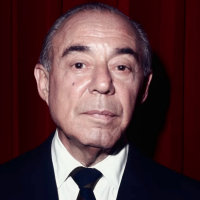
Born in Queens and educated at Columbia, Rodgers had two successful careers as a composer for Broadway, the first with Lorenz Hart with such works as Pal Joey (1940), the second with Oscar Hammerstein II, in a string of successes running from Oklahoma! (1943) to The Sound of Music (1959). He was the first composer to win all four EGOT awards and the Pulitzer Prize. 3, 4.
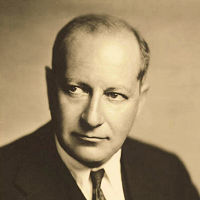
Born Siegmund Rosenberg in Hungary, he showed precocious talent as a musician. He came to America in his late teens, and soon began working for a music publisher, adapting European musicals for US performance. His own most successful shows, The Student Prince (1924) and The Desert Song (1926), were in a similar style, but he could also write music that was entirely American in spirit. 4.
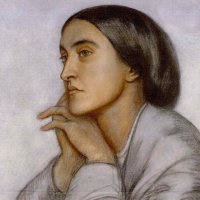
Christina was the younger sister of Dane Gabriel Rossetti and the model for several of his paintings. She began publishing her poetry in 1848. Although remembered for his Christmas carols "Love Came Down at Christmas" and "In the Bleak Midwinter," her popularity declined after her death, but later commentators point to the extraordinary language and psychosexual suggestion in works like Goblin Market (1862), possibly inspired by her volunteer work at a Home for Fallen Women. 5.
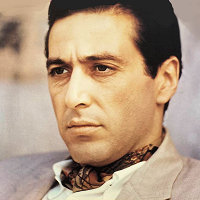
Rota was a child prodigy as both pianist and composer, but his lasting fame comes from his roughly 150 film scores, for directors such as Fellini, Visconti, Zeffirelli, and the Francis Ford Coppola Godfather sequence. He also wrote operas and ballets. 2.
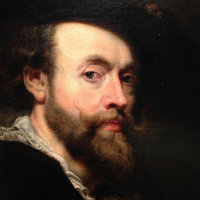
One of the giants of baroque art, Rubens developed the style of Titian into a powerful rhetoric applied equally to sacred and profane subjects, and exerted enormous influence in Spain, England, and France as well as in his native Flanders, continued in the work of his many pupils. His position at so many courts also made him invaluable as a diplomat. 5.
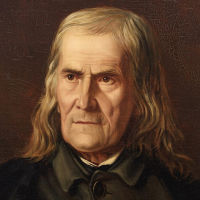
"Rückert was master of thirty languages and made his mark chiefly as a translator of Oriental poetry and as a writer of poems conceived in the spirit of Oriental masters" [Wikipedia]. His poetry was set to music by numerous composers, most particularly Gustav Mahler in two sets of songs for voice and orchestra, including a selection from the 400+ poems of Kindertotenlieder, written privately by the poet to come to terms with the death of two of his children. 5.
GO TO: [A–C] [D–F] [G–K] [L–N] [O–R] [S–U] [V–Z]
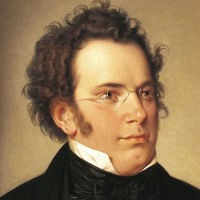
Although he died before his 32nd birthday, Schubert was extremely prolific as a composer, writing symphonies, masses, chamber music, piano sonatas, and over 600 songs, both individually and in cycles. Though little known in his lifetime, his work was rediscovered and championed by Mendelssohn, Liszt, and Brahms, making him in effect the source of the German Romantic movement. 4.
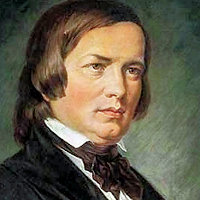
After an injury to his hand (while studying with his future father-in-law Friedrich Wieck) prevented him from pursuing a career as a pianist, he concentrated on composing, producing some of the key works of the Romantic piano literature, together with chamber music, a concerto, four symphonies, and a wealth of songs. He was also a public figure as a critic and thinker. His career was cut short by bipolar disorder. 5.
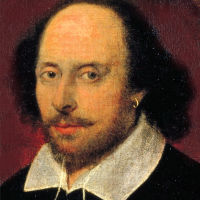
With almost 40 plays, 154 sonnets, and many longer poems, Shakespeare dominates English literature of his time, and world literature for ever after. To attempt a thumbnail biography would be both unnecessary and impossible. 2, 3, 5.
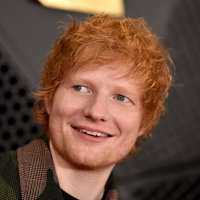
Born in Yorkshire and raised in Suffolk, Sheeran recorded his first song collection as a teenager. He has gone on to sell more than 200 million records worldwide, earning him top awards both in Britain and America. He tours widely, and is the third most-followed artist on Spotify. Also as a teenager, he was accepted into the National Youth Theatre of Great Britain, and continues to do occasional work as an actor. 5.

Swift is unquestionably the best-known popular singer today, so probably needs no bio. Although she is the richest-ever female musician, and her tours have broken box-office records, her huge appeal comes from her ability to reflect the heartbreaks, insecurities, and personal triumphs of ordinary young women. As lyricist of all her songs, she has a gift for turning personal experience into poetry, enhanced by her flair for melody, transmitted by her remarkable feeling for the stage and camera. Born to a professional family in Pennsylvania, she established herself as a country singer in Nashville in her teens, but has long since outlived the label of this or any of the many other genres she has visited along the way. 2, 5.
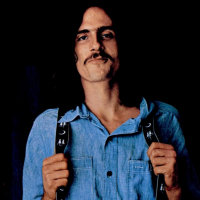
aylor was born in Boston, the son of a physician and an opera singer; all of his siblings became involved in music in some way. He had his first hit in 1970. and every album he released between 1977 and 2007 has sold over a million copies. He has been associated with many of the legends of American music, including Joni Mitchell, Carly Simon (his wife 1972–85), and Carole King. His songs also reflect his long troubles with mental-health problems and drug addiction, and evetual victory over them. At the time of writing, he is still touring internationally, most recently with Henry Taylor, his son by his third marriage. 5.
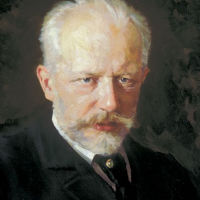
Tchaikovsky was the first Russian composer to gain an international reputation, in part because his Russian voice was allied to a thorough training in Western parctice. His symphonies, tone-poems, and ballets have become staples of their repertoire, but his dozen operas are less well-known, except for Eugene Onegin (1879) and The Queen of Spades (1890), both based on texts by Pushkin. 4.
GO TO: [A–C] [D–F] [G–K] [L–N] [O–R] [S–U] [V–Z]
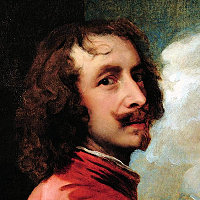
For a time the principal assistant to Peter Paul Rubens, Van Dyck had a shorter but similarly stellar and varied career, painting in most of the major baroque genres. He was especially known as a portraitist, particularly in England, where he served the courts of both James I and Charles I. 5.
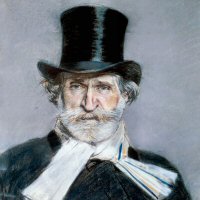
Verdi's two dozen or more operas (some in multiple versions) make him the leading Italian opera composer of his time and among the two or three greatest opera composers ever. After what he called his "years in the galleys," he hit his stride in the early 1850s with the trio of Rigoletto, Il Trovatore, and La Traviata. He intended Aïda (1870) to be his last work, but was persuaded out of retirement to write his final Shakespearean masterpieces: Otello (1886) and Falstaff (1893). 2.5.
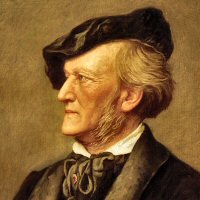
Wagner almost single-handedly transformed the nature not only of opera but also of harmony and orchestration. His 10 mature operas include Tristan und Isolde (1865), Die Meistersinger von Nürnberg (1868), and the vast tetralogy Der Ring des Nibelungen (completed 1876), for which he had a special theater built at Bayreuth. His final opera, Parsifal (1882), was written for exclusive performance at that theater. 5.
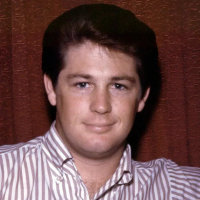
Largely self-taught, Brian Wilson co-founded The Beach Boys in 1961, with his brothers and two cousins. He soon emerged as their creative force, writing and producing most of the group's material, the first rock musician to do so. He is also the first credited with using studio effects as an addtional "instrument." 1.

As director and designer of classic theatre and opera, Zeffirelli set a standard of lavish period realism in which no detail was too small. His many productions at the Met were greatly beloved and have proved difficult or impossible to replace. He carried a similar aesthetic into his films of Shakespeare and opera from the '60s to '90s. He was also a consummate director of actors, whether established stars or often young performers. He served in the Italian Senate 1994–2001. 2.