| Handout Return to Index |
2. Saying it Straight. In contrast to the Class 3, all the excerpts today, in whatever medium, involve people coming right out to declare their love without irony or evasion. Much as Romeo does with Juliet, in fact, and the class will start with two scenes from the play in which they meet, at first in public at the Capulets' ball, and later in private in the garden below Juliet's balcony. Starting this way, the class naturally evolved as a set of Shakespeare Variations, beginning with Romeo and Juliet and extending to scenes and songs from other plays and more recent adaptations of Shakespeare texts. About half the R&J material has been seen in other courses, but all the rest is new.
The class is bookended by two Taylor Swift songs with explicit Shakespeare references: her 2008 mega-hit Love Story, in which she turns Juliet's story on its head to provide a happy ending, and The Fate of Ophelia from 2025, a love-ode to the person (presumably her fiancé Travis Kelce) who prevented her from sharing the same end. Nothing else is quite as current, but the whole class shows the timeless Shakespearean themes as filtered through modern sensibilities.
The script, videos, and images will be posted immediately after class. rb.
| Handout Class Script | Return to Index |
VIDEO LINKS
The main difficulty in providing links to the clips used in the class is to provide equivalents of the scenes from the Shakespeare plays themselves. I could not find the particularly clear excerpt from Stratford Ontario, I had to use different clips from the Globe balcony scene, and I could not find any clip of "It was a lover and his lass" in the context of the play. I made what substitutions I could. Most of the clips of other media, however, are available.
I added a few odds and ends here and there, all marked with *asterisks. In the order in which they are listed below, these are:
| SONNETS AND STUFF | |||
| The improvised sonnet |
* Meeting scene in the play
(Globe 2009, as below) * Zeffirelli film |
||
| Sonnet XVIII |
* David Tennant * Lorna Laidlaw * Setting by Gisle Kverndokk (audio only) |
||
| WITH LOVE'S LIGHT WINGS | |||
| Balcony scene |
* middle section
(Globe 2009, this section not played) * closing (Globe 2009, very short) |
||
| West Side Story |
* Tonight
(1961 film) * Tonight (2021 film) |
||
| Cocciante: Giulietta e Romeo |
* Tu sei
(balcony duet in concert) * Le spade (fight scene) * Gli occhi negli occhi (clips from Carlo Carlei film) |
||
| Presgurvic: Roméo et Juliette, 2001 | * Complete (cued to balcony scene) | ||
| Berlioz: Roméo et Juliette |
* Garden scene * Béjart ballet to Berlioz score (Suzanne Farrell, Joge Dorn) |
||
| Tchaikovsky: R&J overture | * complete (cued to love theme) | ||
| MacMillan: Romeo and Juliet |
* Ball scene * — rehearsing the first meeting * Balcony scene, end (Michael Ball, Yasmine Naghdi) |
||
| SHAKESPEARE AT THE OPERA | |||
| Gounod: Roméo et Juliette |
* Met trailer * Ah, lêve-toi, soleil! (Benjamin Bernheim) * Balcony scene (Roberto Alagna, Leontina Vadova) |
||
| Blacher: Romeo und Julia | * Trailer (retold in a very different aesthetic) | ||
| Nicolai: Merry Wives of Windsor | * Fenton's aubade (Fritz Wunderlich, audio) | ||
| Verdi: Falstaff | * Fenton's Ac III aria (Paolo Fanale, Met 2018) | ||
| Verdi: Otello | * Act I love duet (Placido Domingo, Kiri te Kanawa) | ||
| SONGS FROM OTHER PLAYS | |||
| Twelfth Night |
* Opening scene
(Liam Brennan) * — modern interpretation of this (James Sutton, BBC) * O Mistress Mine scene (Trevor Nunn film) |
||
| Purcell: "If music be the food of love" | * Recording session (Tim Mead) | ||
| Finzi: Let Us Garlands Bring |
* O Mistress Mine
(Roderick Williams, with score) * It was a lover and his lass (as above) |
||
| As You Like It |
* It was a lover and his lass
(pretty tune, awful AI visuals!) * — setting by Roger Quilter (Felicity Lott & Ann Murray, audio) * — setting by Thomas Morley (Jennifer Ellis Kampani) * — settting by Johnny Dankworth (with Cleo Laine, audio) |
||
| Hamlet |
* Death of Ophelia
(Jean Simmons, with later comparisons) * — song by Natalie Merchant (only peripherally related) |
||
| TAYLOR SWIFT | |||
| Music videos |
* Love Story
(video by Trey Fanjoy, 2008) * The Fate of Ophelia (video by Taylor Swift, 2025) |
||
ARTISTS
![]() |
Thomas Morley, 1557–1602. English composer. Organist of St. Paul's Cathedral, and the leading madrigal composer of the Elizabethan era, Morley was a friend of Shakespeare's and set songs from several of his plays, although it is not known if these were used in performance. [The portrait may or may not be genuine; it least it's from the right period.] |
![]() |
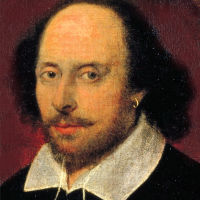
William Shakespeare, 1564–1616. English poet and playwright. With almost 40 plays, 154 sonnets, and many longer poems, Shakespeare dominates English literature of his time, and world literature for ever after. To attempt a thumbnail biography would be both unnecessary and impossible. |
![]() |
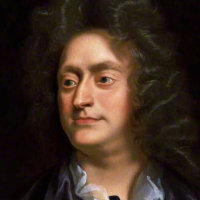
Henry Purcell, 1659–95. English composer. Not only was Purcell the greatest composer of the Restoration period, writing music for occasions ranging from a royal coronation to an opera to be performed in a girls' school (Dido and Aeneas), he was the last indisputably great English composer for almost three centuries. Among many other qualities, he is renowned for the rhythmic acuity of his settings of English texts. |
![]() |
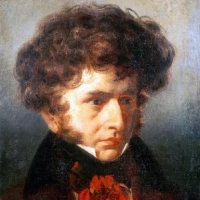
Hector Berlioz, 1803–69. French composer, conductor, and critic. The leading French composer of the Romantic era, Berlioz was a master of orchestration and dramatic effect. A fervent admirer of Shakespeare (and a Shakespearean actress, Harriet Smithson), his works often have a strong literary quality that can obscure their musical craftsmanship. He was unable to get a full performance of his operatic masterpice, The Trojans (1863), but it has come into its own in recent years. |
![]() |
Otto Nicolai, 1810–49. German composer. Born in Prussia, Nicolai first established himself as a composer in Italy; all his operas except the most famous, Die Lustigen Weiber von Windsor (1849) were writen in Italian. In the 1840s, he moved to Vienna, where he also worked as a conductor and was a co-founder of the Vienna Philharmonic. |
![]() |
Giuseppe Verdi, 1813–1901. Italian opera composer. Verdi's two dozen or more operas (some in multiple versions) make him the leading Italian opera composer of his time and among the two or three greatest opera composers ever. After what he called his "years in the galleys," he hit his stride in the early 1850s with the trio of Rigoletto, Il Trovatore, and La Traviata. He intended Aïda (1870) to be his last work, but was persuaded out of retirement to write his final Shakespearean masterpieces: Otello (1886) and Falstaff (1893). |
![]() |
Charles Gounod, 1818–93. French composer. Gounod was the leading French opera composer in the third quarter of the 19th century, achieving fame with Faust and Roméo et Juliette His Philémon et Baucis, which came in between these in 1860, is a lighter opéra comique based on Ovid's story. |
![]() |
Sergei Prokofiev, 1891–1953. Russian composer. With Igor Stravinsky, he is surely the greatest Russian composer of the earlier 20th century, but with two major differences: he returned to Russia, and produced most of his work in traditional forms such as sonatas, symphonies, and concertos. |
![]() |
Gerald Finzi, 1901–56. English composer. Although he composed in other genres, Finzi is best known for his vocal works, such as the cantata Dies Natalis (1939), his Shakespeare cycle Let Us Garlands Bring (1942), and many settings of Thomas Hardy. |
![]() |
Sir Laurence Olivier, 1907–89. English actor and director. Olivier was arguably the leading actor in Britain in the mid-20th century, and her preeminent Shakespearian. After some years as Director of the Old Vic in London, he was appointed Director of the new National Theatre in 1963, launching its national success. He was also a veteran of films, including a Shakespeare trilogy he produced shortly after WW2, and is the winner of four Oscars. |
![]() |
Nino Rota, 1911–79. Italian composer. Rota was a child prodigy as both pianist and composer, but his lasting fame comes from his roughly 150 scores, for directors such as Fellini, Visconti, Zeffirelli, and the Francis Ford Coppola Godfather sequence. He also wrote operas and ballets. |
![]() |
Leonard Bernstein, 1918–90. American conductor and composer. Winning fame relatively young as conductor of the New York Philharmonic, Bernstein also reached wide audiences with his music lectures on television. His work as a composer ranges from Broadway musicals such as West Side Story (1957) through symphonies, operas, and his multi-media Mass (1971). |
![]() |
Franco Zeffirelli, 1923–2019. Italian director. As director and designer of classic theatre and opera, Zeffirelli set a standard of lavish period realism in which no detail was too small. His many productions at the Met were greatly beloved and have proved difficult or impossible to replace. He carried a similar aesthetic into his films of Shakespeare and opera from the '60s to '90s. He was also a consummate director of actors, whether established stars or often young performers. He served in the Italian Senate 1994–2001. |
![]() |
Sir John Dankworth, 1927–2010. British jazz musician. Born near London, John ("Johnny") Dankworth studied clarinet at the Royal Academy of Music, where his jazz interests were frowned upon. Nonetheless he formed a series of bands in the 1950s and quickly became a leader in the British jazz scene. In 1958, he married his frequent collaborator, jazz singer Cleo Laine, who worked with him in his performing and edicational activities to the end of his life. Both Dankworth and Laine were separately honored as Knights or Dames. |
![]() |
Sir Kenneth MacMillan, 1929–92. Scottish choreographer. Beginning as a dancer with the Royal Ballet, MacMillan gave up performing while still in his 20s to concentrate entirely on choreography. He succeeded Sir Frederick Ashton as Artistic Director of the company from 1970 to 1977, but also held positions in Berlin, Stuttgart, New York, and Houston. His best-known work is probably Romeo and Juliet, a setting of the Prokofiev score created for the Royal Ballet in 1965. |
![]() |
Riccardo Cocciante, 1946– . Italian-French composer and singer. Cocciante was born in Saigon to an Italian father and French mother, though completed his education in Rome. He launched his career as a pop singer, but has parlayed that fame into a number of mega-musicals composed by him, including Notre-Dame de Paris (1998) and Giulietta e Romeo (2007). |
![]() |
Taylor Swift, 1989–nbsp;. American singer-songwriter. Swift is unquestionably the best-known popular singer today, so probably needs no bio. Although she is the richest-ever female musician, and her tours have broken box-office records, her huge appeal comes from her ability to reflect the heartbreaks, insecurities, and personal triumphs of ordinary young women. As lyricist of all her songs, she has a gift for turning personal experience into poetry, enhanced by her flair for melody, transmitted by her remarkable feeling for the stage and camera. Born to a professional family in Pennsylvania, she established herself as a country singer in Nashville in her teens, but has long since outlived the label of this or any of the many other genres she has visited along the way. |
• Return to top • Return to index