3. Saying it Slant.
Not all lovers manage to come out with a clear declaration of love. Many are reluctant to admit it, or make it conditional, or
otherwise disguise their feelings—in other words (to borrow a phrase from Emily Dickinson) they say it slant. We start once more
with Shakespeare, who gave us the two iconic examples of the syndrome in Much Ado About Nothing and The Taming of the
Shrew. We move from there to a variety of similar situations in other media, including several where characters do not pass
from repulsion to passion only once, but enter relationships marked by a continuous alternation of love and loathing.
The second hour begins with ballet, which is a special case for two reasons. Being a medium without words, the kind of irony
implied by "saying it slant" is more difficult to achieve. And being a medium that involves intimate physical content even in
non-erotic stuations, it requires special treatment where romantic attraction is indeed the main point. Finally, we pass to two
iconic examples of not-quite-love songs, from American musical theater and Italian opera respectively. rb.
The script, videos, and images will be posted immediately after class. rb.
Q AND A
What about that stagehand in Play?
Not a stagehand, obviously; there were several times when he moved like a dancer. All the same, I too was concerned that the presence of
this third figure took away from the nature of this scene as a duet. I think you have to accept that this was a highly-planned scene
from the beginning: the use of the two different media for the two main performers, the movement of the blocks, and so on. But having
learned this choreography to the point where they could execute it perfectly, the female dancer at least (Marion Barbeau) found ways
to make it her own. There was no question that she was communicating with the man, and she was absolutely enjoying it. Somebody said this
was a excercise in control; I could have seen him as being in control, had he made the sounds and then she danced to them, but in
fact the two were absolutely simultaneous; when this turned into a duet later, it was by mutual agreement. I do agree with the comment,
though, that it was her scene not his—but as her radiance spread to everybody watching the video, I am content with that!
VIDEO LINKS
*Asterisks mark links to the items shown in class—almost everything, in fact, although many
videos are longer or shorter than those shown. I was less lucky with the two operas, however. For the Glyndbourne Béatrice
et Bénédict, I do not have the scene shown, but include a trailer and an aria for each character. For the Met La
bohème, I have clips from the same scenes with other artists, plus the complete video of a very similar Zeffirelli
production from La Scala; it has titles, but you may need to go into settings to find them.
I also put in many related clips that I oiginally considered for the class, but had to omit for lack of time. In the order
listed, these are:
- the complete Branagh movie of Much Ado, plus a separate clip of the final scene
- a clip from the classic Burton/Taylor/Zeffirelli film of The Taming of the Shrew
- a song from the 1953 film of Kiss Me, Kate
- "Marian the Librarian" from the 1962 movie of The Music Man, another pivot from dislike to like
- a bunch of love-hate songs from pop culture—perhaps a strange selection, but not my field
- the full "Black pas-de-deux" from Neumeier's Dame aux camélias, glimpsed in the titles
- trailer showing more of Alexander Ekman's brilliant invention in Play
- a sample of Jerome Robbins' Afternoon of a Faun, as a love-duet-that-isn't—can you see why?
- the quasi-love-duet "People will say we're in love" from Oklahoma! as posted on the syllabus
- the movie version of the Carousel bench scene
- analysis of the Carousel bench scene—long but really worth it!
| A. SHAKESPEARE WITH A TWIST |
| |
Sonnet 130 |
|
* Alan Rickman
* David Bailie
* Ben Smith
* christine 4771
|
| |
Much Ado About Nothing |
|
* Complete movie
(Kenneth Branagh 1993)
* First quarrel
(from the above)
* Ending
(from the above)
|
| |
The Taming of the Shrew |
|
* First encounter
(Globe 2012)
* — "beware my sting"
(joke later in the scene)
* Proposal
(Film: Burton/Taylor)
|
| |
Berlioz: Béatrice et Bénédict |
|
* Glyndebourne trailer
* Bénédict aria
(Paul Appleby)
* Béatrice aria
(Stéphanie d'Oustrac)
|
| |
Porter: Kiss Me, Kate |
|
* Were thine that special face
(Brent Barrett, Rachel York)
* — continuation of same scene
* Kate's song: "I hate men"
(Kathryn Grayson, film 1953)
|
| B. FROM HATE TO LOVE |
| |
Ten Things I Hate About You |
|
* Kat's poem
(Julia Stiles)
|
| |
Puccini: La bohème |
|
* Musetta's Waltz, Madelyn Renée
(when production was new)
* — Olga Kulchynska
(more recent Met revival)
* — Aida Garifullina
(used for Section D title)
|
| |
Willson: The Music Man |
|
* Marian the Librarian
(Robert Preston, film 1962)
|
| |
Calamity Jane |
|
* I can do without you
(Doris Day, Howard Keel)
|
| |
Beauty and the Beast |
|
* Snowball scene
(song by Alan Menken)
|
| |
Hailee Steinfeld |
|
* Rock Bottom
(video by Malia James)
|
| |
Other Love/Hate Songs |
|
* Bon Jovi: "You give love a bad name"
* One Direction: Same Mistakes
* Coldplay: Fix You
* John Legend: Ordinary people
* Taylor Swift: The Great War
|
| C. WORDLESS PASSION |
| |
Neumeier: La dame aux camélias |
|
* Black pas-de-deux
(used for Section C title)
|
| |
Maillot: Taming of the Shrew |
|
* Complete ballet
(cued to Petruchio/Kate scene)
|
| |
Ashton: La fille mal gardée |
|
* Trailer
* Ribbon pas-de-deux
(Marianela Nuñez, Carlos Acosta)
|
| |
McGregor: Chroma |
|
* Central pas-de-deux
(Laura Morera, Eric Underwood)
|
| |
Ekman: Play |
|
* Trailer
* Girl on a Cube
(Marion Barbeau, Simon le Borgne)
|
| |
Robbins: Afternoon of a Faun |
|
* Excerpt
(Sarah Lamb, Vadim Muntagirov)
|
| D. SINGING OF LOVE |
| |
Rodgers/Hammerstein: Oklahoma! |
|
* People will say we're in love
|
| |
Rodgers/Hammerstein: Carousel |
|
* Bench scene, film
(Shirley Jones, Godon MacRae)
* — recording studio
(Jessie Mueller, Joshua Henry )
* — analysis by Laurence Maslon
|
| |
Puccini: La bohème, Act 3 |
|
* End of Act III, La Scala
(Pavarotti; click for titles)
* — Salzburg
(German titles)
* — Met, Mimi's farewell
(Juliana Grigoryan, Met)
* — Met, opening of duet
(Grigoryan, Freddie de Tommaso)
|
| |
|
|
|
|
|
| IMAGES |
The thumbnails below cover the slides shown in class, though
there may be a few small discrepancies.
Click the thumbnail to see a larger image.
Click on the right
or left of the larger picture to go forward or back, or outside it to close. |
 | |
 | |
 | |
 | |
 | |
 | |
 | |
 | |
 | |
 | |
 | |
 | |
 | |
 | |
 | |
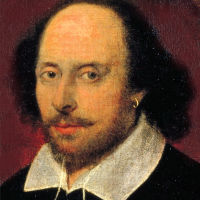 |
William Shakespeare, 1564–1616. English poet and playwright.
With almost 40 plays, 154 sonnets, and many longer poems, Shakespeare dominates English literature of his time, and world literature for ever after. To attempt a thumbnail biography would be both unnecessary and impossible.
|
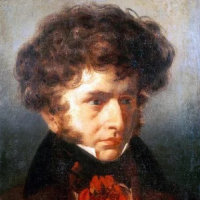 |
Hector Berlioz, 1803–69. French composer, conductor, and critic.
The leading French composer of the Romantic era, Berlioz was a master of orchestration and dramatic effect. A fervent admirer of Shakespeare (and a Shakespearean actress, Harriet Smithson), his works often have a strong literary quality that can obscure their musical craftsmanship. He was unable to get a full performance of his operatic masterpice, The Trojans (1863), but it has come into its own in recent years.
|
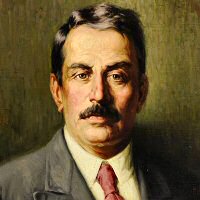 |
Giacomo Puccini, 1858–1924. Italian composer.
Puccini took up the mantle of Verdi as the dominant opera composer of the late 19th century, and developed an international popularity that is unrivaled to this day. His principal works include: Manon Lescaut (1893), La bohème (1896), Tosca (1900), Madama Butterfly (1904), and the unfinished Turandot (1926).
|
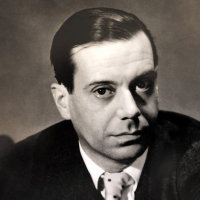 |
Cole Porter, 1891–1964. American songwriter.
Unlike many Broadway composers, Porter wrote not only the music but the lyrics for his songs, and these are notable for their wit, clever rhyming, and encyclopedic range of reference. In addition to numerous standalone songs that became standards, he also wrote musicals such as ANything Goes (1934), Kiss Me, Kate (1948), and Can-Can (1953).
|
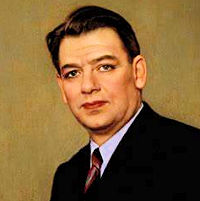 |
Oscar Hammerstein II, 1895–1960. American lyricist and producer.
Oscar Hammerstein's father, a German immigrant, was manager of the Metropolitan Opera and active also on Broadway. His son quickly established a career as lyricist, working with Rudolf Friml, Sigmund Romberg, Jerome Kern (Show Boat, 1926), and a very long partnership with Richard Rodgers from Oklahoma! (1943) to The Sound of Music (1959).
|
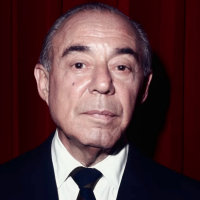 |
Richard Rodgers, 1902–79. American composer.
Born in Queens and educated at Columbia, Rodgers had two successful careers as a composer for Broadway, the first with Lorenz Hart with such works as Pal Joey (1940), the second with Oscar Hammerstein II, in a string of successes running from Oklahoma! (1943) to The Sound of Music (1959). He was the first composer to win all four EGOT awards and the Pulitzer Prize.
|
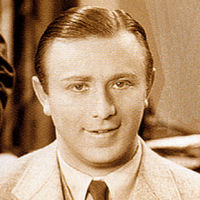 |
Sammy Fain, 1902–89. American composer.
Born in NYC in a showbiz family, Fain made a name with a string of individual hit songs. He is best known today, however, for Calamity Jane (for which he received an Oscar) and Disney animated films such as Alice in Wonderland and Peter Pan.
|
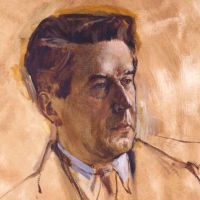 |
Frederick Ashton, 1904–88. English choreographer.
Like most choreographers, Sir Frederick Ashton began as a dancer, and continued performing even as his fame blossomed as a choreographer. He became artistic director of the Royal Ballet in 1963, but had worked with the company and its various predecessors since 1935, responsible for creating many of the works that are the foundations of English ballet today.
|
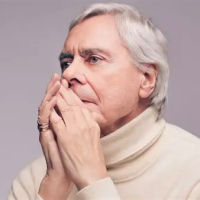 |
John Neumeier, 1939– . American choreographer.
Neumeier trained and began his dancing career in the US, but moved to Europe in 1961. He has been especially associated with companies in Germany, in Stuttgart, Frankfurt, and espcially Hamburg, whe he was principal choreographer and later director from 1973 to 2024. His roster of over 170 works include many adaptations from literary sources such as Dumas, Ibsen, Chekhov, Thomas Mann, and especially Shakespeare, though he has often found unusual ways to enter the narrative through a side door, so to speak.
|
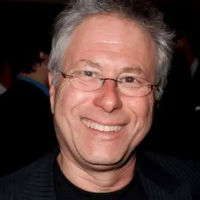 |
Alan Menken, 1949– . American composer.
Menken's primary claim to fame are the scores he wrote for Disney movies, including The Little Mermaid (1989), Beauty and the Beast (1991), and Aladdin (1992), all of which went on to become Broadway successes, as did his Little Shop of Horrors in 1982.
|
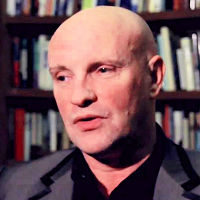 |
Jean-Christophe Maillot, 1960– . French choreographer.
Born in Tours, Maillot trained as a dancer, and at the age of 18 joined John Neumeier's company in Hamburg. An accident in 1983 forced him to abandon dancing for choreography, first in his native Tours, and then, since 1993, as asrtistic director of Les Ballets de Monte Carlo. His version of The Taming of the Shrew was originally created for the Bolshoi in Moscow.
|
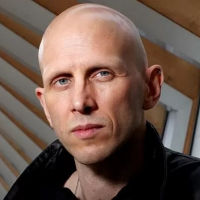 |
Wayne McGregor, 1970– . English choreographer.
McGregor is the first Resident Choreographer of the Royal Ballet to come from a contemporary dance rather than classical background. He has also worked in theater and film, and runs his own company in addition to his work with the Royal Ballet.
|
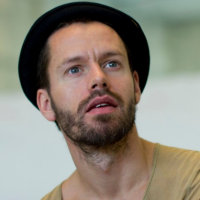 |
Alexander Ekman, 1984– . Swedish choreographer.
After five years as a professional dancer in Sweden and Holland, Ekman began a free-lance career as a choreographer when he was 21. His works, which move beyond traditional ballet technique in startling and inventive ways, have been created for or taken up by companies all over Europe.
|


