4. Heat of the Moment.
Forget romance! All the examples in today’s class have to do with physical desire, or the ability to manipulate desire to
control another person or simple to assert one’s own independence. Consensual relationships between equals are less common
in the literature, though fortunately we have a few of those too.
The class touches on opera, ballet, art song, verse, and the Broadway musical. It is bookended by two figures whose names
have become synonymous with sexual license—Carmen and Don Juan. I originally intended to play many more examples, including
the rich field of popular song. Although those plans have been trimmed way back, I will include a good number of offcuts in
the after-class webpage. rb.
The script, videos, and images will be posted immediately after class. rb.
VIDEO LINKS
*Asterisks mark links to the items that were shown in class, though I give close
substitutions for the Swan Lake adagio (same production, different performers), and the Zerlina aria from Don Giovanni
(no titles, but very well directed performance). The links to the three poems give only the audio readings, without the text.
While compiling this class, however, I considered a large number of additions and alternatives; the non-askterisked entries
below give you a selection of them. In the order listed, these are as follows; items that I especially
recommend are in green.
- versions of Carmen's arias from the other film
- the same as sung by Elina Garanca in the superb 2009 production at the Met
- a trailer and two other clips from Carlos Acosta's Carmen ballet
- a reading of two other Herrick poems, including the famous "To Virgins, to Make Much of Time"
- a musical setting of the latter, by Herrick's contemporary, Henry Lawes
- EE Cummings: "Lady, I will touch you with my mind"—highly relevant, but wrong century
- a complete Swan Lake in a different production, plus another clip from the one we saw
- an illustrated synopsis of Swan Lake
- a fascinating rehearsal/analysis of the bedroom scene from Mayerling
- a complete performance of Mayerling, though not in the best-quality video
- a complete performance of Preljocaj's Le Parc in excellent video (see below)
- Flemming Flindt's 15-minute Ionesco ballet, The Lesson, about sexual obsession leading to murder
- two performances of Tchaikovsky's setting of another Goethe poem, "None but the lonely heart"
- violin arrangement of the above, in a beautiful fjord setting
- Gwen Verdon in "Whatever Lola wants" from Damn Yankees (cut only at the last minute)
- four other songs from musicals about sexual desire
- aria from Don Giovanni in which Leporello explains his master's technique, with titles
- another version of Don Giovanni's duet with Zerlina, with a radical ending
- a somewhat random selection of pop/rock songs I considered but ultimately had to omit
Coming across
Le Parc was my greatest discovery in preparing this class. It is a masterpiece deserving several
viewings, and only 90 minutes long. I recommend reading this fine
review, both in
prepration to seeing it and to explain what you have just seen.
| FOUR CARMENS |
| |
Habanera |
|
* Julia Migenes
(Franco Rosi film, 1983)
* Dorothy Dandridge
(Carmen Jones film, 1954)
* Elina Garanca
(Met Opera, 2009)
|
| |
Seguidilla |
|
* Julia Migenes
(as above, with Placido Domingo)
* Dorothy Dandridge
(Carmen Jones film, 1954)
* Elina Garanca
(Met Opera, 2009)
|
| |
Carlos Acosta ballet |
|
* Trailer
* Opening
(Marinela Nuñez)
* Carmen and Escamillo
* Carmen and Don José
(Nuñez and Acosta)
|
| |
Kander & Ebb: Steel Pier |
|
* "Everybody's Girl"
(Debra Monk in concert)
|
| SEX IN THE SEVENTEENTH |
| |
John Donne |
|
* To his Mistress, Going to Bed
(Jasper Britton)
|
| |
Robert Herrick |
|
* Delight in Disorder
(Alan Rickman, audio)
* To Virgins, to Make Use of Time
(Tom O'Bedlam, + two others)
* — Henry Lawes setting of the above
(Voices of Music)
|
| |
Andrew Marvell |
|
* To His Coy Mistress
(Sir Patrick Stewart, audio)
|
| |
EE Cummings |
|
* "Lady, I will touch you with my mind"
(Ben W. Smith, whispered)
|
| TEMPTATION ON TIPTOE |
| |
Tchaikowsky: Swan Lake |
|
* Complete, Kirov Ballet
(cued to start in class)
* Royal Ballet, Black Swan opening
(different cast: Yankowsky, Kish)
* — Black Swan solo
(Natalia Osipova)
* — Black Swan coda
(Nuñez, Muntagirov)
* Story of the ballet
|
| |
MacMillan: Mayerling |
|
* Complete, Moscow Ballet
(mediocre video)
* Bedroom pas-de-deux
(Steven McRae, Sarah Lamb)
* — rehearsal/analysis of the above
|
| |
Preljocaj: Le Parc |
|
* Complete
(Paris Opera Ballet, excellent)
* Scene watched in class
(Alice Renavand, Matthieu Ganio)
|
| |
Flindt: The Lesson |
|
* Complete
(see description above)
|
| GOETHE SONGS |
| |
Gretchen at the Spinning Wheel |
|
* Anna Lucia Richter
(Ammiel Bushakevitz, piano)
|
| |
None But the Lonely Heart |
|
* Robert Merrill
(in English)
* Frank Sinatra
(in English, w/ Hollywood orchestra)
* Daniel Lozakovich
(violin)
|
| BEDROOM ON BROADWAY |
| |
Romberg: The Desert Song |
|
*"They call it It"
(Ann Miller, in Deep in my Heart)
|
| |
Rodgers: Pal Joey |
|
* "Bewitched, bothered, and bewildered"
(Lady Gaga, in rehearsal)
|
| |
Porter: Kiss Me, Kate |
|
* "In my fashion"
(Amelia Adams-Pierce, WNO)
|
| |
Other songs |
|
*"Whatever Lola wants"
(Gwen Verdon in Damn Yankees)
*"Call from the Vatican"
(Penelope Cruz, Raoul Julia in Nine)
*"Sooner or later"
(Sondheim; Karen Ziemba in concert)
*"Touch-a-touch-a-touch me"
(Rocky Horror, as sung in Glee)
*"With every breath I take"
(torch song from City of Angels)
|
| AN OPERATIC OPERATOR |
| |
Mozart: Don Giovanni |
|
*Leporello's catalogue aria
(Adam Plachetka; excuse Chinese titles!)
*Duet: "La ci darem la mano," Zurich 2015
(Rod Gilfry, Liliana Nikiteanu)
*— Glyndebourne 2010
(Gerald Finley, Anna Virovlansky)
*Aria: "Vedrai, carino," Garsington 2019
(Mireille Asselin)
|
| TOP OF THE POPS |
| |
Songs about desire |
|
*"Physical Attraction"
(Madonna)
*"I'm on fire"
(Bruce Springsteen)
*"Love to love you, baby"
(Donna Summer)
*"Earned it"
(Weeknd, with shots from 50 Shades of Grey)
|
| |
|
|
|
|
|
| IMAGES |
The thumbnails below cover the slides shown in class, though
there may be a few small discrepancies.
Click the thumbnail to see a larger image.
Click on the right
or left of the larger picture to go forward or back, or outside it to close. |
 | |
 | |
 | |
 | |
 | |
 | |
 | |
 | |
 | |
 | |
 | |
 | |
 | |
 | |
 | |
 | |
 | |
 | |
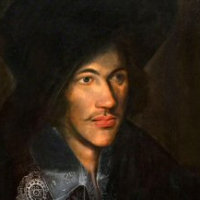 |
John Donne, 1572–1631. English poet and cleric.
Though classed with the Metaphysical Poets of the early 17th century, he had an immense range, from erotic to sacred, characterized by an extraordinary intensity. He took holy orders later in life, and was appointed Dean of St Paul's Cathedral.
|
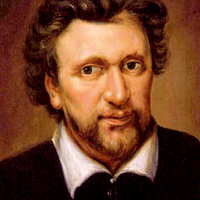 |
Robert Herrick, 1591–1674. English poet.
Like Donne (his elder by two decades), Herrick was a priest in the Church of England as well as a poet of amatory verse. And like Marvell (three decades his junior), many of these poems have a carpe diem message, as in his celebrated quatrain: Gather ye rosebuds while ye may, Old Time is still a-flying; And this same flower that smiles today, Tomorrow will be dying.
|
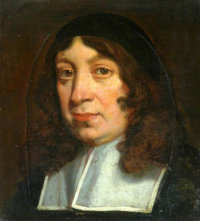 |
Andrew Marvell, 1621–78. English poet.
The son of a clergyman, but not one himself, Marvell entered a career in politics as well as writing poetry, and was elected several times to the House of Commons. After spending most of the years of Cromwell's Commonwealth abroad, he was able to obtain good patronage for himself, and also to advocate for his friend John Milton. His best-known poem is probably To His Coy Mistress with its carpe diem eroticism, but he also wrote heroic or satirical genres.
|
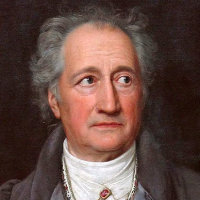 |
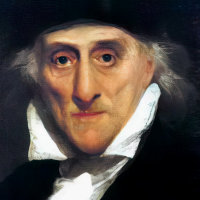
Johann Wolfgang von Goethe, 1749–1832. German poet, playwright, scientist, and statesman.
One of the great universal geniuses of the 18th century, Goethe epitomizes the transition between the Age of Reason and the Romantic era. His scientific works are still studied today, the two parts of his Faust hold a special place as an expression of moral philosophy, and his poems provided inspiration for Schubert and many other composers.
|
 |
Lorenzo Da Ponte, 1749–1838. Italian poet.
Da Ponte's lasting claim to fame is as librettist for Mozart's Marriage of Figaro, Don Giovanni, and Così fan tutte. But he also wrote for numerous other composers, including Salieri. He spent the last years of his life in New York, trying to etablish an opera company.
|
 |
Wolfgang Amadeus Mozart, 1756–91. Austrian composer.
A child prodigy as both performer and composer, Mozart produced an extraordinary body of work in all genres over a relatively short life. He wrote the greatest of his many operas after moving to Vienna: three collaborations with Lorenzo da Ponte—The Marriage of Figaro (1786), Don Giovanni (1787), and Così fan tutte (1790)—framed by two German Singspiels: The Abduction from the Seraglio (1782) and The Magic Flute (1791).
|
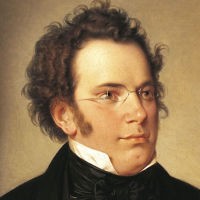 |
Franz Schubert, 1787–1828. Austrian composer.
Although he died before his 32nd birthday, Schubert was extremely prolific as a composer, writing symphonies, masses, chamber music, piano sonatas, and over 600 songs, both individually and in cycles. Though little known in his lifetime, his work was rediscovered and championed by Mendelssohn, Liszt, and Brahms, making him in effect the source of the German Romantic movement.
|
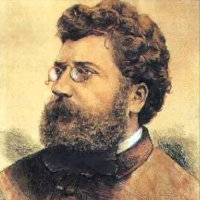 |
Georges Bizet, 1838–75. French composer.
Bizet's teenage Symphony in C (1855) remains a concert staple, and his winning of the pestigious Prix de Rome in 1857 promised a brilliant future. And indeed he wrote a string of works, mainly for the stage, that ensured his continued popularity, though only his music for Arlésienne and his opera The Pearl Fishers are frequently performed. That is until his final work, Carmen, one of the most popular operas of all time. Ironically, though, he died a few weeks of its premiere in 1875, believing that it had been an abject failure.
|
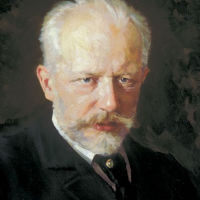 |
Pyotr Ilyich Tchaikovsky, 1840–93. Russian composer.
Tchaikovsky was the first Russian composer to gain an international reputation, in part because his Russian voice was allied to a thorough training in Western parctice. His symphonies, tone-poems, and ballets have become staples of their repertoire, but his dozen operas are less well-known, except for Eugene Onegin (1879) and The Queen of Spades (1890), both based on texts by Pushkin.
|
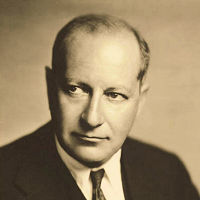 |
Sigmund Romberg, 1887–1951. Hungarian-American composer.
Born Siegmund Rosenberg in Hungary, he showed precocious talent as a musician. He came to America in his late teens, and soon began working for a music publisher, adapting European musicals for US performance. His own most successful shows, The Student Prince (1924) and The Desert Song (1926), were in a similar style, but he could also write music that was entirely American in spirit.
|
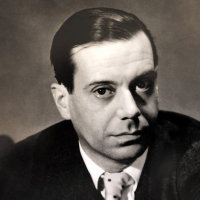 |
Cole Porter, 1891–1964. American songwriter.
Unlike many Broadway composers, Porter wrote not only the music but the lyrics for his songs, and these are notable for their wit, clever rhyming, and encyclopedic range of reference. In addition to numerous standalone songs that became standards, he also wrote musicals such as Anything Goes (1934), Kiss Me, Kate (1948), and Can-Can (1953).
|
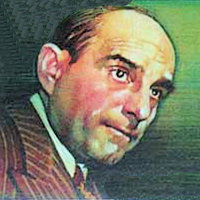 |
Lorenz Hart, 1895–1943. American lyricist.
Wikipedia quotes a contemporary as saying Hart was "so uncomfortable in his own skin that the way he probably got through life was he knew he had to be the funniest, smartest guy in the room." Which he was, in a series of brilliant but often melancholy songs with intricate multisyllabic rhymes that have become American standards. Until he basically sabotaged his career with alcoholism, Hart collaborated notably with Richard Rodgers on such shows as On Your Toes (1936), Babes in Arms (1937), The Boys from Syracuse (1938), and Pal Joey (1940)
|
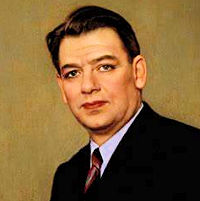 |
Oscar Hammerstein II, 1895–1960. American lyricist and producer.
Oscar Hammerstein's father, a German immigrant, was manager of the Metropolitan Opera and active also on Broadway. His son quickly established a career as lyricist, working with Rudolf Friml, Sigmund Romberg, Jerome Kern (Show Boat, 1926), and a very long partnership with Richard Rodgers from Oklahoma! (1943) to The Sound of Music (1959).
|
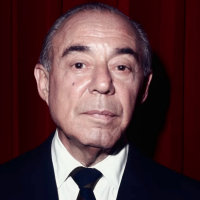 |
Richard Rodgers, 1902–79. American composer.
Born in Queens and educated at Columbia, Rodgers had two successful careers as a composer for Broadway, the first with Lorenz Hart with such works as Pal Joey (1940), the second with Oscar Hammerstein II, in a string of successes running from Oklahoma! (1943) to The Sound of Music (1959). He was the first composer to win all four EGOT awards and the Pulitzer Prize.
|
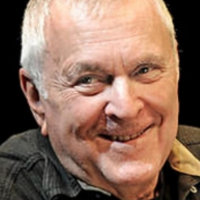 |
John Kander, 1927– . American composer.
While working as a rehearsal pianist on West Side Story, he took Jerome Robbins' suggestion that he compose dance music. After doing just that as a collaborator on Gypsy (1959) and Irma la Douce (1960), he struck off on this own, notably with lyricist Fred Ebb, on such mammoth successes as Cabaret (1966) and Chicago (1975).
|
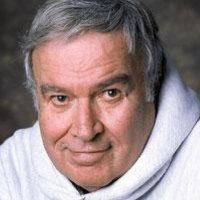 |
Fred Ebb, 1928–2004. American lyricist.
Armed with degrees in English from NYU and Columbia, Ebb nonetheless went into a different kind of writing, as a playwright and lyricist on Broadway. He is best remembered for the shows he wrote with John Kander, including Cabaret (1966) and Chicago (1975), two of the longest-running and most often revived musicals in Broadway history.
|
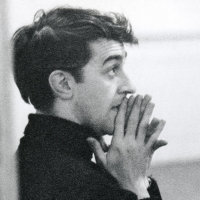 |
Sir Kenneth MacMillan, 1929–92. Scottish choreographer.
Beginning as a dancer with the Royal Ballet, MacMillan gave up performing while still in his 20s to concentrate entirely on choreography. He succeeded Sir Frederick Ashton as Artistic Director of the company from 1970 to 1977, but also held positions in Berlin, Stuttgart, New York, and Houston. His best-known work is probably Romeo and Juliet, a setting of the Prokofiev score created for the Royal Ballet in 1965.
|
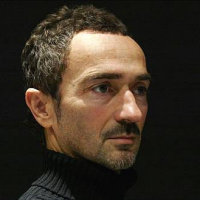 |
Angélin Preljocaj, 1957– . Albanian-French choreographer.
The son of Albanian parents who emigrated to France to escape communism, he trained as a dancer, but made his name primarily as an historian of classical ballet and creator of modern dances on timeless subjects. His film, Polina, about a young dancer who wants more for herself than just to a cog in the Bolshoi machine, was an official French entry at the 2016 Venice Film Festival.
|
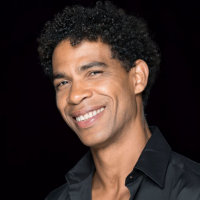 |
Carlos Acosta, 1973– . Cuban-British dancer and choreographer.
Born in Havana as the 11th child of an impoverished family, he was enrolled by his father in the state-funded National Ballet School. His energy, althleticism, and grace brought him to prominence in his teens, and after five years with the Houston ballet, he joined the Royal Ballet in 1998, rising quickly to the rank of principal artist. He resigned from the company in 2015 (bequeathing his Carmen as a farewell gift) to pursue an internation career as choreographer and guest artist. In 2020, he was appointed Artistic Director of the Birmingham Royal Ballet.
|


