5. Love is For Ever.
This class falls into two parts: commitment and loss. The connecting link is a love that endures the test of time, even
continuing after the loved one has passed on. The first hour considers three types of love: commitment leading to
marriage, the love of parent and child, and the enduring love of partners who have grown old together.
The second hour considers death, as far as possible in a transcendent light. So we have the positive attitude of poet Mary
Oliver as the end approaches. We get the consolation that Gustav Mahler manages to wring out of his otherwise heartbreaking
song cycle on the death of children. We get poet Carol Ann Duffy's transfigured account of the last months with her
mother. We get the poignant performance by James Taylor, now an old man, joined by his 20-year-old son in a a lullaby he had
written for a lover many years before—a perfect example of the natural passing of one generation into another.
More than usually in this course, the class focuses on actual songs, with an even blend of genres. Each section will be
introduced by a pop song by the likes of Train, John Lennon, Ed Sheeran, or Taylor Swift, with others included in the
body of the class itself. Although all the lyics will be shown onscreen, you might like to read them in advance: the
Texts handout above contains the words of all 6 songs played in class, all
8 poems, and full translations of the 2 German song-cyles, not just the numbers we will actually hear. rb.
The script, videos, and images will be posted immediately after class. rb.
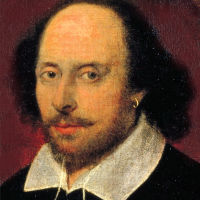 |
William Shakespeare, 1564–1616. English poet and playwright.
With almost 40 plays, 154 sonnets, and many longer poems, Shakespeare dominates English literature of his time, and world literature for ever after. To attempt a thumbnail biography would be both unnecessary and impossible.
|
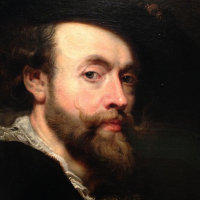 |
Peter Paul Rubens, 1577–1640. Flemish painter and diplomat.
One of the giants of baroque art, Rubens developed the style of Titian into a powerful rhetoric applied equally to sacred and profane subjects, and exerted enormous influence in Spain, England, and France as well as in his native Flanders, continued in the work of his many pupils. His position at so many courts also made him invaluable as a diplomat.
|
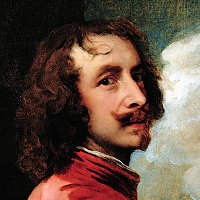 |
Anthony Van Dyck, 1599–1641. Flemish painter.
For a time the principal assistant to Peter Paul Rubens, Van Dyck had a shorter but similarly stellar and varied career, painting in most of the major baroque genres. He was especially known as a portraitist, particularly in England, where he served the courts of both James I and Charles I.
|
 |
Anne Bradstreet, 1612–72. American poet.
Born to a wealthy Puritan family in England, Bradstreet was well educated. She emigrated to Massachussetts shortly after her marriage to an official in the colony. Her collection, The Tenth Muse Newly Sprung up in America (1650), shows her love for her husband, her modest pride in her abilities as a woman, and her delight in the natural world.
|
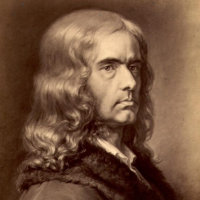 |
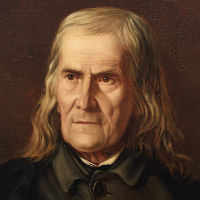
Adalbert von Chamisso, 1781–1838. German botanist and poet.
After an undistinguished career in the Prussian army and a failed attempt to launch a literary magazine, Chamisso joined the circle of the exiled Madame de Stael in Switzerland at the age of 29. It was there that he began the botanical research that would ultimately seal his professional reputation. Meanwhile he was writing poetry, including the cycle Frauenliebe und Leben set by Schumann and others, and his masterpiece, the novel Peter Schlemihl (1814).
|
 |
Friedrich Rückert, 1788–1866. German poet and orientalist.
"Rückert was master of thirty languages and made his mark chiefly as a translator of Oriental poetry and as a writer of poems conceived in the spirit of Oriental masters" [Wikipedia]. His poetry was set to music by numerous composers, most particularly Gustav Mahler in two sets of songs for voice and orchestra, including a selection from the 400+ poems of Kindertotenlieder, written privately by the poet to come to terms with the death of two of his children.
|
 |
Elizabeth Barrett Browning, 1806–61. English poet.
Elizabeth Barrett had established herself as a poet well before she met Robert Browning, whom she eventually married at the age of 40, and was disinherited by her father for doing so. Her sequence of love-letters to Browning, Sonnets from the Portuguese (1850) have been widely influential.
|
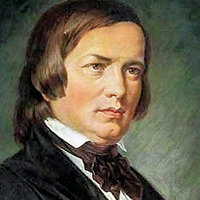 |
Robert Schumann, 1810–56. German composer.
After an injury to his hand (while studying with his future father-in-law Friedrich Wieck) prevented him from pursuing a career as a pianist, he concentrated on composing, producing some of the key works of the Romantic piano literature, together with chamber music, a concerto, four symphonies, and a wealth of songs. He was also a public figure as a critic and thinker. His career was cut short by bipolar disorder.
|
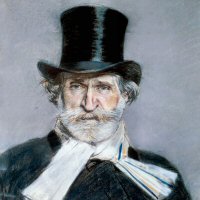 |
Giuseppe Verdi, 1813–1901. Italian opera composer.
Verdi's two dozen or more operas (some in multiple versions) make him the leading Italian opera composer of his time and among the two or three greatest opera composers ever. After what he called his "years in the galleys," he hit his stride in the early 1850s with the trio of Rigoletto, Il Trovatore, and La Traviata. He intended Aïda (1870) to be his last work, but was persuaded out of retirement to write his final Shakespearean masterpieces: Otello (1886) and Falstaff (1893).
|
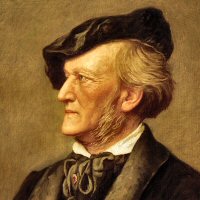 |
Richard Wagner, 1813–83. German opera composer.
Wagner almost single-handedly transformed the nature not only of opera but also of harmony and orchestration. His 10 mature operas include Tristan und Isolde (1865), Die Meistersinger von Nürnberg (1868), and the vast tetralogy Der Ring des Nibelungen (completed 1876), for which he had a special theater built at Bayreuth. His final opera, Parsifal (1882), was written for exclusive performance at that theater.
|
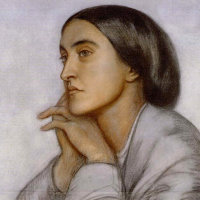 |
Christina Rossetti, 1830–94. English poet.
Christina was the younger sister of Dane Gabriel Rossetti and the model for several of his paintings. She began publishing her poetry in 1848. Although remembered for his Christmas carols "Love Came Down at Christmas" and "In the Bleak Midwinter," her popularity declined after her death, but later commentators point to the extraordinary language and psychosexual suggestion in works like Goblin Market (1862), possibly inspired by her volunteer work at a Home for Fallen Women.
|
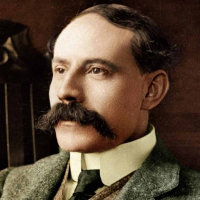 |
Edward Elgar, 1857–1934. English composer.
Elgar was the leading figure in English music during the late Victorian and Edwardian eras. With works such as the Enigma Variations and his concerti for violin and cello, he was one of the first English composers after Purcell to achieve an international reputation.
|
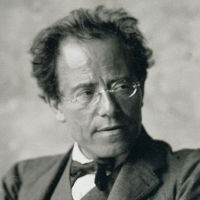 |
Gustav Mahler, 1860–1911. Austrian composer and conductor.
In the summers during his appointment as director of the Vienna State Opera, he completed nine symphonies, numerous songs, and his masterpiece, the "song-symphony" Das Lied von der Erde (The Song of the Earth, 1909). His works typically use very large orchestras and incorporate a wide range of musical styles.
|
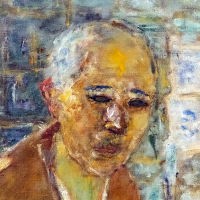 |
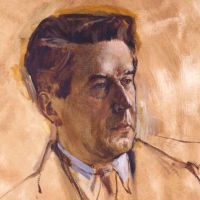
Pierre Bonnard, 1867–1947. French painter.
Bonnard was one of the original Nabis (Hebrew for "prophets") in 1889, basing themselves on the example of Gauguin. In later years, he painted numerous pictures of his wife at home and especially in the bath, using a rich palette that dissolved forms in colored light, much as her body was immersed in and refracted by the water.
|
 |
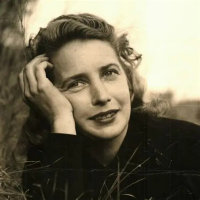
Frederick Ashton, 1904–88. English choreographer.
Like most choreographers, Sir Frederick Ashton began as a dancer, and continued performing even as his fame blossomed as a choreographer. He became artistic director of the Royal Ballet in 1963, but had worked with the company and its various predecessors since 1935, responsible for creating many of the works that are the foundations of English ballet today.
|
 |
Margaret Wise Brown, 1910–52. American writer.
Brown's children's books, The Runaway Bunny (1942) and Goodnight Moon (1947) are surely known to every American parent of small children, but they are only a fraction of her output for various publishers under various pseudomyms. After graduating from Hollins College in 1932, she taught at the famous Bank Street School in New York, where she began her writing. She never married, and died of an aneurysm at age 42.
|
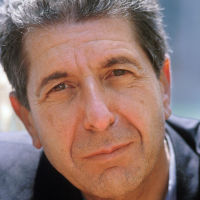 |
Leonard Cohen, 1934–2016. Canadian singer-songwriter.
Wikipedia notes: "Cohen pursued a career as a poet and novelist during the 1950s and early 1960s, and did not begin a music career until 1966." He may be unique among popular artists in that his songs often refer directly to his Jewish faith, as in his most famous number, Hallelujah (1984). He is a holder of the Order of Canada and the international Prince of Asturias Prize.
|
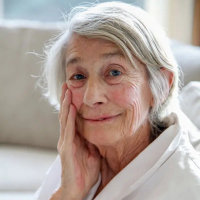 |
Mary Oliver, 1935–2019. American poet.
Winner of the National Book Award and Pultizer Prize, Oliver's work is "inspired by nature, rather than the human world, stemming from her lifelong passion for solitary walks in the wild [and] characterised by a sincere wonderment at the impact of natural imagery, conveyed in unadorned language." [Wikipedia]
|
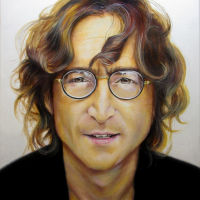 |
John Lennon, 1940–80. British singer-songwriter.
Born in Liverpool, Lennon formed The Quarrymen in 1956, a group that evolved into The Beatles in 1960. Working with Paul McCartney, Lennon was the principal songwriter for the group, making the pair the most successful writing duo in history. Lennon married his second wife, Japanese multimedia artist Yoko Ono, in 1968. When the Beatles broke up in 1970, he moved with her to NYC, engaging in numerous projects, musical and otherwise, including opposition to the Vietnam War. He was assassinated at the entrance to the Dakota Apartments near Central Park on 8 December, 1980.
|
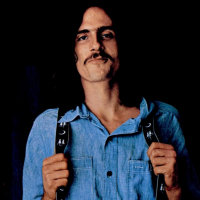 |
James Taylor, 1948– . American singer-songwriter.
Taylor was born in Boston, the son of a physician and an opera singer; all of his siblings became involved in music in some way. He had his first hit in 1970. and every album he released between 1977 and 2007 has sold over a million copies. He has been associated with many of the legends of American music, including Joni Mitchell, Carly Simon (his wife 1972–85), and Carole King. His songs also reflect his long troubles with mental-health problems and drug addiction, and evetual victory over them. At the time of writing, he is still touring internationally, most recently with Henry Taylor, his son by his third marriage.
|
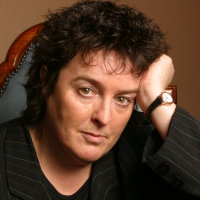 |
Carol Ann Duffy, 1955– . Scottish poet.
Dame Carol Ann Duffy was Poet Laureate of the United Kingdom from 2009 to 2019, the first woman, the first Scot, and the first openly gay person to hold that position. "Her poems address issues such as oppression, gender, and violence in accessible language." [Enc. Brit.]
|
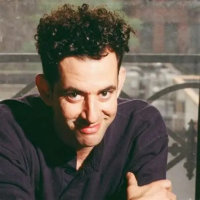 |
Jonathan Larson, 1960–96. American composer and lyricist.
Wikipedia notes: "Larson was an American composer, lyricist and playwright, most famous for writing the musicals RENT and Tick, Tick... Boom!, which explored the social issues of multiculturalism, substance use disorder, and homophobia. He worked on both musicals throughout the late 1980s and into the 1990s. RENT began an off-Broadway run in early 1996, though Larson died from an aortic dissection the day before its first preview performance. The show transferred to Broadway that April, becoming one of the longest-running productions ever. Larson posthumously received three Tony Awards and the Pulitzer Prize for Drama."
|
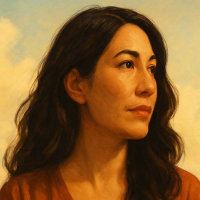 |
Ada Limón, 1976– . American poet.
Mexican-American Ada Limón was appointed US Poet Laureate in 2022, the first Latina to hold the honor. Born in Sonoma CA, she attended the University of Washington and NYU before working for various style organizations such as Condé Nast and GQ to fund her work as a poet. Her three-year tenure as Poet Laureate included an environmental project in collaboration with the National Parks Service to solicit poetic responses to America's natural wonders.
|
 |
Taylor Swift, 1989–nbsp;. American singer-songwriter.
Swift is unquestionably the best-known popular singer today, so probably needs no bio. Although she is the richest-ever female musician, and her tours have broken box-office records, her huge appeal comes from her ability to reflect the heartbreaks, insecurities, and personal triumphs of ordinary young women. As lyricist of all her songs, she has a gift for turning personal experience into poetry, enhanced by her flair for melody, transmitted by her remarkable feeling for the stage and camera. Born to a professional family in Pennsylvania, she established herself as a country singer in Nashville in her teens, but has long since outlived the label of this or any of the many other genres she has visited along the way.
|
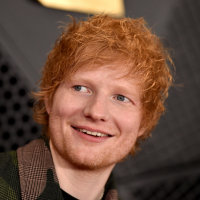 |
Ed Sheeran, 1991– . British singer-songwriter.
Born in Yorkshire and raised in Suffolk, Sheeran recorded his first song collection as a teenager. He has gone on to sell more than 200 million records worldwide, earning him top awards both in Britain and America. He tours widely, and is the third most-followed artist on Spotify. Also as a teenager, he was accepted into the National Youth Theatre of Great Britain, and continues to do occasional work as an actor.
|
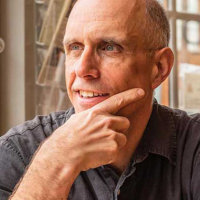 |
Joe Mills, bdnk. American poet.
Mills grew up in Indiana, and holds degrees from the Universities of Chicago, New Mexico, and California-Davis. He currently teaches at the University of North Carolina School of the Arts. His poems, written in accessible language approaching speech, spring from "daily life and personal memory" [Poetry Magazine].
|


