• About the Instructor • Return to Index
12 classes
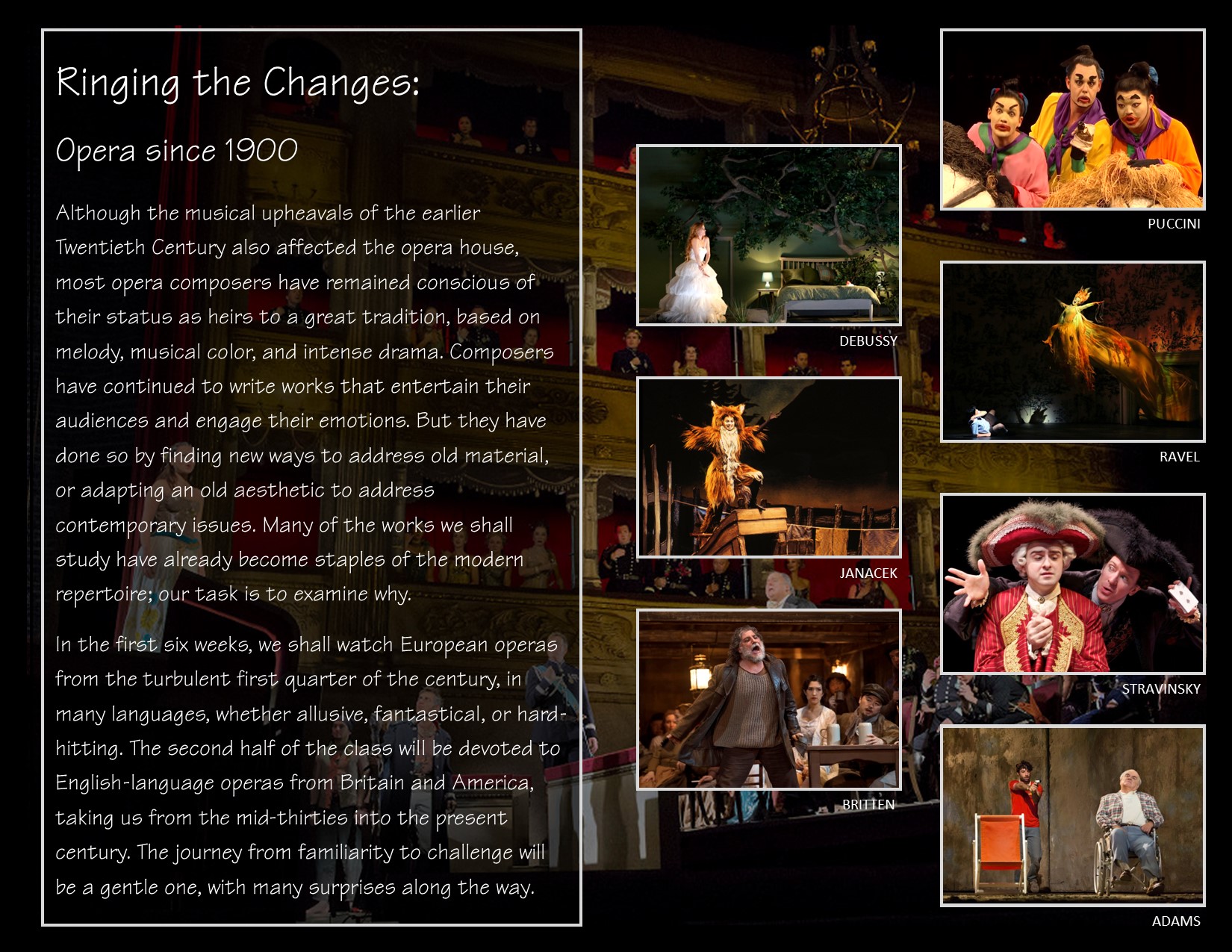
Although the musical upheavals of the earlier Twentieth Century also affected the opera house, most opera composers have remained conscious of their status as heirs to a great tradition, based on melody, musical color, and intense drama. Composers have continued to write works that entertain their audiences and engage their emotions. But they have done so by finding new ways to address old material, or adapting an old aesthetic to address contemporary issues. Many of the works we shall study have already become staples of the modern repertoire; our task is to examine why. In the first six weeks, we shall watch European operas from the turbulent first quarter of the century, in many languages, whether allusive, fantastical, or hard-hitting. The second half of the class will be devoted to English-language operas from Britain and America, taking us from the mid-thirties into the present century. The journey from familiarity to challenge will be a gentle one, with many surprises along the way.