• Baltimore website, Spring 2020 • About the Instructor • Return to Index
12 classes
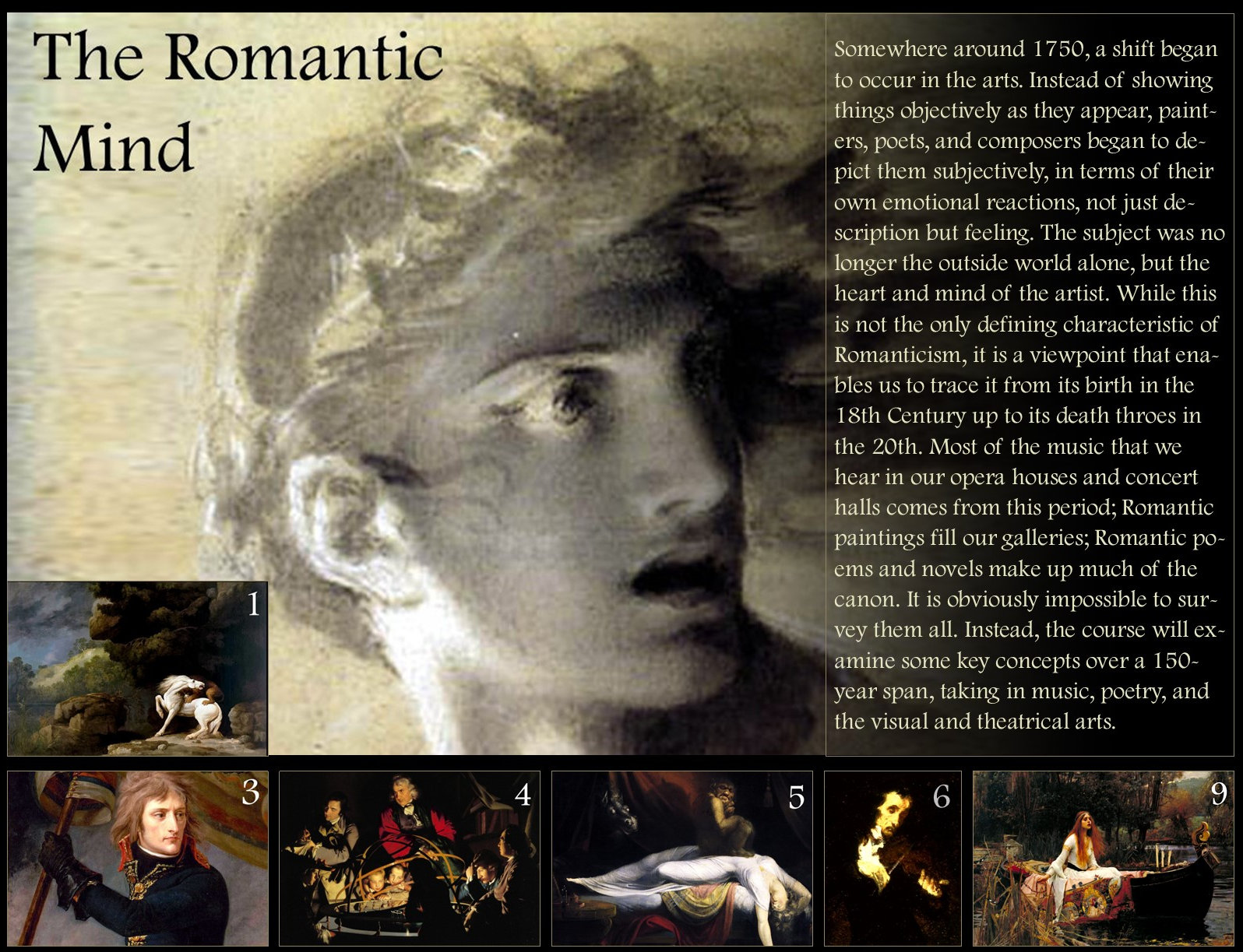
Somewhere around 1750, a shift began to occur in the arts. Instead of showing things objectively as they appear, painters, poets, and composers began to depict them subjectively, in terms of their own emotional reactions, not just description but feeling. The subject was no longer the outside world alone, but the heart and mind of the artist. While this is not the only defining characteristic of Romanticism, it is a viewpoint that enables us to trace it from its birth in the 18th Century up to its death throes in the 20th. Most of the music that we hear in our opera houses and concert halls comes from this period; Romantic paintings fill our galleries; Romantic poems and novels make up much of the canon. It is obviously impossible to survey them all. Instead, the course will examine some key concepts over a 150-year span, taking in music, poetry, and the visual and theatrical arts.