• About the Instructor • Return to Index
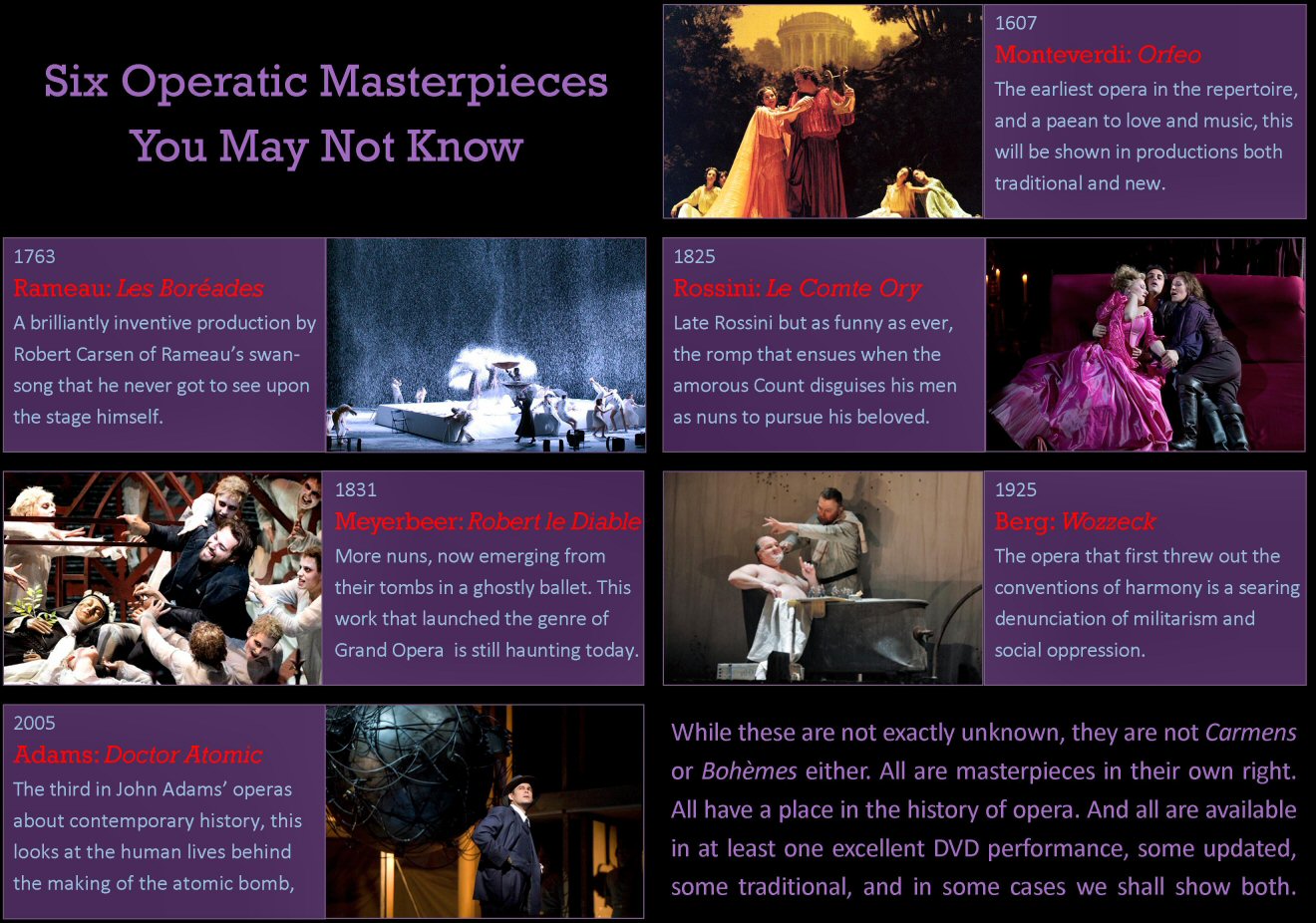
While these are not exactly unknown, they are not Carmens or Bohèmes either. All are masterpieces in their own right. All have a place in the history of opera. And all are available in at least one excellent DVD performance, some updated, some traditional, and in some cases we shall show both.
1607. Monteverdi: Orfeo. The earliest opera in the repertoire, and a paean to love and music, this will be shown in productions both traditional and new.
1763. Rameau: Les Boréades. A brilliantly inventive production by Robert Carsen of Rameau’s swan-song that he never got to see upon the stage himself.
1825. Rossini: Le Comte Ory. Late Rossini but as funny as ever, the romp that ensues when the amorous Count disguises his men as nuns to pursue his beloved.
1831. Meyerbeer: Robert le Diable. More nuns, now emerging from their tombs in a ghostly ballet. This work that launched the genre of Grand Opera is still haunting today.
1925. Berg: Wozzeck. The opera that first threw out the conventions of harmony is a searing denunciation of militarism and social oppression.
2005. Adams: Doctor Atomic. The third in John Adams' operas about contemporary history, this looks at the human lives behind the making of the atomic bomb.
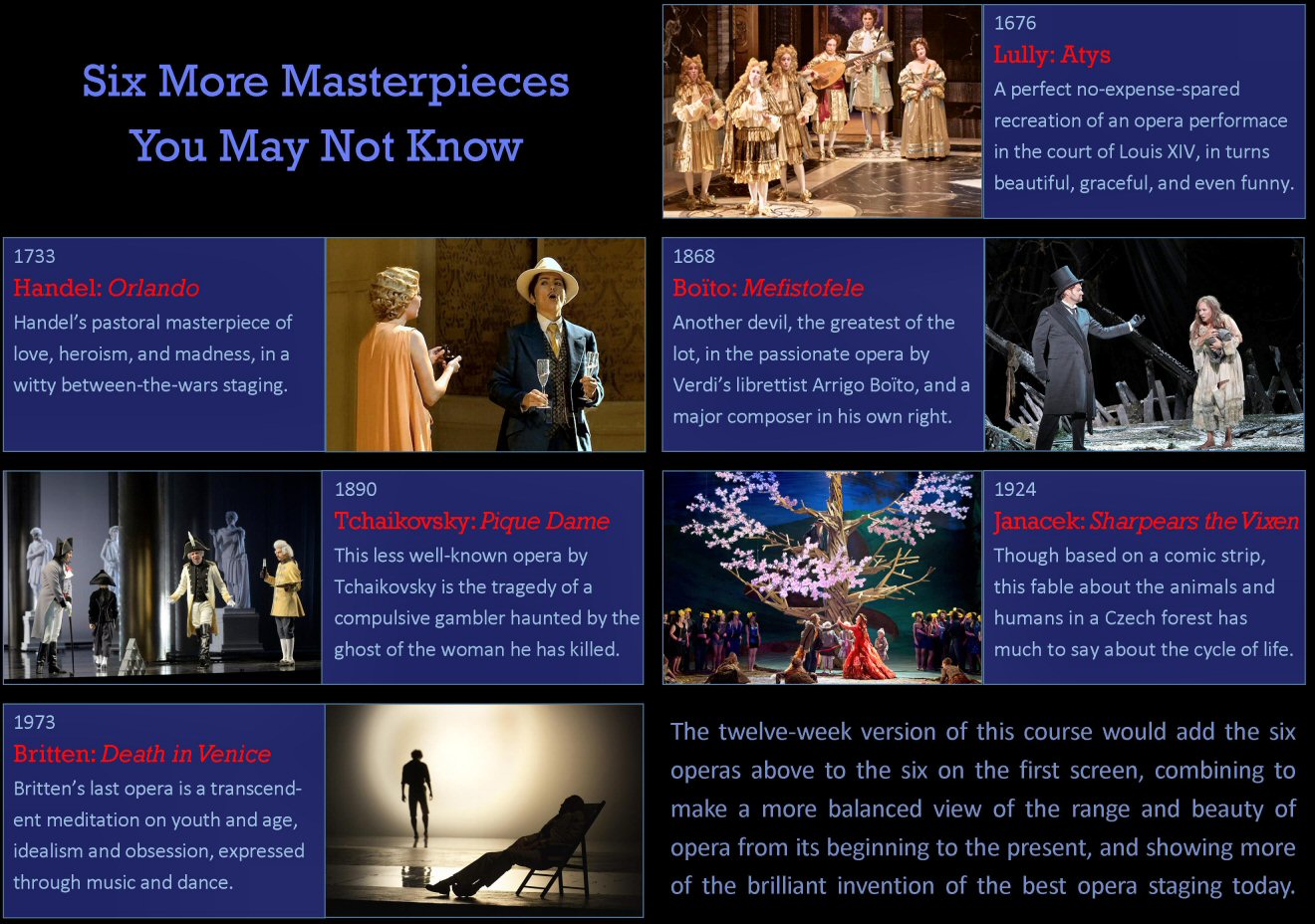
The twelve-week version of this course would add six more operas to the six on the first screen, combining to make a more balanced view of the range and beauty of opera from its beginning to the present, and showing more of the brilliant invention of the best opera staging today.
1676. Lully: Atys. A perfect no-expense-spared recreation of an opera performace in the court of Louis XIV, in turns beautiful, graceful, and even funny.
1733. Handel: Orlando. Handel’s pastoral masterpiece of love, heroism, and madness, in a witty between-the-wars staging.
1868. Boito: Mefistofele. Another devil, the greatest of the lot, in the passionate opera by Verdi’s librettist Arrigo Boïto, and a major composer in his own right.
1890. Tchaikovsky: Pique Dame. This less well-known opera by Tchaikovsky is the tragedy of a compulsive gambler haunted by the ghost of the woman he has killed.
1924. Janacek: Sharpears the Vixen.Though based on a comic strip, this fable about the animals and humans in a Czech forest has much to say about the cycle of life.
1973. Britten: Death in Venice. Britten’s last opera is a transcendent meditation on youth and age, idealism and obsession, expressed through music and dance.