
GO TO: [A–C] [D–F] [G–K] [L–N] [O–R] [S–U] [V–Z]
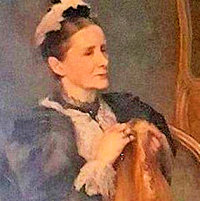
Born of an English family in Dublin, she began writing religious poetry in her teens, and in time became celebrated for her hymns, including "All things bright and beautiful," "Once in royal David's city" and "There is a green hil far away." She married an Anglican clergyman who became Bishop of Londonderry and Archbishop of Armagh, both in Northern Ireland. 7.

Arriaga is often called "the Spanish Mozart," because of his facility, because of his short life and because he wrote in a vein that owed much to the earlier composer. Unfotunately, he died before he was able to develop the individual style that can just be glimpsed in his extant works. 3.
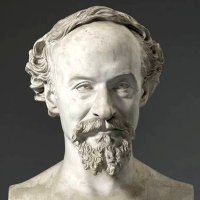
Baade was known for his paintings of Norwegian scenes, often illuminated by moonlight, creating strong dramatic contrasts. In this respect, he is somewhat similar to Caspar David Friedrich, with whom he worked in the later 1830s. 4.
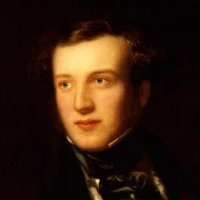
Balfe was born in Dublin and studied voice and violin. His singing career took him to Paris, Milan, and London, where he also began to get his own operas produced. The Bohemian Girl (1843), his greatest success (containing the air "I dreamt that I dwelt in marble halls") was produced in translation all over Europe, and even returned to London as an Italian opera! 5.
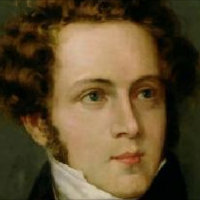
The short-lived Bellini, who was born in Sicily, trained in Naples, and finally achieved success in Milan and Paris, with his operas La sonnambula, Norma, and I puritani. Renowned for his long melodic lines and psychological acumen, he was the quintessential composer of bel canto opera. 1.
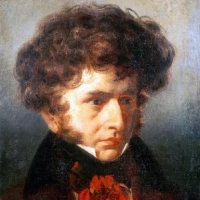
The leading French composer of the Romantic era, Berlioz was a master of orchestration and dramatic effect. A fervent admirer of Shakespeare (and a Shakespearean actress, Harriet Smithson), his works often have a strong literary quality that can obscure their musical craftsmanship. He was unable to get a full performance of his operatic masterpice, The Trojans (1863), but it has come into its own in recent years. 4.
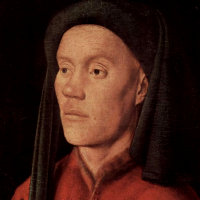
Binchois was praised by his contemporaries in the same breath as Dufay, though his fame has declined somewhat. He is especially memorable as a melodist, with a gift for the long expressive line in both his secular and sacred vocal work. [He may or may not be the subject of this portrait by Jan van Eyck.] 2.
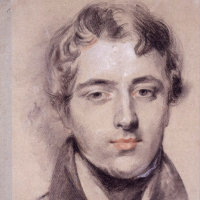
Although born in England, Bonington moved to France with his parents in his teens, studied with Gros, and became friends with Delacroix. Although he also worked in oil, his best work may be in watercolor, which he handled with a freshness of touch that Delacroix found unique. 3.
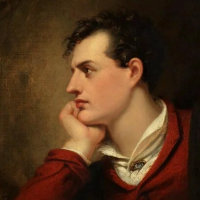
Byron, an hereditary peer, was one of the leading poets of the Romantic age, and the one whose passions and unconventional lifestyle most clearly defined the Romantic Hero, especially among his admirers in France, Germany, and Russia. His long poems Don Juan and Childe Harold's Pilgrimage are epic in scope and show his characteristic combination of action and wit. He died in Greece at the age of 36, fighting in the Greek War of Independence. 3.
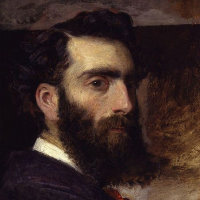
Calderon was an English painter of French birth (mother) and Spanish (father) ancestry who initially worked in the Pre-Raphaelite style before moving towards historical genre. He was Keeper of the Royal Academy in London. [Wikipedia] 7.
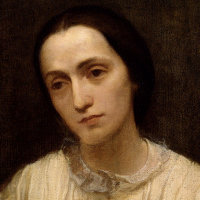
Julia Margaret Pattle was born in British India, and remained there until her mid-forties as a society hostess until her husband retired to England in 1845. In 1863, when she was 48, she received a box camera as a Christmas present from her daughter, as "something to amuse her." Indeed it did, and she became famous for her portraits of famous sitters, such as her neighbor Tennyson, and inventive restagings of literary works. 4.

The leading opera composer after Monteverdi, his works dominated the Venetian stage in the mid 1600s, and frequently addressed mythological subjects, such as his La Calisto (1651). 2.

Chatterton began writing poetry while still a child, and published some of it in Liverpool before moving to London. where he attracted a couple of infliential patrons. But his work, purporting to be the rediscovered writings of a medieval monk, and written in a fake old-English, also incurred criticism, and he poisoned himself shortly before his 18th birthday. Wordsworth, Coleridge, and Keats, however, saw him as the prototypical Romantic poet, and a martyr to the muse. [The image, by Henry Wallis, imagines him after his suicide.] 3.
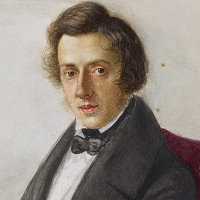
Chopin was a virtuoso pianist (though for the most part avoiding the concert stage), and wrote almost exclusively for the piano, in a variety of shorter forms, many reflecting the dances of his native Poland, which he left at age 20 to escape the consequences of a revolution. He spent his adult life in Paris, where he was a frequent guest at salons. He maintained a long relationship with the writer George Sand. 1.
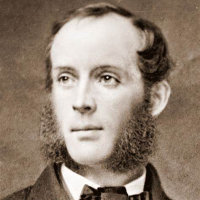
A pupil of Thomas Cole, Church was (with Bierstadt) the outstanding landscapist of the second generation of the Hudson River School. He was attracted to highly dramatic subjects, such as his Niagara, which made him famous, and traveled to the Andes and Middle East in search of them. 1.
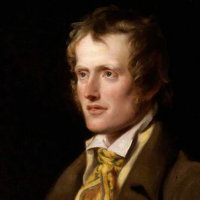
The son of an agricultural laborer, Clare worked the land himself. Leaving school at age 12, he nonethless continued to read as much as he could and write about his experience of rural life. His first book of poems found their way to Keats' publisher; their publication in 1820 with a further volume in 1821 made him instantly famous, but he passed through alcoholism into madness and ended his life in a mental hospital. 1.

The Neapolitan Colbran was the first wife of Rossini and, in his opinion, the greatest singer of his music. It was for her that he wrote the bravura mezzo-soprano leads in many of his operas. She also published four volumes of songs dedicated to various noble patrons, considerably less difficult than those that she herself sang, but with a charming musicality. 5.

Collier was a highly successful portraitist and painter of scenes from life, often with a "problem picture" element. He was connected through both his marriages to the family of Thomas Huxley, President of the Royal Society. 7.
GO TO: [A–C] [D–F] [G–K] [L–N] [O–R] [S–U] [V–Z]
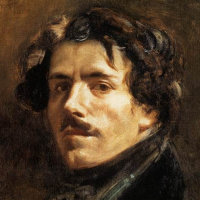
The leading French painter of the Romantic movement, he is known for his brilliant Rubensian color and his dramatic compositions. Especially in the first half of his career, these included political themes, such as The Massacre at Chios (1824) and Liberty Leading the People (1830), as well as subjects from Romantic literature. He also visited North Africa, and was constantly fascinated by the exotic. 5.
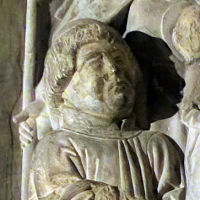
Dufay (also spelled Du Fay and other variants) was born near Brussels. Writing in most genres and traveling widely, he was regarded as the leading composer of his time, composing for example a motet for the dedication of Brunelleschi's dome of Florence Cathedral. [The portait comes from his tomb.] 2.
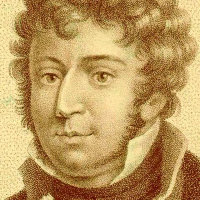
Born in Dublin, he made his début in London at age 9, and then came under the wing of Muzio Clementi, less as a pupil than an agent for his pianos, going with him all around Europe. He settled in St. Petersburg in 1803, where he spent the rest of his career. He is credited with inventing the piano Nocturne and thus influencing the music of Chopin and others. 1.
GO TO: [A–C] [D–F] [G–K] [L–N] [O–R] [S–U] [V–Z]

A violinist, conductor, and pedagogue, Gade was the leading Danish composer of his day, becoming Director of the Copenhagen Conservatory. His musical connections extended far abroad, and he was friends with Mendelssohn, Schumann, and others. His first major work, Echoes of Ossian (1841), reflected the great fame of the supposed Gaelic bard in Denmark in the early 19th century. 4.
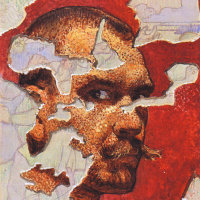
Although considered the leading painter of Finnish nationalism, largely for his use of themes from the Kalevala, Gallen-Kallela grew up in a Swedish-speaking family, and lived for extended periods in Paris, Berlin, Nairobi, and Taos NM. 4.
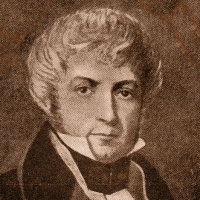
Born in Seville, Garcia lived in Paris 1819–23, performing the leads in several Rossini operas, as well as presenting his own. In 1825, at the invitation of Lorenzo da Ponte, he took his family plus a few other singers to New York, where they were the first to present Italian opera in America. He was the father of the singers Maria Malibran and Pauline Viardot, and the teacher Manuel Garcia jr. 5.
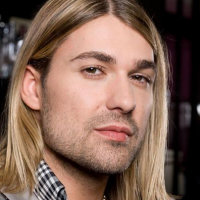
The son of a German jurist, Georg Bongartz, and an American ballerina, Dove Garrett, David took his mother's name when performing. He was a child prodigy, playing for the German President at 11 and signing a contract with Deutsche Grammophon at 13. He later studied at Juilliard in New York, making extra money on the side as a male model. He portayed (and played) Paganini in the 2013 movie The Devil's Violinist. His later career has been mainly in the crossover genre, presenting a glamorous mixture of classical and pop. 5.

Géricault's monumental Raft of the Medusa (1819) was a seminal work in French art, treating a contemporary political scandal with searing humanity coupled with a monumentality that owes much to Michelangelo. His many studies for this work, including corpses and severed limbs, his portraits of the insane, and above all his numerous paintings of horses, made him a key figure in French Romanticism until his death from a riding accident at the age of 32. 3.
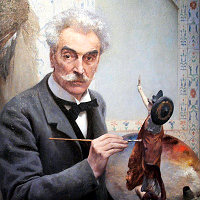
A leading academic painter of the mid-century, his works have been described by one critic (Lorenz Eitner) as "carefully plotted picture-plays, graced with sex, spiced with gore, and polished into waxwork lifelikeness by a technique that his admirers took for realism." He was much favored by American buyers including William Walters for his collection in Baltimore. 3.

Girodet was a student of Jacques-Louis David's, and like him spent several years in Italy. His manner is generally more Romantic, however, with a particular interest in evocative lighting effects. In adulthood, he styles himself Girodet-Trioson, in honor of the man who adopted him (and may well have been his natural father). 4.
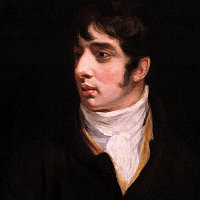
Hailed as the father of English watercolor, his landscapes freed the medium from its origins in tinted drawings, painting directly in transparent washes on white paper. Turner, an early work companion, later said "Had Tom Girtin lived, I should have starved." 3.
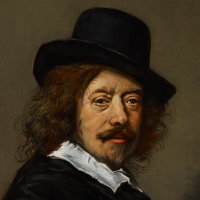
Though born in Antwerp, he moved to Haarlem with his parents and spent the rest of his life there. 24 years older than Rembrandt, he was the first great master of the Dutch Golden Age and its leading portraitist. His style is remarkable for the effects he could achieve from a few swift touches of paint. 3.
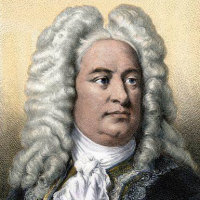
Gradually over the last half-century, Handel's 42 operas and numerous dramatic oratorios have been recognized as placing him on the level of Mozart and Verdi as an opera composer. The delay in appreciation is partly due to the fact that his preferred form, opera seria, is based almost entirely on recitative and solo arias. Born in Germany and trained in Italy, he dominated the English musical scene in the first half of the 18th century. 2.
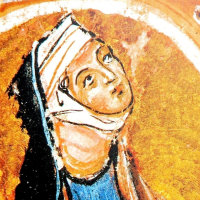
Abbess of the monastery of Rupertsberg on the Rhine, and composer of the music drama Ordo Virtutum, she achieved extraordinary fame as a theologian, poet, composer, manuscript illuminator, and natural scientist, becoming known as "The Sibyl of the Rhine." The Catholic Church has long revered her as a saint. 2.

A pupil of Mozart and Salieri and a friend of Beethoven, Hummel's career as composer and performer spanned their combined lives. With prestigious appointments in Vienna, Stuttgart, Weimar, and London, and numerous compositions to his name, Hummel was the paradigm of the early 18th-century composer, and died a famous man, only to be forgotten by later generations. 3.
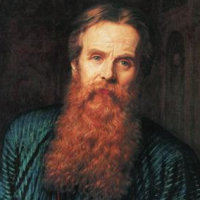
One of the founders of the Pre-Raphaelite Brotherhood, his paintings were noted for their vivid color, precise detail, religious or moral subjects, and profuse symbolism. His The Light of the World became one of the most reproduced paintings in the late 19th and early 20th centuries. 7.
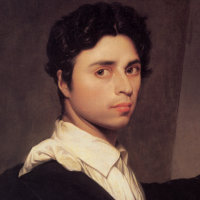
Ingres was trained in the academic tradition, and indeed spent 7 years as Director of the French Academy in Rome. Although one of the great masters of French Romantic era, his style was always marked by a cool classicism and precision of line, in contrast to the freer handling of paint by his contemporary Delacroix. 5.
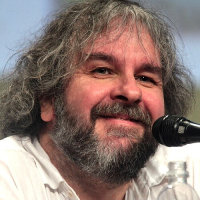
Sir Peter Jackson began shooting his first film as a teenager growing up in New Zealand. The success of some of his early movies earned him an invitation to Hollywood in the mid-1990, and thence to the project which made his name, directing the Lord of the Rings trilogy (2001–03) based on the books by JRR Tolkien. He returned to Tolkien in 2012 with another trilogy based on The Hobbit. 4.
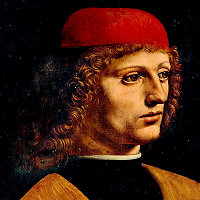
Josquin is considered one of the leading composers in the High Renaissance, and not just in the Franco-Flemish school. Almost all his works are vocal, mostly sacred. He is credited with breaking away from the tradition of long melismatic lines, writing instead in short imitative phrases that are closely expressive of the text. [This portrait of a musician by Leonardo da Vinci has not definitely been identified as Josquin, although both were in Milan at the same time.] 2.
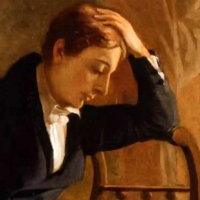
Keats was a second-generation Romantic, contemporary with Byron and Shelley. By the time he died of tuberculosis at the age of 25, he had been publishing for less than four years. Nevertheless, later critics have hailed him as one of the greatest English poets, especially for his Sonnets and series of Odes. 3.
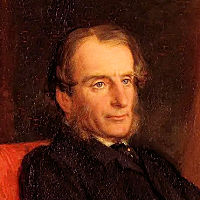
The son of a Church of England rector, Kingsley entered the church himself. He was appointed chaplain to Queen Victoria in 1859 and Professor of History at Cambridge in 1860. He was also a novelist, writing once-popular books like The Water Babies (1863), nominally for children but with a strong didactic function and passionate polemic against child labor and similar real-world issues. 7.
GO TO: [A–C] [D–F] [G–K] [L–N] [O–R] [S–U] [V–Z]
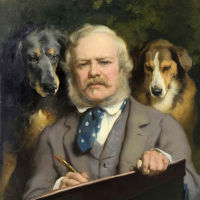
He is best known for his numerous animal paintings, such as the once world-famous Monarch of the Glen, and for his scuptures of lions around Nelson's Column in London's Trafalgar Square. 1.
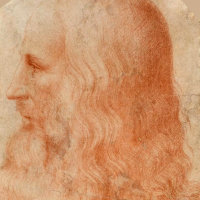
With Michelangelo and Raphael, one of the triumvirate of artistic geniuses that crown the High Renaissance. He trained in Florence with the painter Andrea Verrocchio before moving to the court of Ludovico Sforza in Milan. He spent the last years of his life at the court of François I in France. The naturalism and luminosity of his painting, and his effects of sfumato (or modeling as if by smoke), were widely influential. It is his notebooks, however, that are the best testament to the range of his genius, containing remarkable observations of the natural world, and mechanical inventions centuries before their time. 2.
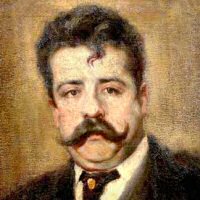
Although he wrote many operas, Leoncavallo's reputation rests upon a single work, I pagliacci (the players, 1892), a two-act opera generally performed as half of a double bill. But that is one of the cornerstones of Italian verismo—a movement characterized by its depiction of the passions of ordinary people. 8.
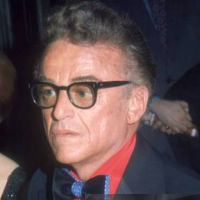
Lerner was born in New York City, the son of a clothing retailer; he studied for a while at Juilliard and graduated from Harvard. With composer Frank Loesser, he wrote the lyrics for Brigadoon (1947), My Fair Lady (1956), and Camelot (1960) among several others. 4.
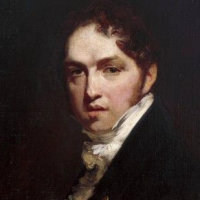
Lewis worked in a variety of genres, but he is best known for his naturalistic lanscapes and closely-observed studies of country people. 1.

Born in Haarlem, she probably studied with Frans Hals, and her work was later frequently sold as his. She was, however, a Guild-certified Master in her own right, with several appentices, and maintained good sales in the genre subjects that were her main specialty. 3.
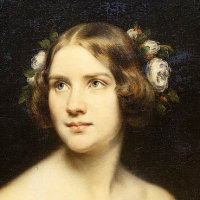
A child prodigy, Lind sang heavy roles too young, but her voice was repaired by Manuel Garcia jr. After that, she specialized in roles that highlighted the limpid purity of her voice, earning the nickname of "The Swedish Nightingale," under which PT Barnum billed her for a grand tour of America (1850–52). This garnered her the equivalent of pop superstardom, launching brand-name merchandise of every kind and earning her over $13 million (in today's values), which she used to establishing charity schools in Sweden. 5.
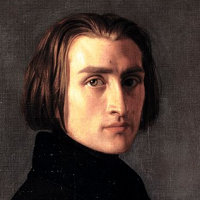
Liszt was the foremost piano virtuoso of his time, playing three or four concerts a week during his heyday during the 1840s, and much of his prolific output—including notably his set of 19 Hungarian Rhapsodies—is designed for display. But he was also a generous supporter of numerous other musicians, including Chopin, Schumann, Berlioz, Grieg, Borodin, and Wagner (who became his son-in-law). Many of his compositional techniques in his later works paved the way for advanced composers at the turn of the century, 5.
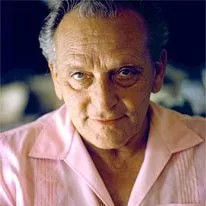
Frederick (Fritz) Loewe was born in Berlin, the son of a Jewish operetta star. He was a piano prodigy, the youngest soloist to appear with the Berlin Philharmonic. In 1924 his father got an offer to appear in New York, and Fritz traveled with him, hoping to write for Broadway—an ambition that was not fulfilled until he teamed with lyricist Alan Jay Lerner and wrote the musicals Brigadoon (1947), My Fair Lady (1956), and Camelot (1960) among others. y.
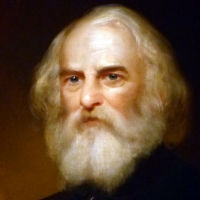
Longfellow was born in Maine, and taught at Bowdoin College and later at Harvard. His American themes and stirring diction made him the most popular poet of his day and earned him a reputation abroad. His Song of Hiawatha (1855) and similar poems employed the form of the Finnish Kalevala to create a similar Native American myth. 4.

Lönnrot was "a Finnish physician, philologist. and collector of traditional Finnish oral poetry. He is best known for creating the Finnish national epic, Kalevala, (1835, enlarged 1849), from short ballads and lyric poems gathered from the Finnish oral tradition" [Wikipedia]. 4.

Writer-director George Lucas is known for the creation of two major Hollywood franchises, which between them virtually define the blockbuster genre: Star Wars (9 films, 1977– ) and Indiana Jones (5 films, 1981– ). The former, especially, involved the creation of an extensive legendarium, a complex web of characters and shared histories that form the epic background to any one of the films. He also founded several corporations such as Lucasfilm and Industrial Light and Magic, to handle the business and technical aspects of his films. 4.
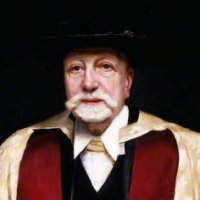
A violinist, Mackenzie trained in Germany and began his career in orchestras there. He later enrolled at the Royal Academy of Music in London—he would eventually become its Principal—and began composing while continuing to play the violin as a living. Many of his works have a Scottish theme, including three Scottish Rhapsodies (1880, 1881, and 1911) for orchestra. 1.
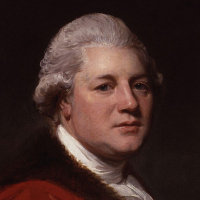
Macpherson leapt to fame with the publication of the epic Fingal in 1761, supposedly the work of the Gaelic poet Ossian, discovered and translated by him. Other works by Ossian followed. Although this was later exposed as a massive forgery, the mythical world of Ossian sparked something in the early Romantic fantasy, bringing worldwide fame to his supposed discoverer. 4.
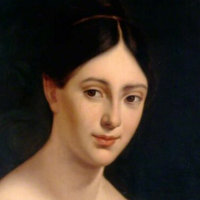
The daughter of Manuel Garcia, Malibran quickly became one of the leading divas of bel canto opera; a single benefit performance in Venice was sufficient to rebuild the dilapidated old theater as the Teatro Malibran. Donizetti wrote the title role in Maria Stuarda for her. She moved to England in 1834 and died in Manchester two years later of complications from a riding accident. 5.

Everything about this writer (including his dates and the roughly contemporary portrait) is conjectural, as he is known only as the author/translator of Le morte D'Arthur, as published by Caxton in 1485. He decribes himself (or is described) as "knight prisoner," implying a certain rank and imprisonment perhaps for political reasons, but all the rest is a matter of argument. 4.

With plays such as Edward II and Doctor Faustus, he was the preeminent tragedian in England until he was murdered at the age of 29, when his crown passed to Shakespeare. 1.

Called "the most popular painter of his day," Martin's vast paintings of religious subjects and natural disasters later fell out of fashion. 4.
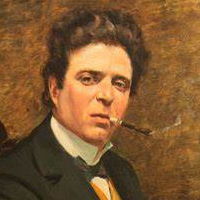
While still in his twenties, Mascagni won first prize in a 1890 competition sponsored by the music publisher Sanzogno. Cavalleria rusticana (Rustic Chivalry), the winning work, soon achieved worldwide popularity, particularly in combination with another single-act work, Leoncavallo's I pagliacci (1892), which together virtually define the verismo style. None of his other operas has achieved such fame. 8.

McGonagall, who may actually have been born in Ireland, was a mill-worker and amateur actor when in 1877 he suddenly had the conviction that he was destined to be a poet. From then on, he wrote numerous narrative ballads and toured the country reciting them. He was oblivious to the opinion of others, and indeed to most poetic conventions other than rhyme. But his fame did not last; he died in poverty. 1.
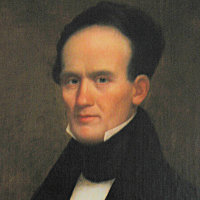
Growing up on the Ohio frontier, McGuffey began working as a teacher in his teens. Years later, when he was already a Professor of Ancient Languages at Miami University in Ohio, and an ordained Presbyterian minister, he was recommended by Harriet Beecher Stowe to write a series of school Readers for children. These are still used by homeschoolers today, largely on account of the strong moral lessons they teach along with basic literacy. 7.
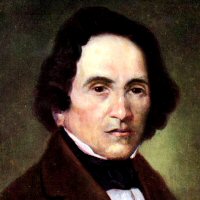
Although born and trained in Germany, Meyerbeer began his prolific opera career in Italy, falling under the spell of the serious operas of Rossini. He moved to Paris in 1826 and began a series of operas that essentially defined the notion of Grand Opera, among them Robert le Diable (1831), Les Huguenots (1836), Le Prophète (1849), and L'Africaine (1865). 5, 6.
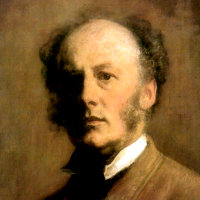
Millais was, with DG Rossetti and William Holman Hunt, one of the founders of the Pre-Raphaelite Brotherhood in 1848. At first noted for his highly realistic treatment of religious and literary subjects, he later adopted a more sentimental style, with which he was hugely successful. 1, 7.
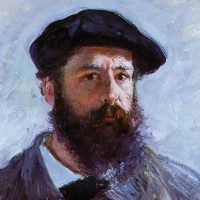
The central figure in Impressionism (it was his Impression: Sunrise of 1872 that gave the movement its name), he intensified its focus more than any other artist, continuing well into the next century to produce series of paintings showing minute variations in the light and color in basically the same scene. Cézanne famously said of him, "Monet is nothing but an eye—but my God, what an eye!" 3.

The towering genius of the first half of the 17th century, and a founding father of opera. Unfortunately, only three of his dozen operas survive: La favola di Orfeo (The Story of Orpheus), written for Mantua in 1607 and the earliest opera to remain in the general repertoire, and The Return of Ulysses and The Coronation of Poppea, both written for Venice at the end of his life. 4.

A child prodigy as both performer and composer, Mozart produced an extraordinary body of work in all genres over a relatively short life. He wrote the greatest of his many operas after moving to Vienna: three collaborations with Lorenzo da Ponte—The Marriage of Figaro (1786), Don Giovanni (1787), and Così fan tutte (1790)—framed by two German Singspiels: The Abduction from the Seraglio (1782) and The Magic Flute (1791). 3.

Born in South Korea, Newbold was adopted and raised by a family in Frederick, Maryland. She became proficient in both piano and violin as a child, and performed with orchestras up and down the country. After graduating from James Madison University, she got a job at Disney that eventually led to commissions for film scores in the epic genre. She has also worked as a conductor and director. 4.
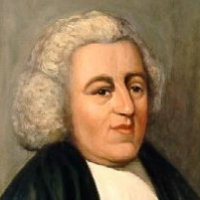
Author of the hymn "Amazing Grace," Newton was originally a man of no great religious faith. After serving with the Royal Navy, he became a captain and then owner of a fleet of slave ships. When wrecked off the coast of Ireland, his desperate prayer was answered, and he began a spiritual change, devoting himself to God, giving up the slave trade, and studying for the priesthood. 7.
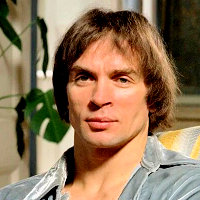
Nureyev's musicality, physique, and technical wizardry made him a star of he Kirov Ballet before he was 20. He defected on a Kirov tour to Paris in 1861, and soon after joined the Royal Ballet in London. His presence had an extraordinary cataytic effect on the company, especially its prima balerina Margot Fonteyn, making their partnership world famous. In his last decade, before dying of AIDS, he was Director of the Paris Opera Ballet, creating some new works and resurrecting many others. 5.
GO TO: [A–C] [D–F] [G–K] [L–N] [O–R] [S–U] [V–Z]
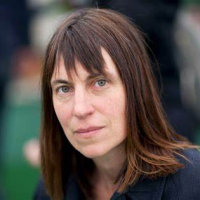
Alice Oswald studied Classics at Oxford, and later became a professional gardener; she is currently Oxford Professor of Poetry, arguably the highest honor for a British poet. Although she has published nine collections and won numerous prizes, her most famous work is Memorial (2011), subtitled "an excavation of the Iliad." 4.
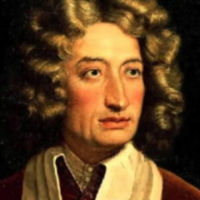
An organist as well as a composer, Pachelbel was influential in setting standards for German sacred music in the era before Bach. His output was prolific, but he is best known today for a secular work, his Canon and Gigue in D for three violins and continuo. 2.
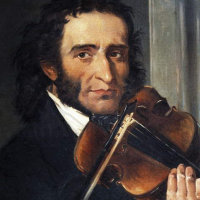
A virtuoso in the manner of a modern rock star, Paganini drew huge audiences wherever he played. Such was his virtuosity that he was rumored to be in league with the Devil. But there was nothing meretricious about his technique, which expanded greatly upon traditional practice, nor in the many works he wrote to play himself and challenge others. 5.

Patmore is best known for his long poem The Angel in the House, in praise of his wife Emily, published serially between 1854 and 1862. Though decried today, it became immediately popular as an expression of the Victorian ideal of a perfect marriage. 7.
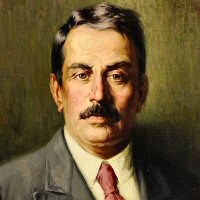
Puccini took up the mantle of Verdi as the dominant opera composer of the late 19th century, and developed an international popularity that is unrivaled to this day. His principal works include: Manon Lescaut (1893), La bohème (1896), Tosca (1900), Madama Butterfly (1904), and the unfinished Turandot (1926). 8.
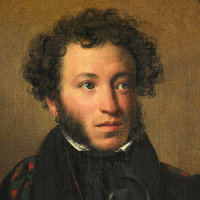
While in exile because of verses critical of the Tsar he wrote his most celebrated play Boris Godunov. His masterpiece is the novel in verse Eugene Onegin, serialized between 1825 and 1832. While his range is extraordinary and an inspiration to later Russian composers, he is celebrated as much for restoring the Russian language (as opposed to French) as the vehicle for artistic expression. 3.
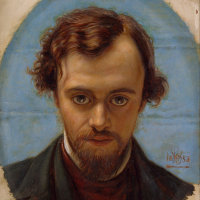
A member of an unusually talented and literary family (father a Dante scholar, sister Christina a poet), he hesitated before devoting himself to painting, but then in 1848 became the co-founder and virtual leader of the Pre-Raphaelite Brotherhood, which influenced the course of Victorian art for the rest of the century. Although he became mannered in later life, his earlier works have a remarkable freshness and sincerity. 7.
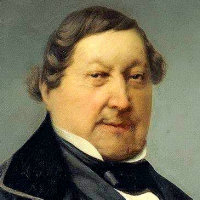
Rossini's fame rests on his 39 operas, especially the comedies, all written while he was still in his thirties. In 1829, fter writing Guillaume Tell, one of the foundation stones of French grand opéra, he essentially retired, settling in Paris, and writing only occasional pieces plus his masterpieces of sacred music, the Stabat Mater of 1842 and Petite Messe solennelle of 1864. 3, 5.
GO TO: [A–C] [D–F] [G–K] [L–N] [O–R] [S–U] [V–Z]
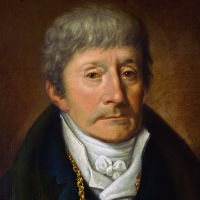
Though famous in legend as Mozart's nemesis in Vienna, Salieri was the more successful composer in his day, writing over twice as many operas, including Europa riconosciuta, about the later life of Ovid's heroine, which inaugurated the La Scala opera house in 1778. He also wrote operas in French for Paris, and a couple of comic operas for performance back home, plus an enormous amount of sacred music. He taught Beethoven, Schubert, Liszt, and Mozart's son. 3.
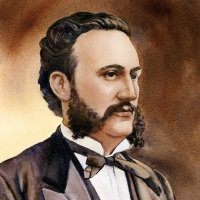
Although only an amateur, Sankey developed a reputation as a singer, choirmaster, and lay preacher, both at home in PA and in the Union army during the Civil War. Evangelist Dwight L. Moody recruited him as his colleague in 1870, and toured with him to Britain and across the USA. Sankey began to write his own gospel songs, which grew to a collection, Sacred Songs and Solos, eventually comprising 1,200 items. 7.
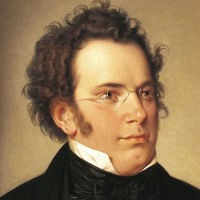
Although he died before his 32nd birthday, Schubert was extremely prolific as a composer, writing symphonies, masses, chamber music, piano sonatas, and over 600 songs, both individually and in cycles. Though little known in his lifetime outside his immediate circle, his work was rediscovered and championed by Mendelssohn, Liszt, and Brahms, making him in effect the source of the German Romantic movement. 3.
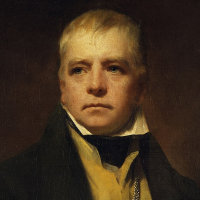
Scott's historical novels, all set in his native Scotland, spoke to the Romantic spirit and were immensely popular throughout Europe, inspiring many adaptations such as Rossini's Donna del lago and Donizetti's Lucia di Lammermoor. 3.
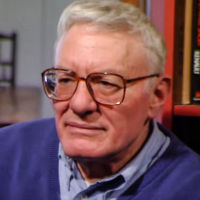
Sir Peter Shaffer's plays have been associated with the English National Theatre since its founding; they include The Royal Hunt of the Sun (1964), Black Comedy (1965), Equus (1973), and Amadeus (1979). He was the twin bother of mystery playwright Antony Shaffer, author of Sleuth (1970). 3.
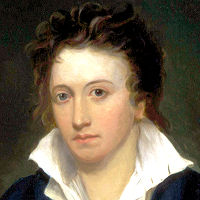
With his friend Byron, Shelley was the outstanding English Romantic poet of the generation after Wordsworth and Coleridge. Politically engaged, and intellectually acute, he was an avowed atheist, a stance that got him expelled from Oxford, and kept him out of England for much of his short career. He drowned in a boating accident off Livorno at the age of 29. His second wife, Mary Godwin Shelley, was the author of Frankenstein. 3.
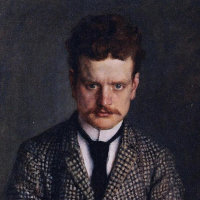
Sibelius "is widely regarded as his country's greatest composer, and his music is often credited with having helped Finland develop a national identity during its struggle for independence from Russia" [Wikipedia]. In addition to his seven symphonies, at least two of which have become repertoire standards, he wrote a number of tone poems based on Finnish history and myth, such as Finlandia, Tapiola, the Lemminkainen Legends, and the Karelia Suite. 4.
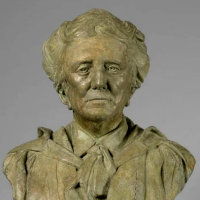
Dame Ethel Smyth was known as much for her political and feminist activism as for her music, which was strongly influenced by her training and early career in Germany. Her best-known opera, The Wreckers (1906) contains some excellent music. 1.
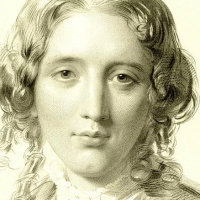
Living in Cincinnati, where he father was President of a theological seminary, Stowe became aware of slaves escaping by means of the Underground Railroad. Becoming passionate in the cause of Abolition, she published Uncle Tom's Cabin in 1852, a book whose immediate popularity energized the forces that ultimately led to Emancipation and the Civil War. 7.
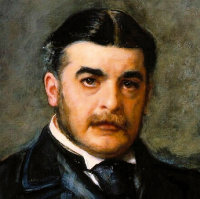
Sullivan essentially had two careers: as a classical composer of orchestra music and oratorios on suitably uplifting subjects, and as the musical partner to W. S. Gilbert on the highly successful series of Savoy Operas from HMS Pinafore (1878) to The Gondoliers (1889) and beyond. History only remembers him in the latter role. 4.

Known for his lyrical poems and his Arthurian epic Idylls of the King, Tennyson was appointed Poet Laureate to Queen Victoria in 1850 and held the position until his death. He adopted his characteristic tone of elegiac retrospection relatively early, and carried it through a long career that established him as the most resonant voice of the Victorian era. 4.
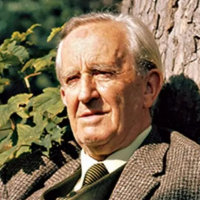
John Ronald Reuel Tolkien was Professor of Anglo-Saxon at Oxford and author of the influential fantasies The Hobbit (1939) and Lord of the Rings (completed 1955), which he said were informed in part by his study of Old English and partly by his experiences as a young officer in WW1. With CS Lewis and others, he formed the "Inklings," a discussion group of similarly-minded academics and writers that met in an Oxford pub 1930–50. 4.
GO TO: [A–C] [D–F] [G–K] [L–N] [O–R] [S–U] [V–Z]

The most celebrated and influential northern painter in the earlier 15th century, responsible for developing a style of oil painting capable of magnificent detail and effects of light. His major work, the altarpiece in Ghent Cathedral, is recorded to have been begun by his perhaps even greater brother Hubert. He was a renowned portraitist, including the enigmatic Arnolfini Marriage in London, and the supposed self-portrait seen here. 2.
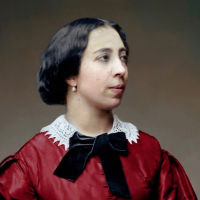
The daughter of opera singers, Pauline Garcia was one of the divas of the day. In this, she followed in the footsteps of her sister Maria Malibran, though speciaizing in more dramatic roles. Berlioz made his edition of Gluck's Orfeo ed Euridice for her, and Brahms wrote his Alto Rhapsody. She retired from the stage in 1863 and devoted herself to composing, writing five chamber operas and numerous songs. 5.
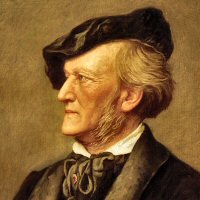
Wagner almost single-handedly transformed the nature not only of opera but also of harmony and orchestration. His 10 mature operas include Tristan und Isolde (1865), Die Meistersinger von Nürnberg (1868), and the vast tetralogy Der Ring des Nibelungen (completed 1876), for which he had a special theater built at Bayreuth. His final opera, Parsifal (1882), was written for exclusive performance at that theater. 4, 6.
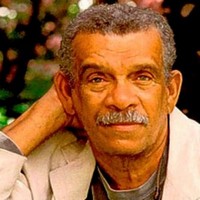
Winner of the 1992 Nobel prize in literature, Walcott was a world traveler who kept returning to his birthplace of Saint Lucia, infusing his work with Caribbean history, light, and color. His 1990 epic Omeros attempts nothing less than an overview of the African diaspora in the manner of Homer. 4.

Finding early success with The Death of Chatterton in 1856, he continued to paint oils in the Pre-Raphaelite vein. In later life, he became increasingly interested in watercolor painting. 3.
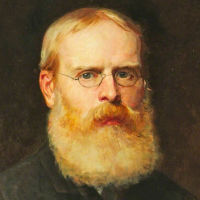
Born in Russia, the son of a British consul, Yeames studied in Dresden and Florence before settling in London, as one of a group of painters specializing in historical subjects. In Yeames' hands, this developed into the "problem picture," leaving the beholder to work out what is going on, his most famous example being And When Did You Last See Your Father? (1878), 7.