7. The Moral View.
Sometimes artists become popular because their art appeals to contemporary concerns; they then go out of fashion for
precisely the same reason. This class is about painters, writers, and hymnodists—all highly skilled in their own
right—who managed to speak to the mid-nineteenth-century appetite for moral exploration. Many of these well-known
figures have been forgotten, and if such names as John Everett Millais, William Holman Hunt, Cecil Frances Alexander,
and Harriet Beecher Stowe remain on the tongue, it is more as a matter of honor than active devotion.
Our first hour will consist entirely of Victorian British painting, from the Pre-Raphaelites onwards. Some of it is
explicitly Biblical, some addresses secular moral themes, and towards the end of the century some is simply designed
to keep the beholder guessing. For whatever reason, there was no close equivalent in America, but there was a strong
evangelical fervor and one enormous moral issue—slavery—that engaged artists of many kinds.
The script, videos, and images will be posted immediately after class.
SOMETHING TO DO
The picture above was painted in 1862 by Robert Braithwaite Martineau. We won’t be discussing it in class, but you may care
to spend some time with it now, if you aren’t familiar with the notion of “reading” a picture. So try the following, taking
the time to respond between each stage:
to open the above image at larger size in a separate tab, if you need to. What do you think is going on?
What do you imagine the title might be?
to reveal the title and some further suggestions to think about.
for a fuller explanation.
to open the above image at larger size in a separate tab, if you need to. What do you think is going on?
What do you imagine the title might be?
to reveal the title and some further suggestions to think about.
The picture was exhibited with the title The Last Day in the Old Home. Does this
alter how you feel about it? What does the setting and objects in it suggest about the reasons for that title?
Dividing the picture into three zones, left, center, and right, what can you say about the attitudes of the pair
of figures in each? Is this just a slice of life, or does the painting contain any kind of moral message?
for a fuller explanation.
to open the above image at larger size in a separate tab, if you need to. What do you think is going on?
What do you imagine the title might be?
to reveal the title and some further suggestions to think about.
The picture was exhibited with the title The Last Day in the Old Home. Does this
alter how you feel about it? What does the setting and objects in it suggest about the reasons for that title?
Dividing the picture into three zones, left, center, and right, what can you say about the attitudes of the pair
of figures in each? Is this just a slice of life, or does the painting contain any kind of moral message?
for a fuller explanation.
To answer the questions in reverse order, it would seem that the mother and child in the
center are also the moral center of the story. They seem to be genuinely distressed by the move, torn better the
pain of the upheaval and their ties of love or duty to the father figure at the right. But he seems impervious to
the disaster—easy come, easy go—one wonders what sort of moral lessons are being passed on to the son. The old lady
on the left is dealing with practical matters, paying off the butler, who is handing over the key. The room itself
suggests that this has been the family home for many generations. The booklet on the floor at the right is a
furniture auction catalogue, and the horse painting on its side at lower left suggests a possible reason for the
lack of funds; the husband’s inveterate gambling.
Every video shown in class is availble on YouTube at the links below; several items are longer than I could actually show. I
added three more of the excellent SmartHistory videos, some clips from a BBC series on the Pre-Raphaelites, and some extra
materials on the two novels. There are also two things on the hymn "Shall we gather at the river?" that I originally meant
to include but couldn't; it interested me as a sacred song that has virtually become secularized as an icon of American
culture. Added items are *asterisked.
The full Coventry Patmore poem, The Woodsman's Daughter, inspiration for the Millais painting, may be found
here.rb.
The thumbnails below cover the slides shown in class, though
there may be a few small discrepancies. Click the thumbnail to see a larger image. Click on the right
or left of the larger picture to go forward or back, or outside it to close.
ARTISTS
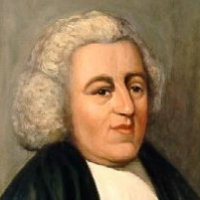
John Newton, 1725–1807. English cleric and writer.
Author of the hymn "Amazing Grace," Newton was originally a man of no great religious faith. After serving with the Royal Navy, he became a captain and then owner of a fleet of slave ships. When wrecked off the coast of Ireland, his desperate prayer was answered, and he began a spiritual change, devoting himself to God, giving up the slave trade, and studying for the priesthood.
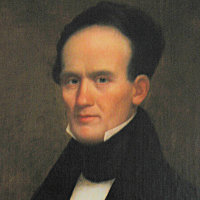
William Holmes McGuffey, 1800–73. American educator.
Growing up on the Ohio frontier, McGuffey began working as a teacher in his teens. Years later, when he was already a Professor of Ancient Languages at Miami University in Ohio, and an ordained Presbyterian minister, he was recommended by Harriet Beecher Stowe to write a series of school Readers for children. These are still used by homeschoolers today, largely on account of the strong moral lessons they teach along with basic literacy.
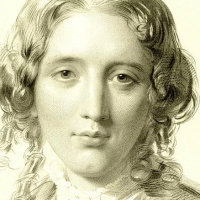
Harriet Beecher Stowe, 1811–96. American writer.
Living in Cincinnati, where he father was President of a theological seminary, Stowe became aware of slaves escaping by means of the Underground Railroad. Becoming passionate in the cause of Abolition, she published Uncle Tom's Cabin in 1852, a book whose immediate popularity energized the forces that ultimately led to Emancipation and the Civil War.
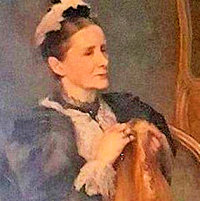
Cecil Frances Alexander, 1818–95. English poet.
Born of an English family in Dublin, she began writing religious poetry in her teens, and in time became celebrated for her hymns, including "All things bright and beautiful," "Once in royal David's city" and "There is a green hil far away." She married an Anglican clergyman who became Bishop of Londonderry and Archbishop of Armagh, both in Northern Ireland.
Charles Kingsley, 1819–75. British writer and reformer.
The son of a Church of England rector, Kingsley entered the church himself. He was appointed chaplain to Queen Victoria in 1859 and Professor of History at Cambridge in 1860. He was also a novelist, writing once-popular books like The Water Babies (1863), nominally for children but with a strong didactic function and passionate polemic against child labor and similar real-world issues.
Coventry Patmore, 1823–96. English poet and critic.
Patmore is best known for his long poem The Angel in the House, in praise of his wife Emily, published serially between 1854 and 1862. Though decried today, it became immediately popular as an expression of the Victorian ideal of a perfect marriage.
William Holman Hunt, 1827–1910. English painter.
One of the founders of the Pre-Raphaelite Brotherhood, his paintings were noted for their vivid color, precise detail, religious or moral subjects, and profuse symbolism. His The Light of the World became one of the most reproduced paintings in the late 19th and early 20th centuries.
Dante Gabriel Rossetti, 1828–82. English painter and poet.
A member of an unusually talented and literary family (father a Dante scholar, sister Christina a poet), he hesitated before devoting himself to painting, but then in 1848 became the co-founder and virtual leader of the Pre-Raphaelite Brotherhood, which influenced the course of Victorian art for the rest of the century. Although he became mannered in later life, his earlier works have a remarkable freshness and sincerity.
John Everett Millais, 1829–96. English painter.
Millais was, with DG Rossetti and William Holman Hunt, one of the founders of the Pre-Raphaelite Brotherhood in 1848. At first noted for his highly realistic treatment of religious and literary subjects, he later adopted a more sentimental style, with which he was hugely successful.
Philip Hermogenes Calderon, 1833–98. Franco-Spanish-English painter.
Calderon was an English painter of French birth (mother) and Spanish (father) ancestry who initially worked in the Pre-Raphaelite style before moving towards historical genre. He was Keeper of the Royal Academy in London. [Wikipedia]
William Frederick Yeames, 1835–1918. British painter.
Born in Russia, the son of a British consul, Yeames studied in Dresden and Florence before settling in London, as one of a group of painters specializing in historical subjects. In Yeames' hands, this developed into the "problem picture," leaving the beholder to work out what is going on, his most famous example being And When Did You Last See Your Father? (1878),
Ira Sankey, 1840–1908. American hymnodist.
Although only an amateur, Sankey developed a reputation as a singer, choirmaster, and lay preacher, both at home in PA and in the Union army during the Civil War. Evangelist Dwight L. Moody recruited him as his colleague in 1870, and toured with him to Britain and across the USA. Sankey began to write his own gospel songs, which grew to a collection, Sacred Songs and Solos, eventually comprising 1,200 items.
John Collier, 1850–1934. English painter.
Collier was a highly successful portraitist and painter of scenes from life, often with a "problem picture" element. He was connected through both his marriages to the family of Thomas Huxley, President of the Royal Society.