12. Beyond the Marquee
Among the most famous artists in America today are surely the singers of popular music, especially if they write their
own material, like Taylor Swift. Composers of Broadway megahits such as Andrew Lloyd Webber must come a close second.
Other Broadway writers such as Rodgers and Hammerstein and Stephen Sondheim earned less, but they may be even more beloved.
In the first hour, we look at the career trajectories of each of the composers or teams mentioned above, trying to work out
the reasons for their success and follow what they did after they reached their peak. The second hour has less of a continuous
narrative, but looks at six songs over the past 60 years of popular music, starting in the Vietnam War era and ending in the
present with Ms. Swift. Read the texts here.
The script, videos, and images will be posted immediately after class.
Q AND A
What is the meaning of the text of Hotel California?
The Wikipedia article contains a number of
theories about the meaning of the Eagles' song, and also a bit about how it came to be written. Apparently the music
was written first, by band member Don Felder, and the words were later added by fellow band members Glenn Frey
and Don Henley. While it is not unusual to have the music preceding the words in the pop world, it is rare to get a
text that works in such a surreal and enigmatic fashion; the nearest I can think of are Johhny Mercer's words to Henry
Mancini's tune for "Moon River."
What was Leonard Cohen's source for Anthem?
It was suggested that Cohen's words for "Anthem" came originally from Hebrew sources. I had assumed that these were Biblical,
but Google AI says that they derive from the 16th-century Kabbalah mystic Isaac Luria, of Safed in Israel, but also that Cohen
reversed Luria's ideas: "The core metaphor stems from the Lurianic concept of Shevira (the shattering of the vessels),
where divine light was too strong for the vessels (sefirot) intended to hold it, causing them to break. Cohen inverted
this, focusing on how the brokenness allows light to enter, rather than just representing a loss." I found two more articles
on it here and (for a more
theological take) here. But then Cohen started his career as a poet; a selection of his work can be found
here.
Was this the last you will see of me?
In person, I'm afraid so, yes; it is no longer safe for me to make the long drive (at least until some heart issues have been
attended to). But I do hope to maintain a presence on Zoom. Because of conflicts, Susan could only offer me 5 weeks in the fall:
Love Songs: Expressing Romance in Music, Verse, Drama, or Dance (Mondays from 10am to 12noon, 9/14-10/19). But I assume
there will be more later. As you probably realize, I don't claim to teach these subjects as an expert specialist, but rather
as an explorer, fascinated to trace the connections between diverse topics and media in the arts. And I have especially enjoyed the
opportunity to do so with a group of people like yourselves, willing to follow the thread wherever it leads. Thank you!
Roger.
VIDEO LINKS
Largely for lack of time to sort through everything, I include links only to the items I showed (or intended to
show) in class. But there a many other numbers on YouTube from most of the artists or shows, and in most cases alternative
versions of the same song.rb.
| |
|
|
|
|
|
| IMAGES |
The thumbnails below cover the slides shown in class, though
there may be a few small discrepancies.
Click the thumbnail to see a larger image.
Click on the right
or left of the larger picture to go forward or back, or outside it to close. |
 | |
 | |
 | |
 | |
 | |
 | |
 | |
 | |
 | |
 | |
 | |
 | |
 | |
 | |
 | |
Here are brief bios of the artists considered in the class, listed in order of birth.
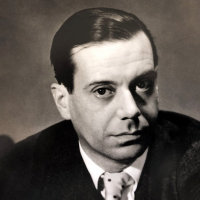 |
Cole Porter, 1891–1964. American songwriter.
Unlike many Broadway composers, Porter wrote not only the music but the lyrics for his songs, and these are notable for their wit, clever rhyming, and encyclopedic range of reference. In addition to numerous standalone songs that became standards, he also wrote musicals such as Anything Goes (1934), Kiss Me, Kate (1948), and Can-Can (1953).
|
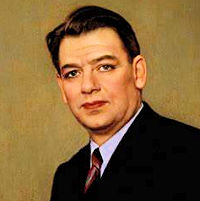 |
Oscar Hammerstein II, 1895–1960. American lyricist.
Oscar Hammerstein's father, a German immigrant, was manager of the Metropolitan Opera and active also on Broadway. His son quickly established a career as lyricist, working with Rudolf Friml, Sigmund Romberg, Jerome Kern (Show Boat, 1926), and a very long partnership with Richard Rodgers from Oklahoma! (1943) to The Sound of Music (1959).
|
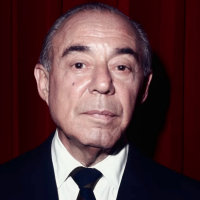 |
Richard Rodgers, 1902–79. American composer.
The composer of 43 Broadway shows, Rodgers virtually defined the American musical in the middle decades of the 20th century. His collaboration with Lorenz Hart produced witty works such as On Your oes (1936) and Pal Joey (1940), but his collaborations with Oscar Hammerstein II, beginning with Oklahoma! in 1943, brought a new kind of drama, developing a single narrative line and focusing more on character.
|
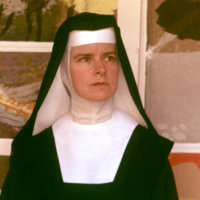 |
Corita Kent, 1918–86. American artist.
Born in Iowa, Frances Elizabeth Kent entered the Californian Sisters of the Immaculate Heart at age 18, and took the name Sister Mary Corita. The order was known for its liberalism and respect for creativity, and Sister Corita flourished, teaching herself silk-screen printing and eventually becoming head of the college art department. But her increasing social activism set her at odds with her Cardinal, and she left the order in 1968 to continue her work on the East Coast under the name Corita Kent.
|
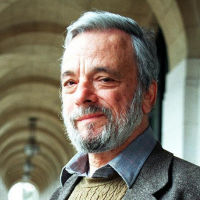 |
Stephen Sondheim, 1930–2021. American composer and lyricist.
A protégé of Oscar Hammerstein's, Sondheim made his Boadway debut in 1957 as lyricist for West Side Story and Gypsy, but he soon began his own string of musicals, writing the music as well as the words, including A Funny Thing Happened on the Way to the Forum (1962), A Little Night Music (1973), and Sweeney Todd (1979). Often dealing with non-traditional subjects, these and others largely redefined the Broadway musical in the later 20th century.
|
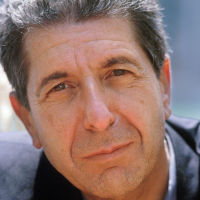 |
Leonard Cohen, 1934–2016. Canadian writer and singer.
Born in Montreal, Cohen at first pursued a career as a poet and novelist, and did not begin a musical career until he was 32. His songs, such as Anthem and Hallelujah often pursue religious or philosophical ideas, and his stage performances tended to avoid the flamboyance of his contemporaries.
|
 |
Joan Baez, 1941– . American singer.
Baez began her recording career in 1960 and found immediate success with a series of folk albums that gave voice to the counterculture protest movements of the period. She was an early intepreter (and partner) of Bob Dylan when he was writing in that style. Over a performing career lasting six decades, sh broadened her scope to include rock, gospel, and country music.
|
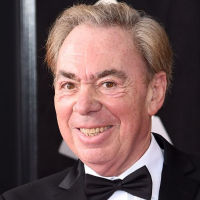 |
Andrew Lloyd Webber, 1948– . English composer.
Baron Lloyd-Webber is credited with reinvigorating the stage musical with a series of hits that include Jesus Christ Superstar (1970), Evita (1976), CATS (1981), and The Phantom of the Opera (1986). He has also written a certain amount of non-theatrical music, including an anthem for the coronation of King Charles III.
|
 |
Taylor Swift, 1989– . American singer-songwriter.
Swift's parents, businesspeople from Pennsylvania, named her after the singer-songwriter James Taylor. True to form, she began playing as a child, singing, and writing both lyrics and music soon after. She began recording in her mid-teens, originally as a country singer, and has made around a dozen records, almost all of which have reached the top of their respective charts. She was TIME Person of the Year in 2023 and the youngest-ever female inductee into the Songwriters' Hall of Fame in 2026. Her Eras Tour of 2023–24 was the highest-grossing concert tour of all time. For all her fame, her strength lies in the emotional honesty of her songs, which have earned her a huge fanbase worldwide.
|


