| Handout Class Script | Return to Index |
Q AND A
Were any special instruments required in early opera?
The modern orchestra was pretty much in place by the earlier 18th century, albeit using natural gut on the string instruments and
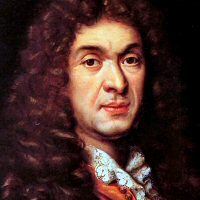
fewer or no keys on the winds. But the 17th century used many different ones. Look at the players in the background of the image
from the Lully below: the plucked instrument is a lute; the man in the background is holding a wooden flute (or maye an oboe)
without keys; and the woman has a recorder.

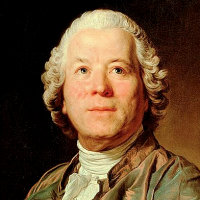
What voice type did Gluck write Orfeo for?
A castrato—a choirboy surgically altered before puberty to preserve the purity of his unbroken voice, but ally it with the stamina
and lung power of a grown man. Most often, this procedure resulted only in mediocrity (and infertility), but the few successful castrati
were the superstars of their day and fabulously wealthy. Orpheus is most commonly sung today by countertenors (normal men who have developed
the power and flexibility of their falsetto voices), but also occasionally by tenors and even baritones. However, the more usual solution from
about 1840 to 1970 was to give the role to a female alto en travesti (in male costume). I made this little video illustrating the various solutions to Orfeo; there is also an excellent explanation
of the countertenor voice here. We will encounter the question again in two weeks’
time with Handel, all of whose operas required castrato stars (and often castrato supporting roles as well).
What was the difference between Villégier’s and Havelka’s use of the Baroque stage?
The main difference is that Havelka used a baroque theater and Villégier didn’t. Atys was originally produced in a grand hall of the
palace, and Villégier, whose production concept probably started with the costumes and choreography, aims for total immersion in the court world,
but an entire avoidance of special effects. Havelka, on the other hand, delights in the baroque theater as box of tricks, much as though playing
with a toy stage. Everything in his film emphasizes the artificiality of the stage, right down to the pasted-on smiles of the singers and dancers.
As to his reason for doing this, see the next question.
Why did Havelka end his film as he did?
Frankly, I don’t really know, but I am pretty sure it has to do with the artificiality I mentioned earlier. It seems obvious that this Orpheus
was not a regular character in the pretty opera production. He was costumed differently; he wandered the theater spaces freely and was not confined
to the stage; he both began and ended outside the action. But who was he? The modern American singer, or the timeless avatar of loss whose meaning
cannot be reduced to such a simplistic stage fiction? More the second than the first, I think. I can even see him as a poet, writing the opera to
make sense of some grief of his own, but ultimately rejecting it as inadequate. One of the class members suggested that he had not yet completed
the time that grieving requires—the opera was merely a quick fix—and this makes much sense to me.
On a different tack, I was also struck by the long pause before he embraces Euridice and the music of the finale begins. There is something very
like it just before the end of The Marriage of Figaro, as we shall hear next month. Love is a hostage to fortune; it makes you vulnerable.
Once hurt, you come to wonder if you can risk it all again. Mostly, we do, but there may come a time when it is no longer worth it. Speaking for
myself, I found that pause between one page and the next far more pregnant than anything Havelka did after he music was over.
VIDEO LINKS
Both videos shown in class are available complete, but neither has English titles. I would recommend looking at the trailer for Atys, as it both captures the flavor of the production and shows scenes we did not see in class. Only the aria from the Cesky Krumlov production of Orfeo ed Euridice is available with titles.
On the other hand, since this is a course on Opera Production, I include a large selection of alternative Orfeo productions;
I suggest you scroll through and sample a few minutes of each, somewhere in the middle at random. Unless otherwise noted, you can
assume they use the Vienna version of the score (the one we watched), have a countertenor hero, and no English titles. They
are in chronological order; here are a few notes on each:
- London 1991. Orfeo as rock musician, against dark but fascinating photo projections
- Paris 2000. Almost abstract Robert Wilson production, with female Orfeo.
- Munich 2003. Berlioz edition; female Orfeo. Very strange production, with comic elements.
- Wuppertal 2008. Pina Bausch ballet, with opera on sound-track only. A classic for a reason.
- Paris 2018. Robert Carsen production: minimalist, modern-dress, always effective.
- La Scala 2018. Paris version, with tenor hero. Interesting use of changing stage levels.
- Parma 2026. Dark production by Shirin Neshat, using contemporary imagery in an always-evocative way. English titles.
| ATYS | |||
| Full production |
Complete through Act III Acts IV and V — Prologue (cued to start in class) — Sommeil (cued to start in class) |
||
| Related clips |
Trailer Full sommeil scene Christie interview (largely about funding; English titles) |
||
| ORFEO ED EURIDICE | |||
| Cesky Krumlov film |
Complete — aria only (with titles) |
||
| OTHER ORFEOS | |||
| London 1991 |
Complete Act I only (with titles) |
||
| Paris 2000 | Complete (Wilson production; female Orfeo) | ||
| Munich 2003 | Complete (Berlioz edition, female Orfeo) | ||
| Wuppertal 2008 |
Part 1
(ballet by Pina Bausch) Part 2 |
||
| Paris 2018 | Complete | ||
| La Scala 2018 | Complete (Paris version; tenor hero) | ||
| Parma 2026 | Complete (with titles) | ||
| IMAGES | |||||
| The thumbnails below cover the slides shown in class, though
there may be a few small discrepancies. Click the thumbnail to see a larger image. Click on the right or left of the larger picture to go forward or back, or outside it to close. |
|||||
 |  |  | |||
 |  |  | |||
 |  |  | |||
 |  |  | |||
 |  |  | |||
 |  |  | |||