GO TO: [A–C] [D–F] [G–K] [L–N] [O–R] [S–U] [V–Z]

Born in Germany, Adler was brought to the US at age 10 by his widowed father, a rabbi. After service as an engineer in the Civil War, he went into private practice as an architect. His greatest renown comes from his partnership with Louis Sullivan on a number of pioneering skyscraper buildings, including the Wainwright Building in St. Louis (1891), the Chicago Stock Exchange Building (1894), and the Guaranty Building in Buffalo (1896). 1.

He is first recorded as a painter in 1417, and by 1423 had joined the Dominican Order in Fiesole, where he remained all his life, becoming prior in 1450. Although not an innovator like Masaccio, he is noted for the purity of his style, which set the tone for Florentine art of the mid-quattrocento (1400s). He took the name Fra Giovanni, but it is as Fra Angelico (Angelic Brother), and later Beato Angelico, that he is recorded. 3.
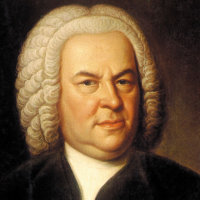
The towering genius of German music in the earlier 18th century, Bach was most famous in his time as an organist and choirmaster, most notably at the Thomaskirche in Leipzig. His work includes two Passions, numerous cantatas, and keyboard and orchestral works that codify and extend the possibilities of counterpoint in his time. 7.
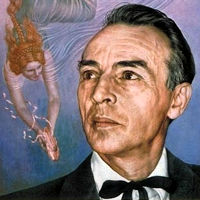
After work with Diaghilev's Ballets Russes, including the pioneering neo-classical Apollon musagète (1928, with Stravinsky) and The Prodigal Son (1929, with Prokofiev), he moved to America, where he eventually co-founded the New York City Ballet, remaining its artistic director for 35 years. One of the most influential choreographers of the century, he is especially noted for his abstract works with minimal decor but the greatest musicality. 6.
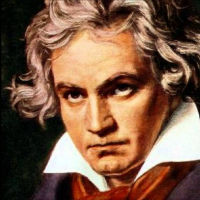
The dominant composer of his time, Beethoven wrote 9 symphonies, 16 string quartets, 32 piano sonatas, and one opera, Fidelio, which he labored on in several versions between 1805 and 1814. From about 1800 onwards, increasing deafness gradually put an end to his performing career, although he wrote some of his finest works when totally deaf. He is one of the first composers to exhibit a distinct late style. 6.

One of a family of artists, he more than anyone was responsible for developing the characteristic Venetian style of painting in layers of oils, no doubt learned from the Flemish masters. This gives his pictures their extraordinary light, whether portraits or religious subjects. 4.
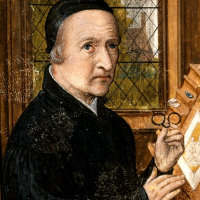
Working in Bruges, he represents the very end of the Northern European tradition of illustrating religious texts such as Books of Hours with detailed reference to the lives of ordinary people of the time. 2.
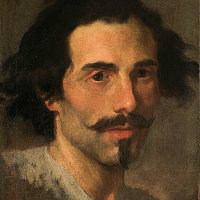
He is to the Italian Baroque what Michelangelo was to the Renaissance, the supreme master of many arts. The sense of movement and drama in his sculpture carries through into his architecture and even his town planning, such as the piazza before St. Peter's. 5.
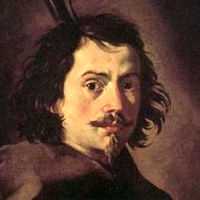
Born Francesco Castelli in Italian Switzerland, he began to use his mother's family name when he came to Rome and emerged as the chief architectural rival to Gianlorenzo Bernini. Compared to him, though, he was a more temperamental personality, which may be reflected in the strikingly original distortions of classical motifs in many of his designs. 5.
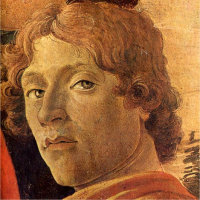
Botticelli's work was neglected for centuries, but he is now acknowledged as the leading Florentine painter of the later quattrocento. Although he produced numerous religious paintings, he is best known for two large mythological works: Primavera (c.1480) and The Birth of Venus (c.1485). 3.

Elizabeth Barrett had established herself as a poet well before she met Robert Browning, whom she eventually married at the age of 40, and was disinherited by her father for doing so. Her sequence of love-letters to Browning, Sonnets from the Portuguese (1850) have been widely influential. 3.
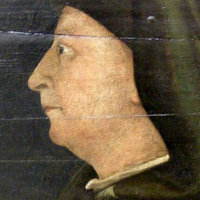
One of the founding fathers of the Renaissance, he came to prominence as a sculptor in the competition for the Florence Baptistery doors, eventually won by Ghiberti. But it was as an architect that he made his biggest impression on the city, with the churches of San Lorenzo and Santo Spirito, and his crowning achievement, the dome of Florence Cathedral. 3.

Raised in Chicago, Burnham tried several occupations before setting up as an architect with John Root in 1871. They were responsible for the first multi-storey steel-frame buildings, popularly known as skyscrapers. The firm was charged with design of the site of the 1893 World's Columbian Exhibition in Chicago; Root died, but Burnham showed his organizational skills by recruiting other architects from all over the county and bringing the project—known as The White City—in on time. 1.
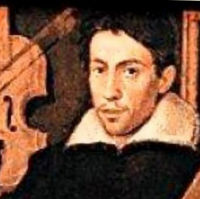
Born and trained in Rome, Caccini was brought to Florence by Francesco de' Medici, as singer, choirmaster, and composer. He was one of the members of the Camerata gathered around Count Bardi, and as such was influential in the creation of opera and development of the new seconda prattica style. 3.
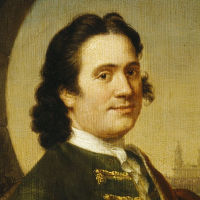
Giovanni Antonio Canal was the son of a painter, so his nickname "Canaletto" means simply "Canal Jr." It has nothing to do with the literal canals of Venice, although these figure prominently in his numerous Vedute or views of the city. These sold extremely well to foreign visitors, especially those from Britain. As a result of these connections, Canaletto lived in England from 1746 to 1755, painting similar views in London and elsewhere. 4.

Born, trained, and working in Venice his whole life, Carpaccio remains one of the most Venetian of painters, especially in urban scenes that provide a detailed image of the city in his time. He is rather conservative, however, and never attempted the sensuous beauty of late Bellini or early Titian. [The portrait is by him, but almost certainly not of him.] 4.

The leading opera composer after Monteverdi, his works dominated the Venetian stage in the mid 1600s, and frequently addressed mythological subjects, such as his La Calisto (1651). 4.

Born in Florence, Cellini showed early promise as a musician, but was apprenticed by his father to a goldsmith. He eventually became the most celebrated goldsmith of his age, but worked on the large scale also, as in the Perseus in Florence. His frank and racy Autobiography (1563), which chronicles a highly eventful life, was hailed by a contemporary as "the most delightful ever written." 3.

Born in Wahington DC, the daughter of a Washington Post photographer, Chevalier moved to England after her graduation from Oberlin. She is the author of 11 novels, mostly involving real people in historical contexts. The most famous of these is Girl with a Pearl Earring (1999), which imagines the real life of the young woman depicted in Vermeer's painting of that name. 7.

Whether or not he actually studied with Jan van Eyck, he became one of his most distinguished followers, and the leading painter in Bruges after his death. The portrait is by him, but almost certainly not of him. 2.
GO TO: [A–C] [D–F] [G–K] [L–N] [O–R] [S–U] [V–Z]
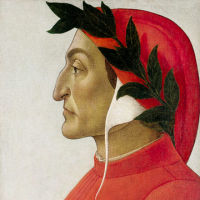
Dante is so highly regarded as the author of the Divina Commedia and founder of Italian poetry, that any capsule biography here would be superfluous. There are at least five operas based on his work: Puccini's Gianni Schicchi, plus versions of Francesca di Rimini by Mercadante, Rachmaninoff, Ambroise Thomas, and Zandonai. The portrait by Botticelli is posthumous. 3.
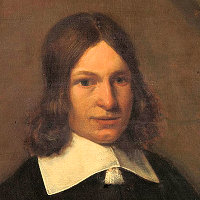
His best paintings date from his years in Delft (1655–61), and show scenes of urban life in the sunlit rooms and inner courtyards of Dutch houses, in a manner not too dissimilar from Vermeer. Later in Amsterdam, his quality took second place to quantity. He died in a madhouse. 7.
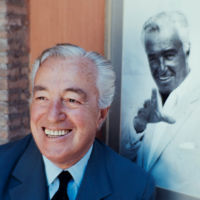
De Sica began his career as an actor, appearing all over Italy and co-founding his own company in 1933. He was already working in film in the summer months, and in the turbulent years after the War emerged as one of the leaders of the Neo-Realist movement. A 1952 poll in Sight and Sound ranked his Bicycle Thieves (1948) as the greatest film ever made. Both this and The Garden of the Finzi-Continis (1970) won Academy Awards. 5.

De Witte's architectural paintings are similar to those of Pieter Saenredam, though more concerned with atmosphere than architectural detail. His tumultuous personal life saw the arrest and banishment of his wife and daughter for theft, and his own bankruptcy. 7.
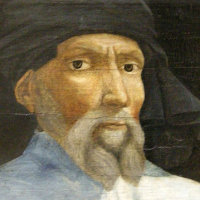
The outstanding sculptor of his day, Donatello ranks with Brunelleschi in architecture and Masaccio in painting as a standard-bearer of the Renaissance. He studied under Ghiberti, but soon struck out on his own, producing an immense variety of work over a long career, showing technical daring, psychological insight, and a characteristic grace. 3.
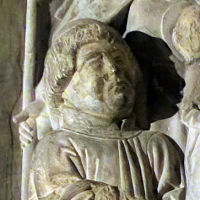
Dufay (also spelled Du Fay and other variants) was born near Brussels. Writing in most genres and traveling widely, he was regarded as the leading composer of his time, composing for example a motet for the dedication of Brunelleschi's dome of Florence Cathedral. [The portait comes from his tomb.] 2, 3.
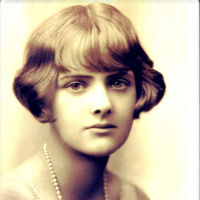
The daughter of a prominent actor-manager, and granddaughter of a Punch cartoonist, du Maurier had early access to people who were useful in her career. Her 1939 novel Rebecca was her most successful work, forming the basis for the iconic film by Alfred Hitchcock (who also adapted her later story The Birds ). She lived in relative seculsion in a house in Cornwall, very similar to Manderley in that novel. Although she never used the titles, she became Dame Daphne in her own right and Lady Browning through her marriage to WW2 general Frederick "Boy" Browning. 4.

Edison is one of those prolific figures whose creations penerated society fo deeply that even the longest biography will seem too short. He was born in Ohio, grew up in Michigan, and settled in New Jersey, where he built the first research laboratory at Menlo Park. His 1,093 US patents include work in telegraphy, electric power generation. sound recording, and motion pictures. 1.
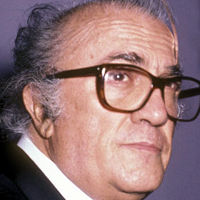
After a brief stint as a law student to please his parents, Fellini broke out as a cartoonist, writer, and later filmmaker. Beginning in the neo-realist style with works like La strada (1954), he gradually moved towards the more fantastic treatment that defined his style, in films like La dolce vita (1960), 8½ (1963), and Amarcord (1973). He is commonly listed among the greatest directors ever. 5.
GO TO: [A–C] [D–F] [G–K] [L–N] [O–R] [S–U] [V–Z]
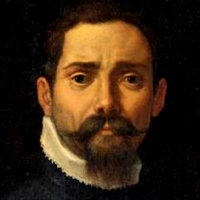
Third in a line of succession to Adrien Willaert and his uncle Andrea Gabrieli as organist of Saint Mark's in Venice, he is famous for the spatial effect of his polychoral compositions, using mixed groups of instruments and voices calling to one another antiphonally between the various balconies of the church. 4.
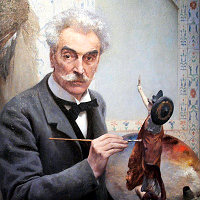
A leading academic painter of the mid-century, his works have been described by one critic (Lorenz Eitner) as "carefully plotted picture-plays, graced with sex, spiced with gore, and polished into waxwork lifelikeness by a technique that his admirers took for realism." He was much favored by American buyers including William Walters for his collection in Baltimore. 5.
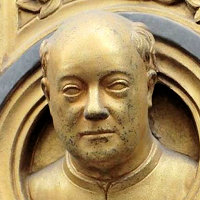
He came to prominence in 1401, defeating Brunelleschi for the design of doors for the Florence Baptistery. He followed these up in 1437 with the design of an even grander set of doors, dubbed by Michelangelo the "Gates of Paradise." 3.
Very little is known of his life, other than that he was born in Flanders and served in the court of Charles the Bold. On the other hand, his secular Chansons such as "Allez regets" were so well known that they were transcribed (and later reprinted) several dozen times. The portrait is a roughly contemporary placeholder only. 2.
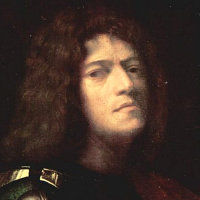
Almost nothing is known of his life, and the catalogue of his undisputed works is very small, his fame and influence are quite disproportionate to the size of his output. He was an exquisite colorist, the first to specialize in cabinet paintings for private patrons rather than religious commissions, and the first painter to subordinate subject matter to the evocation of mood. 4.

The outstanding artist of his era, Giotto, much like his contemporary Dante, blazed the path on which art would travel over the succeeding centuries (although it was over 100 years before he had any real followers). He is known especially for his fresco cycles in Florence, Padua, and Assisi. The portrait is speculative. 3.

Although Goldoni was trained as a lawyer, his chief interest was the stage, and he led a long life both managing theaters and writing for them. Comedies like The Servant of Two Masters (1745) quickly became classics, uniting the Italian traditions of commedia dell'arte with a well-constructed plot, and written (as opposed to improvised) dialog that often includes Venetian dialect. He also wrote tragedies and libretti for composers like Galuppi, Haydn, and even Mozart, but it is for his spoken comedies that he is best remembered. 4.
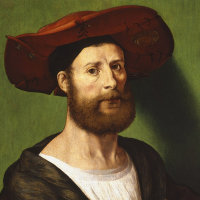
Gossaert, also known as "Mabuse," visited Italy in 1508–9, and thereafter combined Italianate subjects (including those from classical myth) with a Netherlandish precision of detail. 2.
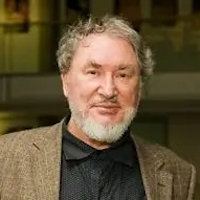
Heinz Karl Gruber, who works only under his initials, is a double-bassist, conductor, and chansonnier as well as a composer. Highly eclectic, one ciric (Paul Driver) has called him "a sentient (and downright accomplished) composer who keeps responding to whatever musical stimulus, be it highbrow or lowbrow, 12-tone or 7-tone, bitter or sweet, that comes his way." He came to the fore in 1978 with Frankenstein!!, a 'pan-demonium' for chansonnier and orchestra. 6.
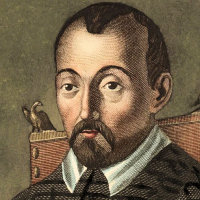
"No poet played a larger role in the flowering of the madrigal in the late Renaissance and early Baroque eras than Guarini. His poems were set more often by madrigal composers than the work of any other." [Wikipedia] 4.
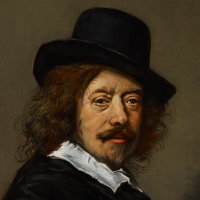
Though born in Antwerp, he moved to Haarlem with his parents and spent the rest of his life there. 24 years older than Rembrandt, he was the first great master of the Dutch Golden Age and its leading portraitist. His style is remarkable for the effects he could achieve from a few swift touches of paint. 7.
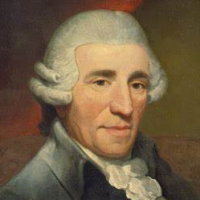
With Mozart, Haydn was the leading musical genius of the late 18th century. Equally prolific, but far longer lived, he wrote 104 symphonies, 68 string quartets, 16 operas, and 14 masses, together with the two great oratorios, The Creation and The Seasons. 7.

Born in Haarlem, Helst moved on the occasion of his marriage to Amsterdam , where he may have studied with Pickenoy. He was able to cultivate a wealthy group of patrons, who commissioned several guild portraits as well as individual works. He is also known for genre subjects. 7.
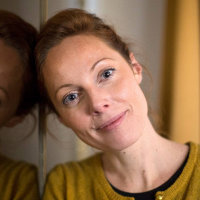
Barbora Horáková Joly studied voice in Switzerland and was set on a career as an opera singer before switching to stage direction. Her 2021 staging of Haydn's Missa in Tempore Belli in Amsterdam has led to other invitations (with more standard repertoire) from companies in Germany, Holland, and Geat Britain. 7.
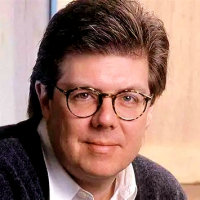
Born in Michigan, Hughes moved with his family to Chicago in his early teens. Many of the films that he both wrote and directed are set in Chicago and reflect the adolescent experience. They include Ferris Bueller's Day Off (1986) and Home Alone (1990). 1.
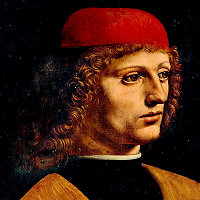
Josquin is considered one of the leading composers in the High Renaissance, and not just in the Franco-Flemish school. Almost all his works are vocal, mostly sacred. He is credited with breaking away from the tradition of long melismatic lines, writing instead in short imitative phrases that are closely expressive of the text. [This portrait of a musician by Leonardo da Vinci has not definitely been identified as Josquin, although both were in Milan at the same time.] 2.
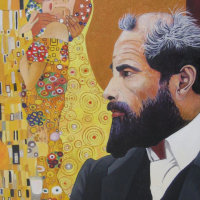
Klimt was the foremost painter of the Vienna Seccession at the turn of the century. He specialized in female subjects, some taken from myth, painted in a highly-patterned Symbolist style, erotic and richly colored, often with the addition of gold leaf. His Danaë of 1907 is a prime example. 6.

Korngold was born in Brno, then a German enclave. He showed great promise as a child pianist and soon also a composer, absorbing the richness of late Romanticism which was then at his height. He reached the height of his fame in the 1920s, when opera houses fought to premiere his opera Die tote Stadt. Invited to Hollywood in 1934 by Max Reinhardt he both escaped the Nazis (he was a Jew) and began a new career as a film composer, finding that his style worked perfectly for the swashbuckling romances then in fashion. 2.
GO TO: [A–C] [D–F] [G–K] [L–N] [O–R] [S–U] [V–Z]
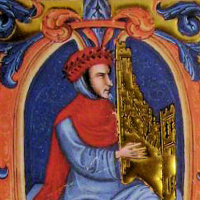
The leading Italian composer of the later 14th century, he was organist at various Florentine churches, and most probably a close friend of the poet Petrarch. Many of his secular songs have survived, but none of his sacred music. 3.

Born in Paris, L'Enfant was recruited by the French playwright Beaumarchais to serve in the American Continental Army, where he became military engineer to George Washington, who later commissioned him to draw up plans for the new capital city bearing his name. Although he did not personally supervise most details of its execution, his plan is very largely still in place today. 1.
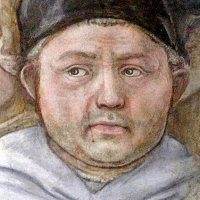
A reluctant friar, Lippi was released from his vows after an affair with a nun (that produced their painter son Filippino), but continued to sign himself "Brother Lippi." His exquisite drawing, pale color harmonies, and formal innovations set the standard for mid-quattrocento Florentine painting, as seen for example in the work of Botticelli and his son. 3.
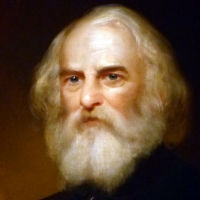
Longfellow was born in Maine, and taught at Bowdoin College and later at Harvard. His American themes and stirring diction made him the most popular poet of his day and earned him a reputation abroad. His Song of Hiawatha (1855) and similar poems employed the form of the Finnish Kalevala to create a similar Native American myth. 2, 3.

Born in Wisconsin, Losey studied in Germany with Bertolt Brecht. Blacklisted by Hollywood in the 1950s, he moved to England, and made the rest of his films there, including three with screenplays by Harold Pinter: The Servant (1963), Accident (1967), and The Go-Between (1971). He also directed in the theater and opera house, the latter following his success filming Mozart's Don Giovanni in 1979. 4.

Born in Belfast, Laverty moved to Scotland in 1975 to escape the violence. He is the author of five novels, mainly about faith, love, and identity, His novels Lamb (1980/85), Cal (1983/84), and Midwinter Break (2018/26) were filmed. 7.
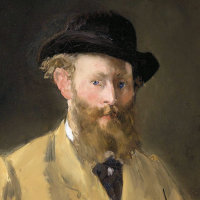
Manet is arguably the greatest French painter in the third quarter of the 19th century. Though primarily a realist, he was influenced by older artists such as Titian and Velasquez. He was admired by the young Impressionists, became friends with Monet, and produced a number of works in their style, but he never exhibited with them, preferring to retain his own status in the official Salons. 4.

Winner of the 1929 Nobel prize in literature, Mann's best-known works date from before he fled from Germany in 1933: these include the novels Budenbrooks and The Magic Mountain and the novella Death in Venice. Eventually settling in America, he continued to write until his death. 4.

Sir Steve Rodney McQueen is a British director of films tackling challenging subjects, such as sex-addiction in Shame (2011), slavery in the Oscar-winning 12 Years a Slave (2013), and the Nazi invasion of Holland in the 4-hour documentary Occupied City (2023), 7.
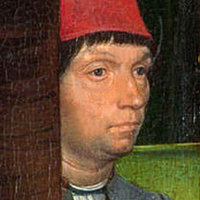
Based in Bruges, and probably a pupil of Rogier van der Weyden, he developed a sweeter more balanced version of his style which brought him great success. Also spelled "Memlinc." 2.
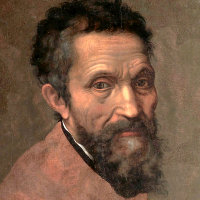
A towering universal genius, his work virtually defines the Italian High Renaissance. He made his name primarily as a sculptor in his native Florence, though he worked elsewhere as well. His most famous works, however, are in Rome: the ceiling of the Sistine Chapel (1508–12) and his work from 1546 as leading architect of the Basilica of St. Peters, one of a succession of masters who brought the building to its present form. 2, 3, 5.
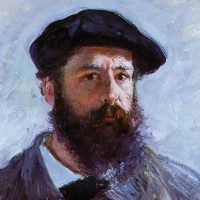
The central figure in Impressionism (it was his Impression: Sunrise of 1872 that gave the movement its name), he intensified its focus more than any other artist, continuing well into the next century to produce series of paintings showing minute variations in the light and color in basically the same scene. Cézanne famously said of him, "Monet is nothing but an eye—but my God, what an eye!" 4.

The towering genius of the first half of the 17th century, and a founding father of opera. Unfortunately, only three of his dozen operas survive: La favola di Orfeo (The Story of Orpheus), written for Mantua in 1607 and the earliest opera to remain in the general repertoire, and The Return of Ulysses and The Coronation of Poppea, both written for Venice at the end of his life. 4.

A child prodigy as both performer and composer, Mozart produced an extraordinary body of work in all genres over a relatively short life. He wrote the greatest of his many operas after moving to Vienna: three collaborations with Lorenzo da Ponte—The Marriage of Figaro (1786), Don Giovanni (1787), and Così fan tutte (1790)—framed by two German Singspiels: The Abduction from the Seraglio (1782) and The Magic Flute (1791). 4, 6.
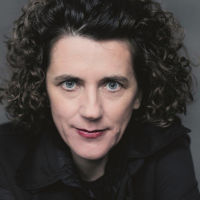
Born in Graz, Neuwirth is the daughter of a pianist and sister of a sculptor. She has pursued both music and visual art herself, studying first in San Francisco and later in Vienna, where she is now a professor. In addition to instrumental music, she has written eight stage works, including Lost Highway (2003), after the film by David Lynch, three collaborations with Nobel prizewinner Elfriede Jelinek, and Orlando (2019), based on Virginia Woolf. The latter was the first opera ever commissioned by the Vienna Staatsoper from a female composer. Like most of her work, it also explores social activist themes. 6.
GO TO: [A–C] [D–F] [G–K] [L–N] [O–R] [S–U] [V–Z]
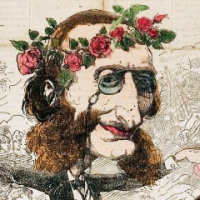
The son of a cantor, Offenbach took the name of the German town near Cologne in which he was born. After studying briefly at the Paris Conservatoire and establishing a career as cello soloist and conductor, he began to write operettas, composing over 90 in the course of a long and wildly successful career. He is also known for his unfinished grand opera The Tales of Hoffmann. 4.

Born in China, IM Pei studied at MIT and then Harvard, with Marcel Breuer and Walter Gropius. He established his own design NYC firm in 1955. His notable buildings include the John F. Kennedy Library in Boston (1977), the East Wing of the National Gallery in Washington (1978), and the pyramids and associated structures at the Louvre in Paris (1988). 1.
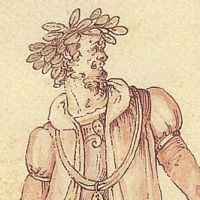
Peri was a leading member of the Florentine Camerata in the late 16th century. His Dafne (1597, now lost) is regarded as the first opera. The picture shows him in the role of Arion. 3.

Pickenoy is best known for his group potraits, a lucrative subject in Holland at that time, though he also painted individual figures. For a while, he had the next-door house to Rembrandt's in Amsterdam. 7.
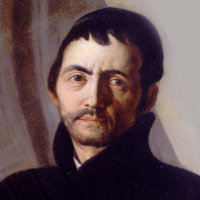
A Jesuit lay brother, he is most famous for his masterpiece, the ceiling fresco in Sant'Ignazio in Rome, perhaps the most stupendous feat of illusionistic painting ever accomplished. He also worked in several other cities, including Vienna, and published a treatise on architectural painting which was widely influential. 5.

Trained in London, Price has made a fairly recent reputation for his over-life-size sculptures of ordinary black women, placed in environments in ways that provoke throught about the activities or other art nearby. 3.
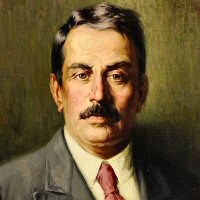
Puccini took up the mantle of Verdi as the dominant opera composer of the late 19th century, and developed an international popularity that is unrivaled to this day. His principal works include: Manon Lescaut (1893), La bohème (1896), Tosca (1900), Madama Butterfly (1904), and the unfinished Turandot (1926). 3, 5.

The greatest artist of the Dutch Golden Age, he nonetheless retained his own style which set him apart from his contemporaries. There is a strong baroque influence earlier in his career, but his later work developed a quality of deep introspection in which the subject seems to glow within rich layers of paint. 7.
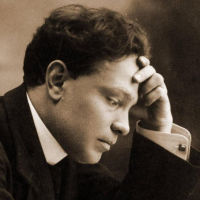
Wikipedia writes: "His compositions range over operas, ballets, orchestral suites, choral songs, chamber music, and transcriptions of Italian compositions of the 16th–18th centuries, but his best known and most performed works are his three orchestral tone poems which brought him international fame: Fountains of Rome (1916), Pines of Rome (1924), and Roman Festivals (1928)." 5.

Roeg (pronounced "Rohg") worked his way up in the film industry from clapper-boy to cameraman, and thence to director. His films such as Walkabout (1971) and Don't Look Now (1973) are noted for their radical intercutting of disparate scenes and non-linear narrative, making him an icon with film critics, though not always a success with the public. 4.

Though born in Georgia, Root studied in Liverpool, England, where he got to know the work of Peter Ellis, designer of the world's first two metal-framed curtain-walled buildings. He would develop these ideas later in Chicago, with his partner Daniel Burham, to create the first American skyscrapers. 1.
GO TO: [A–C] [D–F] [G–K] [L–N] [O–R] [S–U] [V–Z]

A painter of architectural subjects, mainly church interiors, he was active mainly in Haarlem. 7.
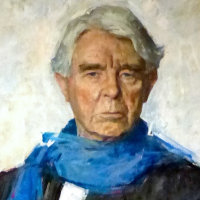
Sandburg won two Pulitzer Prizes for his poetry and one for his biography of Abraham Lincoln. He began his writing career as a journalist on the Chicago Daily News, and many of his poems paint a realistic, but basically optimistic, portrait of city life. 1.
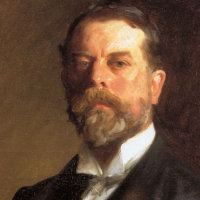
Sargent was born in Florence, the son of wealthy cultured parents, and much of his career was spent in Europe, although his rising fame as the preeminent society portraitist of his day also took him back to America. He is said to have hated portraiture, though, and diversified into landscapes and watercolors for his own satisfaction. 4.
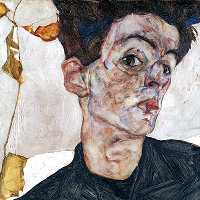
A follower of Gustav Klimt, who encouraged him throughout his career, Schiele early developed a highly energetic style of nervous lines and angled forms. Despite his tendency to depict his subjects as though gesticulating, he had some success as a portraitist, but is now better known for his frank depictions of sexual subjects. 6.
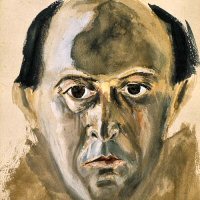
Schoenberg is most famous in the history of music as the developer first of atonal music and then of the principle of musical organization known as Serialism. He wrote three shorter operas, but his masterpiece is Moses und Aron. Although he conceived it in three acts, Schoenberg had only finished two when he emigrated to America in 1934, and it is this version that is usually performed. [Schoenberg was also a painter; this is a self-portrait.] 6.
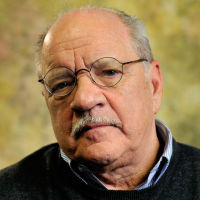
Schrader trained as a Calvinist minister, but entered the film industry instead. He had a long collaboration with director Martin Scorcese, writing the scripts for Taxi Driver (1976), Raging Bull (1980), and others. His directorial credits include American Gigolo (1980). His The Comfort of Strangers (1990), had a screenplay by Harold Pinter from the novel by Ian McEwan and was filmed in Venice. 4.

Schwartz is the composer of many Broadway musicals ncluding Godspell (1971), Pippin (1972), and Wicked (2003). In 1978, he made a musical-theater adaptation of Studs Terkel's Working. Born in NYC, he is a graduate of Carnegie-Mellon University in Pittsburgh. 1.
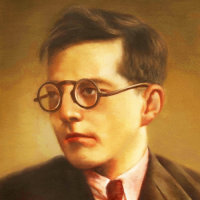
A child prodigy, Shostakovich entered the St. Petersburg Conservatory at 13. His first symphony, composed while still a student, won him national accalim, and he went on to write 14 other symphonies, 15 string quartets, and numerous other works, including ballet and film music. His 1934 opera Lady Macbeth of Mtensk, although initially successful, fell afoul of Stalin, forcing the composer to take unusual measures to save his career, and indeed his life. 6.

Although he also painted portraits and historical or religious works, he is best known for his genre subjects, typically a merry but disorderly household scene illustrating the consequences of ignoring some moral precept. 7.
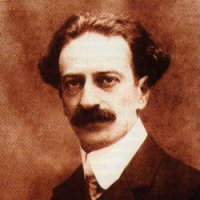
Dropping the last letter of his family name, Strauss, to avoid association with the waltz family, he nonetheless worked in a similar vein, composing operettas and other light music. He is best known for the operettas Ein Waltzertraum (1907) and The Chocolate Soldier (1908). Jewish by birth, he escaped to Hollywood during the War, but returned to Vienna after it. 6.
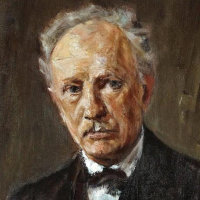
You might say that Strauss had two careers: as an orchestral composer, and as an opera one. His tone poems in the 1890s such as Don Juan and Till Eulenspiegel brought him immediate fame, but he wrote his last big orchestral work in 1915. Meanwhile his operas Salome (1905) and Elektra (1909) continued his radical Expressionism, but with Der Rosenkavalier (1911), he began a stylistic retreat that continued until his last opera, Capriccio, in 1942. 6.
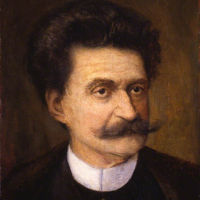
His musician father did not want his son to follow in his foosteps, so he worked as a bank clerk while studying privately. His first professional appearances were as a conductor of his father's waltzes, to which he added his own and eventually became hailed as the Waltz King of Vienna. His Die Fledermaus (1874) virtually defines the genre of Viennese operetta. 6.
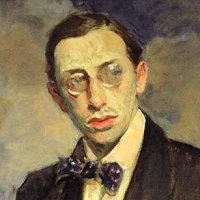
Starting as an enfant terrible in Paris with the ballets he wrote for Serge Diaghilev, he gradually pared back his resources, developing a neo-classical style between about 1930 and 1955, but eventually turning his back on tonality. 1.
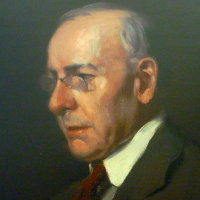
Sullivan moved to Chicago in 1873 to join building boom following the Great Fire of 1871. After various short residencies to learn his craft, he became the partner of Dankmar Adler in 1880. Together, they designed many theater buildings and commercial blocks that became some of the first skyscrapers. He is credited with the phrase "form follows function," but his own relatively austere forms were illuminated with details that are pure are and nothing to do with function at all. 1.
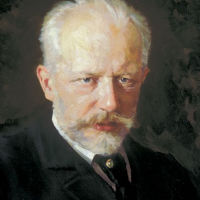
Tchaikovsky was the first Russian composer to gain an international reputation, in part because his Russian voice was allied to a thorough training in Western parctice. His symphonies, tone-poems, and ballets have become staples of their repertoire, but his dozen operas are less well-known, except for Eugene Onegin (1879) and The Queen of Spades (1890), both based on texts by Pushkin. 3.

Although Terkel has a law degree, he decided he wanted to be a hotel concierge instead. Throughout his long career, mainly in Chicago, he has maintained contact with ordinary people, featuring them on his daily radio show, which ran for 45 years, or transcribing their voices in a series of oral histories for which he received he Pulitzer Prize: Hard Times (1970, about the Great Depression), Working (1974, people talking about their jobs), and The Good War (1984, about the WW1). 1.
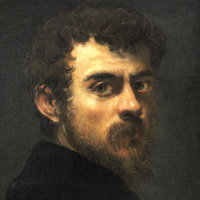
With Titian, Tintoretto is the great Venetian master of the earlier 16th century, excelling in both religious and secular subjects. His paintings are generally darker than Titian's and rougher in touch, but he yields nothing in vigor or the scope of his imagination. 4.
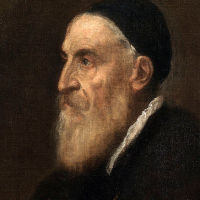
Arguably the greatest Venetian painter of the High Renaissance, he produced works in just about every genre over an exceptionally long career. Probably his greatest influence was in his handling of paint and use of color, which became a starting point for Rubens and others in the next century. 4.
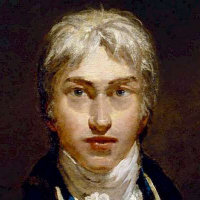
Rivaled only by Constable, Turner was the dominant British landscape painter of the first half of the 19th century, he started his career with topographical views intended for engraving, and ended with works whose subjects were dissolved in veils of paint and light. His Fighting Temeraire (1838) was recently voted the Greatest British Picture in a BBC poll. 4.
GO TO: [A–C] [D–F] [G–K] [L–N] [O–R] [S–U] [V–Z]
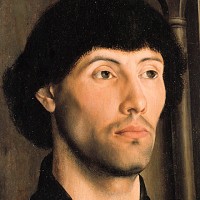
The major figure of the second half of the 15th century in the Netherlands, he is known for his psychological observation and the richness of his backgrounds, as in the Portinari Altarpiece which introduced his style to Florence. [Identificaton of this as a self-portrait is conjectural.] 2.

The most celebrated and influential northern painter in the earlier 15th century, responsible for developing a style of oil painting capable of magnificent detail and effects of light. His major work, the altarpiece in Ghent Cathedral, is recorded to have been begun by his perhaps even greater brother Hubert. He was a renowned portraitist, including the enigmatic Arnolfini Marriage in London, and the supposed self-portrait seen here. 2.
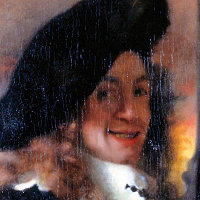
Now considered second only to Rembrandt among the geniuses of the Golden Age, Vermeer did not have much success in his lifetime. Although most of his relatively small body of work could be described as genre subjects (for example, women engaged in household tasks), their sense of greater significance—a simple act suspended in eternity—is not easily explained, though much has to do with the solidity of his forms, his sense of light, and a paint surface that one contemporary described as "crushed pearls melted together." 7.
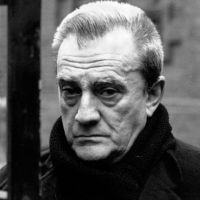
Though born into a Milanese aristocratic family, Visconti became a Communist, and his earlier films depict working-class life with brutal realism. In 1963, with his filming of Lampedusa's The Leopard, his style changed totally, and his last works are noted for their opulent depictions of decadence. He was also one of the greatest opera directors of his time. 4.
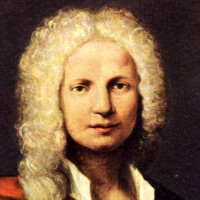
Vivaldi, who was ordained as a priest, but lived a largely secular life, was an amazingly prolific composer of music in most genres, including opera, oratorio, and the instrumental concerti on which his later fame mainly rests. 4.

Webber has worked in film, television, and documentary. He is probably best known for his first feature film, Girl with a Pearl Earring (2003) based on the Tracy Chevalier novel. 7.
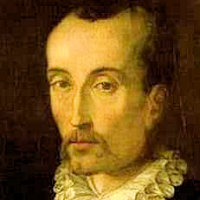
Born in Flanders, Wert went to Italy as a choirboy and remained there the rest of his life, working mainly for the Gonzaga court in Mantua and the Este court in Ferrara. He played an important part in the development of the madrigal in Italy in the generation befoe Monteverdi. 4.
His plays, including The Glass Menagerie (1944), A Streetcar Named Desire (1947), and Cat on a Hot Tin Roof (1955), established Williams as one of the leading American playwrights of the 20th century, arguably the most edgy and sexually charged. Elia Kazan, who filmed many of his works, said "Everything in his life is in his plays, and everything in his plays is in his life." Unfortunately his work declined in later years, due to alcoholism and bouts of depression. 5.

Wright designed over 1,000 buildings, including the iconic Fallingwater (1937) and Guggenheim Museum (1959). Beginning with the Ward Willits House in Chicago (1902), he developed what became known as the Prairie School of architecture, featuring long low verticals and close integration of buildings with their environment, principles that he developed further in connection with Broadacre City, a pioneer of planned suburban development. 1.
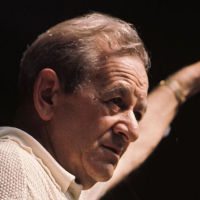
Born in Alsace (then part of Germany), Willi Wyler emigrated to the US at the age of 19. He began working almost immediately in minor capacities for Universal Pictures (founded by his mother's cousin). He got his first directing assignment at 23. But this was no case of nepotism; he won the Oscar three times, and went on to direct a string of successes such as Wuthering Heights (1939), Roman Holiday (1953), and Ben-Hur (1959). Known as a technical perfectionist, he nonetheless had a gift for bringing the best out of his actors. 5.