Class 8: Edinburgh: A Tale of Two Cities.
Edinburgh Castle has been described as the most often besieged fortress in history. But its position atop a crag with three
sheer sides made it virtually impregnable. Its presence spurred the growth of the medieval city on the rocky spine leading
up to it, which became Scotland’s national capital. Because the population was large and the site confined, the buildings
were tall and crammed together, making for conditions that were as unsanitary as they were picturesque. The city was a powder keg.
In 1756, the council approved designs for a New Town, laid out on neoclassical principles on the lower crest across the ravine,
and eventually stepping down in elegant terraces toward the Firth of Forth below. Its rational layout became the physical
counterpart to the ideas and discoveries of the thinkers, scientists, and artists of the Scottish Enlightenment who lived and
met there.
Postwar Edinburgh has dedicated itself to preserving its history of Scottish nationalism and Enlightenment philosophy. But
Edinburgh is also a center of creativity in its own right and, though the multiplicity of its annual Festivals, midwife to
creative artists from many countries and in many media. rb.
The script, videos, and images will be posted immediately after class.
Q AND A
What was Edinburgh's economy in the middle ages?
By shipping through its port of Leith, Edinburgh carried on a very profitable trade with continental Europe, principally in
commodoties produced in Scotland, such as wool and animal hides, which might also be exported in more finished forms, such
as woven fabric, knitwear, and leather.
VIDEO LINKS
All the videos shown in class are available on YouTube, mostly at far greater length than I showed. I also include some
additions (all *asterisked). First and foremost, a very good overview of the city by American
visitor Daniel Steiner; I considered using him, but opted for Alice Loxton instead. There is some extra music there, and a
whole lot of poetry about Edinburgh other than the one thing we heard. But why bother: just look up "Edinburgh" and you'll
find a lot more, in pretty much every category! rb.
| OLD AND NEW TOWNS |
| |
Alice Loxton |
|
* Life in C18 Edinburgh
|
| |
Daniel Steiner |
|
* Edinburgh's Map Explained
|
| |
Rick Steves |
|
* Full segment
* — Old Town, from the above
* — New Town, from the above
|
| |
David Wheater |
|
* Old Town walking tour
|
| |
New Town tour |
|
* Video, no words
(different music from that heard in class)
|
| |
New Town through Time |
|
* Time-lapse video
(different music from that heard in class)
|
| ARTS AND IDEAS |
| |
Scottish Enlightenment |
|
* Melvin Bragg
(as seen in class)
|
| |
Scottish National Gallery |
|
* Lachlan Goudie
(full BBC program)
|
| MUSIC |
| |
Traditional |
|
* Pipes and Drums at the Tattoo
* Black Watch on the Royal Mile
* Pub music
(Ensign Ewart Pub)
|
| |
Thomas Erskine |
|
* Minuet
(used under New Town video)
* Quartet
(played by string orchestra)
|
| |
Robert Burns |
|
* A man's a man for a' that
(Midge Ure, Scottish Parliament)
* Auld lang syne
(used under video)
|
| |
The Proclaimers |
|
* The Streets of Edinburgh
* Sunshine on Leith video
* Sunshine on Leith movie trailer
|
| |
Fascinating Aïda |
|
* So sorry, Scotland
(Fesitval, 2016)
|
| PERFORMING ORGANIZATIONS |
| |
Edinburgh Festivals, 2005 |
|
* Promo
|
| |
Edinburgh Fringe, 2005 |
|
* Promo
(Shona McCarthy)
|
| |
Scottish Chamber Orchestra |
|
* History and mission
* Jay Capperauld: Whisky Mouth
|
| POETRY |
| |
Hannah Lavery |
|
* Edinburgh is a Story
* — text of the above
|
| |
WH Henley |
|
* From a window in Princes Street
(text only)
|
| |
Valerie Gilles |
|
* To Edinburgh
(text only)
|
| |
Edward Morgan |
|
* Opening of the Scottish Parliament, 2004
(text only)
|
| |
Robert Fergusson |
|
* Auld Reikie
(text only, in Scots!)
|
| |
|
|
|
|
|
| IMAGES |
The thumbnails below cover the slides shown in class, plus the
individual images in some of the montages. Click the thumbnail to see a larger image.
Click on the right
or left of the larger picture to go forward or back, or outside it to close. |
 | |
 | |
 | |
 | |
 | |
 | |
 | |
 | |
 | |
 | |
 | |
 | |
 | |
 | |
 | |
 | |
 | |
 | |
 | |
 | |
 | |
 | |
 | |
 | |
 | |
 | |
 | |
 | |
 | |
 | |
 | |
 | |
 | |
Here are brief bios of the composers and writers considered in the class, listed in order of birth.
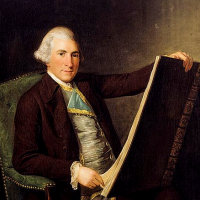 |
Robert Adam, 1728–92. Scottish architect.
The son of noted Scottish architect William Adam, Robert studied for five years in Italy before bringing the fruits of his study back to Britain, where he soon became the leading neoclassical architect, interior, and furniture designer. He was Royal Architect from 1761 to 1769. Back in Scotland, he designed parts of Edinburgh New Town, and served as Member of Parliament for Kinross (1768–74).
|
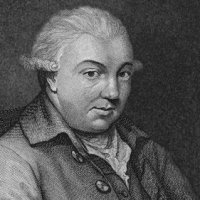 |
Thomas Erskine, Earl of Kellie, 1732–81. Scottish composer.
The Wikipedia article is too good not to quote: "Thomas Alexander Erskine, 6th Earl of Kellie […] was a Scottish musician and composer whose considerable talent brought him international fame and his rakish habits notoriety, but nowadays is little known. Recent recordings of his surviving compositions have led to him being re-evaluated as one of the most important British composers of the 18th century, as well as a leading exponent of Scotland's music."
|
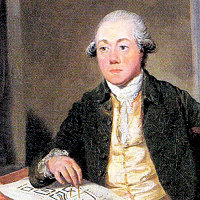 |
James Craig, 1739–95. Scottish architect.
Craig's apprenticeship to the Edinburgh Council master mason put him in an excellent position to enter the competition for design of the New Town, which he won at age 27. After supervising the first stages of its construction, he continued to work for the Edinburgh Council in a variety of projects.
|
 |
Alexander Nasmyth, 1758–1840. Scottish painter.
Nasmyth studied for two years in Italy, and the influence of classical artists like Claude can be seen even in his topographically accurate depictions of his native Scotland. But in the background of his standing portrait of his friend Robert Burns, he gave his Romantic side full play. He was also active as an architect, garden designer, and inventor.
|
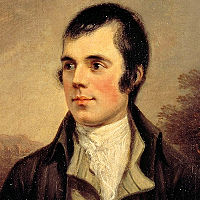 |
Robert Burns, 1759–96. Scottish poet.
Rabbie Burns is often regarded as the national poet of Scotland, where his birthday (1/25) is an occasion for the often-drunken singing of his many songs. His manner as "peasant-poet" was largely assumed; he was in fact quite well educated, and held his own with other figures of the Scottish Enlightenment. He wrote mainly in a Scottish dialect, but it is mostly intelligible to non-Scots.
|
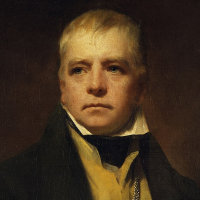 |
Sir Walter Scott, 1771–1832. Scottish poet and novelist.
Scott's historical novels, all set in his native Scotland, spoke to the Romantic spirit and were immensely popular throughout Europe, inspiring many adaptations such as Rossini's Donna del lago and Donizetti's Lucia di Lammermoor.
|
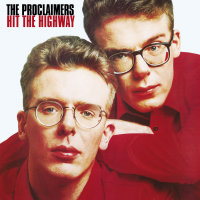 |
Craig and Charlie Reid, 1962– . Scottish singers.
Craig and Charlie Reid. twin brothers from Leith, teamed up as a rock duo, The Proclaimers, in 1983, after performing with other groups. After chart-toppers in Britain and Europe, their biggest hit, Sunshine on Leith (1988), went platinum in Canada and Australia and spawned a musical and a movie. After keeping out of the public eye for much of the 1990s, they returned to the stage in 2001 and still tour internationally.
|
 |
Hannah Lavery, 1977– . Scottish poet.
Lavery is a poet, playwright, and performer. Her plays The Drift (2019) and Lament for Sheku Bayoh (2020) were performed in Edinburgh and on tour. In 2021, she became Edinburgh Makar, or equivalent of Poet Laureate.
|
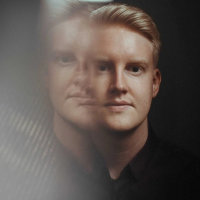 |
Jay Capperauld, 1989– . Scottish composer.
After graduating from the Royal Conservatoire of Scotland in 2014, Ayrshire-born Capperauld has had works performed by major British orchestras. He was appointed Associate Composer with the Scottish Chamber Orchestra in 2022. In 2023 he was commissioned by King Charles III to write a piece for the Honours of Scotland ceremony in Edinburgh, based on three Scots tunes selected by the King.
|


