1. What is Reality in Opera?
"An exotic and irrational entertainment:? Everybody knows Dr Johnson’s dismissive definition of opera. Often, alas, the
description fits, but need it always be so? This class—and this course—will outline two types of exception.
One, which will occupy the second half of the class, derives from opera’s origins as an instrument of power. From the
beginning, opera has served as a propaganda vehicle for courtly life and values, and its subjects often include mighty
figures from history. True, their stories are usually tweaked to make better entertainment, but what happens when the
subjects get close to home?
A more significant kind of reality, however, is when an opera moves far from court or mythological settings, to deal with
everyday life and people whose feelings and reactions we recognize as much like our own. So far from artifice, the addition
of music can work on our hearts before we even get the chance to process it with our minds. In such situations, opera is no
longer exotic or irrational, but present, compelling, and often scarily real. rb.
The script, videos, and images will be posted immediately after class.
FURTHER THOUGHTS
Technical issues
Thank you, everyone, for your patience with the technical snafu today. Thing is, I had rehearsed it and it all worked just fine
then. But I think Jessica knows whatever solution it was that she and Giovanni came up with, so I trust we won’t encounter the
problem again. The scene with that glorious tune from Die Frau ohne Schatten can be heard
here; the complete scene is below.
The role of the camera
I illustrate all my examples with videos. But we mustn’t forget that the video itself affects how we understand a scene. Even the
simplest, the middle version of the Countess’ aria, had a gradual zoom-in that would not have happened in the theater. The director
of the Nixon video made decisions on when to move in for a close-up and when to pull back. The bottom line is that almost all the
examples in these classes are in what is essentially a new medium, no longer the exclusive product of the composer, conductor, and
stage director.
The role of the music
I thought it would be crass to ask for comments immediately after that averted-rape scene in Mozart’s Abduction. But my wife
remarked afterwards how beautifully timed it was to the various changes in the music. When I think how gratuitous that violence
would have seemed had it not been so closely synchronized, I realize again how important music is, not in dictating external
action, but in displaying the flux of internal emotions that make such action natural and even inevitable.
The perspective of time
I went up to the Met for one of those early performances of Klinghoffer. I found it relevant, moving, and even at times beautiful.
I especially remember those lovely opening choruses (hear them with score here and
here). I read about the protests, but thought them ridiculous. Watching the NYT piece now,
though, I am not so sure. Opera should indeed address third-rail subjects, but is it always the right time and place?
I remarked that a Klinghoffer production in New York would be impossible now. As one of the protesters said, it might be possible
again in some decades’ time. But should it have been possible then? I thought so, yes—but now I am not so sure.
On the other hand, I realize that most of the protesters had not seen the opera. If they had done, they would also have recognized the beauty
of the early choruses. More importantly, once we get on board the ship, the even distribution of sympathy shifts, so that while we always
understand where the Palestinian characters have come from, we are not expected to sympathize with where they are going, and certainly
not the means they choose to get there. People who have not actually seen the opera would not know that.
VIDEO LINKS
Most of what I showed in class is available at the links below. The main exceptions are some details in the Mozart
comparisons and the Adams operas. I could not get the Dorothea Röschmann "Porgi, Amor" as staged by Sir David McVicar, but
added the scene in a fine conservatory production by Sir Thomas Allen in London. Alas, I could not get that tense dialogue
scene between Konstanze and the Pasha in The Seraglio, but I could find the aria that follows it and her first
aria in the opera, from which you can see a lot of their relationship. I have expanded the treatment of all three
Orfeo productions so you can compare both scenes sampled in class.
The extended scene of Air Force One arriving in Beijing from Nixon in China is not available, but I do have the
shorter clip of Nixon's "News" aria. I also include the complete scene in the Houston premiere (albeit in poor video) and a
more modern production in Paris. My coverage of The Death of Klinghoffer is actually expanded with an introduction
to the English National Opera production (from which the Met version derived), an extended trailer from the Met, and a
second documentary on the protests. I also include the entire final scene from the Penny Woolcock film of the opera, which
shows the empathy that characterizes the entire work and her treatment of it.
The links for Die Frau ohne Schatten, the conservatory production of Figaro, The Orfeo productions
by Ponnelle and Kosky, and both the Houston and Paris productions of Nixon lead to complete perforrmances. Clips
not shown in class are *asterisked. rb.
| VARIOUS COMPARISONS |
| |
Strauss: Die Frau ohne Schatten |
|
* Dyer's hut scene
(from complete opera)
|
| |
Mozart: Die Entführung |
|
* Ach, ich liebte
* Martern aller Arten
(the actual aria)
|
| |
Mozart: Le nozze di Figaro |
|
* Countess aria, Glyndebourne 1972
(Kiri te Kanawa)
* — Paris 2012
(Annette Dasch, Paris)
* — Royal College of Music 2020
(complete opera)
|
| MONTEVERDI'S ORFEO |
| |
Ponnelle, Zurich |
|
* Opening
* Orpheus aria
|
| |
Deflo, Barcelona |
|
* Opening
* Orpheus aria
|
| |
Kosky, Berlin |
|
* Opening
(complete opera)
* Orpheus aria
|
| |
Alden, Munich |
|
* Trailer
|
| JOHN ADAMS OPERAS |
| |
Nixon in China |
|
* Arrival of Air Force One
(Houston premiere 1987)
* — Paris 2012
* — News aria only
(James Maddalena, Met 2011)
* Historical background
(documentary)
|
| |
Death of Klinghoffer |
|
* Introduction to ENO production
* Met trailer, 2012
* Protests outside Met
(NY Times)
* — PBS report
(Gwen Ifill)
* Mrs Klinghoffer's last aria
(Yvonne Howard, Penny Woolcock film)
* Chorus of Exiled Palestinians
(audio, with score and text)
* Chorus of Exiled Jews
(audio, with score and text)
|
| |
|
|
|
|
|
| IMAGES |
The thumbnails below cover the slides shown in class, though
there may be a few small discrepancies.
Click the thumbnail to see a larger image.
Click on the right
or left of the larger picture to go forward or back, or outside it to close. |
 | |
 | |
 | |
 | |
 | |
 | |
 | |
 | |
 | |
 | |
 | |
 | |
Here are brief bios of the composers and diectors considered in the class, listed in order of birth.
 |
Claudio Monteverdi, 1567–1643. Italian composer.
The towering genius of the first half of the 17th century, and a founding father of opera. Unfortunately, only three of his dozen operas survive: La favola di Orfeo (The Story of Orpheus), written for Mantua in 1607 and the earliest opera to remain in the general repertoire, and The Return of Ulysses and The Coronation of Poppea, both written for Venice at the end of his life.
|
 |
Wolfgang Amadeus Mozart, 1756–91. Austrian composer.
A child prodigy as both performer and composer, Mozart produced an extraordinary body of work in all genres over a relatively short life. He wrote the greatest of his many operas after moving to Vienna: three collaborations with Lorenzo da Ponte—The Marriage of Figaro (1786), Don Giovanni (1787), and Così fan tutte (1790)—framed by two German Singspiels: The Abduction from the Seraglio (1782) and The Magic Flute (1791).
|
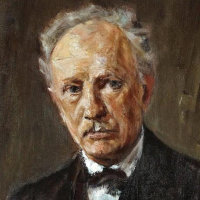 |
Richard Strauss, 1864–1949. German composer.
You might say that Strauss had two careers: as an orchestral composer, and as an opera one. His tone poems in the 1890s such as Don Juan and Till Eulenspiegel brought him immediate fame, but he wrote his last big orchestral work in 1915. Meanwhile his operas Salome (1905) and Elektra (1909) continued his radical Expressionism, but with Der Rosenkavalier (1911), he began a stylistic retreat that continued until his last opera, Capriccio, in 1942.
|
 |
Jean-Pierre Ponnelle, 1932–88. French opera director and designer.
Ponnelle studied philosophy, history, and art in Paris, and his stage productions have always been noted for their strong historical underpinning. This was seen especially in the period costumes and architectural sets of his baroque productions, such as the three Monteverdi operas he did with Nikolas Harnoncourt around 1970, and which he was largely responsible for bringing back into the repertoire. His close attention to often-exuberant detail is also seen in his films of more familiar operas made with the leading singers and conductors of the time.
|
 |
Gilbert Deflo, 1944– . Belgian opera director.
Deflo studied theater in Brussels and Milan, before beginning a directing career that has taken him to most of the major houses in Europe. Although known on video primarily for his period-aware Orfeo in Barcelona, his repertoire in fact covers most of the standard repertoire.
|
 |
Jean-Louis Martinoty, 1946–2016. French opera director.
Martinoty began as a writer and journalist. An interview with Jean-Pierre Ponnelle led to his becoming Ponnelle's assistant, and thence to productions of his own. He initially became famous for his baroque productions, and even wrote a book on the subject, but later branched out into more general repertoire. He served as General Administrator of the Paris Opéra 1986–89.
|
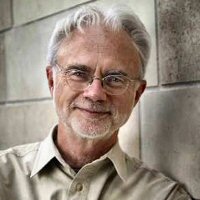 |
John Adams, 1947– . American composer.
One of the founders of musical minimalism, Adams has turned his attention to operatic subjects based on relatively recent history and posing political questions. Examples include Nixon in China (1987), The Death of Klinghoffer (1991), and Doctor Atomic (2005), all of which have been produced at the Met. He has beeen especially associated with the director Peter Sellars, who also compiled the texts for all his operas from 2000 on.
|
 |
David Alden, 1949– . American opera director.
David and his identical twin brother Christopher Alden (also an opera director) were born into a Broadway family, and began their professional careers as child actors. David's productions, which have been seen more in Europe than the US, are radical, post-modern, and often politically charged. He worked closely with impresario Sir Peter Jonas, first at the English National Opera and later in Munich.
|
 |
Peter Sellars, 1957– . American opera director.
Sellars was already being hailed as a Wunderkind for his productions while he was a student in Harvard. While still in his twenties, he received a MacArthur Fellowship, a directing assignment on Broadway, and the appointment as Director of the National Theater at the Kennedy Center. But these early successes were not without tensions, and the Broadway and Washingon gigs did not last. In opera, he is best remembered for groundbreaking productions of the Mozart/DaPonte operas in Purchase NY, and his long collaboration with John Adams. In the latter capacity, he directed the premieres of most of his operas, and compiled the texts for many of the later ones.
|
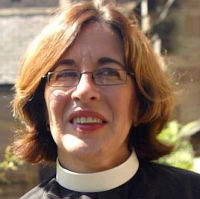 |
Alice Goodman, 1958– . American poet and librettist.
Goodman studied literature at Harvard and later at Cambridge University, England. Although born a Jew, she converted to Christianity as an adult, and went on to study for the Anglican priesthood, becoming Chaplain of Trinity College, Cambridge, and rector of a group of Cambridgeshire parishes. Her poetry has been published in both Britain and the US. She collaborated with John Adams as the librettist for his first two operas, Nixon in China and The Death of Klinghoffer, but withdrew during their work on Doctor Atomic.
|
 |
David McVicar, 1966– . Scottish opera director.
Born in Glasgow, McVicar studied acting at the Royal Scottish Academy, graduating in 1989. Almost immediately, he seems to have turned to opera directing, and now has 13 productions at the Met to his credit, plus at least 5 at the Royal Opera House, 4 at Glyndebourne, and numerous other major houses in Europe and America cities. His best productions, such as The Abduction from the Seraglio, Agrippina, Giulio Cesare, Die Meistersinger, Salome, and Die Zauberflöte, all of which seem to have come mid-career, are extraordinary in psychological insight, historical awareness, and frequent wit. He was knighted in 2012.
|
 |
Barrie Kosky, 1967– . Australian opera director.
Kosky, who describes himself as a "gay Jewish kangaroo," is one of the leading directors on the Euopean opera stage. His 2017 production of Die Meistersinger at Bayreuth was the first by a director not called Wagner, and the first to address the composer's anti-Semitism head-on. Beginning as a director of both opera and theater in Australia, he came to Europe in 2000, and has held important posts in Vienna, Munich, and Berlin, where he was Intendant of the Komische Oper 2012–22. An accomplished pianist, he is equally at home in cabaret, musical theater, and operetta.
|


