5. In Time of War.
Many operas have included war somewhere in their plot: examples include Verdi’s Battle of Legnano (1848) and Prokofiev’s War
and Peace (1947). But the horrors of trench warfare in the First World War or the bombed-out cities of the Second have generally been
avoided, their harsh reality seemingly antithetical to the traditional values of musical entertainment. Yet both wars produced visual
imagery invaluable to directors looking to contextualize operas from quite different centuries.
A deeper question is how music can depict either of the World Wars directly. Although his War Requiem was not an opera, Benjamin
Britten used WW1 references and the poetry of Wilfred Owen together with the Latin Mass as a healing ritual to address the German destruction
of Coventry Cathedral in WW2. By adding an enigmatic staging of Owen’s many images, director Derek Jarman turned Britten’s oratorio into a
powerful dramatic film.
We end with two recent operas set in the trenches of WW1, both of which succeed in transcending the grinding attrition of the reality.
They differ mainly in their approach to time. Kevin Puts, in Silent Night (2011), focuses on a singular moment, the “Christmas
Truce” of 1914, when the soldiers emerged from their trenches to sing carols and share food. In In Parenthesis (2016), Iain Bell's
operatic adaptation of the 1937 poetic epic by David Jones. the war experience becomes part of an eternal cycle of death and
regeneration going back to Welsh mythology, Shakespeare, and the Bible.
The script, videos, and images will be posted immediately after class. rb.
VIDEO LINKS
We do well for everything in today's class, with the exception of Iain Bell's In Parenthesis, for which there is a mass of supporting
material but almost no clips (I got my own examples from a DVD that was never commercially available). Since there is so much extra here,
I have used *asterisks to indicate the clips that were seen in class.
War Requiem: there are many complete performances out there, including the original. However, I have given only the one
performance I could find with English titles. There are two brief spoken introductions (one by Marin Alsop in Baltimore) that are
worth watching, and a tantalizingly short glimpse of a stage production at the English National Opera which I would love to have seen.
The Jarman film is available complete, though without titles; I have cued it to the section we saw in class.
Attila and The Magic Flute: all the clips shown are available, plus the complete Branagh film of the Mozart.
In Parenthesis: we have three trailers for the premiere production, with some overlapping material, but largely independent.
The Welsh National Opera also issued ten short video documentaries; I give links to three of them (the last is a condensation of all the
previous ones), but they include few if any performance clips. On the other hsnd, there is a lot about David Jones: I include a half-hour
interview, an hour-long documentary, and an introduction from the librettists of the Bell opera. There are so many readings, I had difficulty
choosing between them; I decided on some passages read by Jones himself, plus one other short but gripping scene. I also include a
teaser for Bell's latest work, Medusa (2026), to show that he continues to go from strength tho strength.
Silent Night: all the clips shown are available. I added another cross-section of the opera, plus another aria (sung in
French, but with titles). As with Bell, I wanted also to show something of the composer's more recent work, so I tacked on a preview
of The Hours, his 2023 opera for the Met, and two clips relating to his Grammy-winning concerto Contact, for the crossover
virtuoso trio Time for Three. The clip with them playing Gankin Horo is brilliantly exhilarating (I think that's him on the piano); he
later folded the music into Contact: I include a video clip from the first movement, but the whole thing is out there on audio.
rb.
| BRITTEN: WAR REQUIEM |
| |
Full oratorio |
|
* Pappano, Proms, 2024
(with titles)
|
| |
Introductions |
|
* Marin Alsop, Baltimore
* Brett Mitchell, Colorado
|
| |
Derek Jarman film, 1999 |
|
* Trailer
* Complete
(no titles)
* — cued to start in class
|
| |
ENO staging, 2018 |
|
* Clips and audience reaction
|
| VERDI: ATTILA |
| |
Mariinsky 2010 |
|
* Complete
(no titles)
* — cued to start in class
|
| |
La Scala 2018 |
|
* Trailer
* Prologue
(cued to start in class)
|
| MOZART: MAGIC FLUTE |
| |
Branagh Film 1999 |
|
* Trailer
* Complete
(film by Kenneth Branagh, 1999)
* — overture segment
(cued to start in class)
* — opening
(cued to start in class)
* — Sarastro aria, Act II
(complete aria)
* — finale
(a litte before start in class)
|
| BELL: IN PARENTHESIS |
| |
WNO premiere |
|
* Trailer
* Trailer, with interviews
* Sir David Pountney at the Somme
|
| |
Podcast, selected episodes |
|
* Writing and composing
* Sets and costumes
* Selections of previous episodes
|
| |
About David Jones |
|
* BBC interview, 1965
* Innovation and Consolidation
(hour-long documentary))
* Making a libretto
(Emma Jenkins, David Antrobus)
|
| |
Readings from In Parenthesis |
|
* Excerpts read by the author
(audio only)
* First shelling
(audio only; Michael Blackburn)
|
| |
Medusa |
|
* Promo of Bell's latest opera
|
| PUTS: SILENT NIGHT |
| |
Various excerpts |
|
* Cross-section, with synopsis
(Opera San José)
* Cross-section, with titles
(Utah Opera)
* Lt. Audebert's aria
* Ponchel's aria
(Houston, in French)
* Dona nobis pacem
|
| |
Other Puts works |
|
* The Hours, trailer
(Met, 2023)
* Gankino Horo
(Time for Three)
* Contact
(opening)
|
| |
|
|
|
|
|
| IMAGES |
The thumbnails below cover the slides shown in class, though
there may be a few small discrepancies.
Click the thumbnail to see a larger image.
Click on the right
or left of the larger picture to go forward or back, or outside it to close. |
 | |
 | |
 | |
 | |
 | |
 | |
 | |
 | |
 | |
 | |
 | |
 | |
Here are brief bios of the composers and directors considered in the class, listed in order of birth.
 |
Wolfgang Amadeus Mozart, 1756–91. Austrian composer.
A child prodigy as both performer and composer, Mozart produced an extraordinary body of work in all genres over a relatively short life. He wrote the greatest of his many operas after moving to Vienna: three collaborations with Lorenzo da Ponte—The Marriage of Figaro (1786), Don Giovanni (1787), and Così fan tutte (1790)—framed by two German Singspiels: The Abduction from the Seraglio (1782) and The Magic Flute (1791).
|
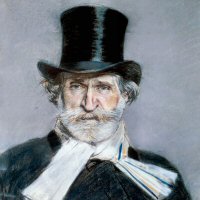 |
Giuseppe Verdi, 1813–1901. Italian opera composer.
Verdi's two dozen or more operas (some in multiple versions) make him the leading Italian opera composer of his time and among the two or three greatest opera composers ever. After what he called his "years in the galleys," he hit his stride in the early 1850s with the trio of Rigoletto, Il Trovatore, and La Traviata. He intended Aïda (1870) to be his last work, but was persuaded out of retirement to write his final Shakespearean masterpieces: Otello (1886) and Falstaff (1893).
|
 |
David Jones, 1895–1974. British poet and painter.
Jones's Wikipedia entry begins: "[Jones…] was a British painter and modernist poet. As a painter he worked mainly in watercolour on portraits and animal, landscape, legendary and religious subjects. In 1965, Kenneth Clark took him to be the best living British painter, while both T. S. Eliot and W. H. Auden put his poetry among the best written in their century. Jones's work gains form from his Christian faith and Welsh heritage." His epic In Parenthesis (1937), part poetry and part prose, based on his three-year service in the trenches (including being one of the few survivors of the slaughter at Mametz Wood) calls on Welsh myth, Shakespeare, and the Bible, side by side with soldiers' slang and popular songs.
|
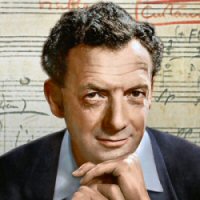 |
Benjamin Britten, 1913–76. English composer.
Arguably the leading opera composer of the mid-20th century, Britten's major operas have included Peter Grimes (1945), Billy Budd (1951), Gloriana (1953), A Midsummer Night's Dream (1960), and Death in Venice (1973), plus many stage works for smaller forces. He was equally active as a composer of instrumental music and text settings, and latterly as a conductor and accompanist.
|
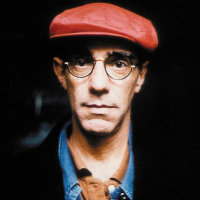 |
Derek Jarman, 1942–94. English film-maker and designer.
After training at the Slade School in London, Jarman began his career as a stage designer, including major projects in opera and ballet. His stage collaborations with Ken Russell led to his work in film, which included numerous experimental works, music videos, and a beautiful rendering of Benjamin Britten's War Requiem. A lifelong gay activist, he died of AIDS in 1994.
|
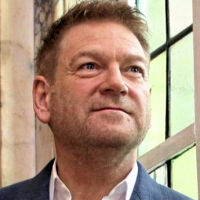 |
Kenneth Branagh, 1960– . British actor and director.
Branagh was born in Belfast, but moved to England with his family at the age of 9 to escape the Troubles. He made a triumphant debut with the Royal Shakespere Company as Henry V, which he used as the basis for his own series of Shakespeare films, in which he both starred and directed, later branching out to include roles from Frankenstein to Hercule Poirot. He does not appear in his 2021 autobiographical film Belfast, however, since it features his experiences as a young boy.
|
 |
Davide Livermore, 1966– . Italian director.
Born in Turin of an Italian mother and English father, Livermore has worked as an actor and director both of theater and opera. He is only stage director ever to have mounted the season-opener at La Scala in four consecutive seasons. He currently also serves as director of the National Theater in Genoa.
|
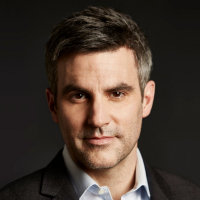 |
Kevin Puts, 1972– . American composer.
Puts was born in St. Louis and studied at Eastman and Yale. After teaching at the University of Texas at Austin, he joined the Peabody faculty in 2005. He won the 2011 Pulitzer Prize for his opera Silent Night, and his operatic version of Michael Cunningham's The Hours gained great acclaim at the Metropolitan Opera in 2022. He won a Grammy awad for his 2024 concerto Contact, for the trio Time for Three.
|
 |
Iain Bell, 1980– . British composer.
Born in London and largely self-taught, Bell has successfully tackled a number of high-profile opera and vocal commissions, such as The Harlot's Progress (2011) written for soprano Diana Damrau in Vienna, A Christmas Carol (2014) for Houston with Simon Callow, and In Parenthesis for the Welsh National Opera in 2016. His most recent venture, Medusa (2026) for the Brussels Opera, has received outstanding reviews.
|


