7. Street Politics.
For a study of social realities, you would think there was little to choose between the immigrant inhabitants of the Lower East Side
tenement in Kurt Weill's Street Scene (1946) or the marginalized Indian workers in turn-of-the-century South Africa featured
in the Satyagraha (1980) of Philip Glass. Yet the approaches of the two composers could hardly be more different. The one is
ultra-realistic, creating a dense web of named characters who experience birth, death, comedy, hatred, and burgeoning love over a
two-day span. The other covers twenty years in an oratorio-like pageant, where even the named characters are subsumed into a timeless
ritual, and real-life violence and defiance are merely episodes in a long spiritual journey. One uses the American vernacular, sung in
as many different accents as the countries that the tenement dwellers have left. The other is sung in an ancient language, Sanskrit,
deliberately removed from the experience of the audience, the performers, or even most of the characters. How is it that both these
approaches can have something equally important to say about human lives?
The story of Street Scene is dense and episodic; the Handout probably contains all
you need. It is probably all you need with Satyagraha too, but I would also recommend the excellent video explanation by the cast and conductor of a production in LA. The script, videos,
and images will be posted immediately after class. rb.
VIDEO LINKS
The Weill clips actually shown in class are *asterisked. In addition, I give two other versions of
the Kanonensong (Army Song), plus the complete German film from which the clip we saw came from. Fortunately, the Madrid
Street Scene is available complete on You Tube; I give separate cues to the Act I excerpts we saw in class, plus Anna
Maurrant's long aria, which is probably as close to real opera (think Puccini) as anything in the score.
With Satyagraha, we are much less lucky—but also more so. Only one clip from the production that we actually watched is
available on YouTube, *asterisked below. On the other hand, there is a wealth of other material, some
(and only some) of which I link below. The Los Angeles Opera intro is worth seeing, and though slightly longer than the one I
posted on the preview page, still refreshingly brief. I also recommend the interview (in English) with Paris director Bobbi Jene
Smith, as it is less about her physical production than a spiritual response to the opera itself.
Since the Met and ENO (English National Opera) productions are substantially the same, I lumped their trailers and documentaries
together. Between them, thye should offer many reminders of other scenes shown in class. I also include several clips from this
year's production in Paris (by Bobbi Jene Smith, above). Although altogether more realistic and action-packed than the ENO/Met
version, it too has its own kind of stylization and approach to time; I recommend watching at least one of the clips. Note that
the role of Gandhi, originally a tenor, has been adapted for the star countertenor Anthony Roth Costanzo. Finally, I include
links to trailers or short clips from six other European productions which show that the Phelim McDermott approach is by no
means the only way to go. rb.
| KURT WEILL |
| |
Die Dreigroschenoper, Kanonensong |
|
* GW Pabst film, 1931
* Raul Julia, Bill Nighy, 1989
* Brechts Dreigroschenfilm, 2017
* — trailer
(in German)
* — complete film
(in German)
|
| |
Street Scene |
|
* Complete Madrid production
* — Anna Maurrant's aria
* — Ain't it awful, the heat!
* — Let things be as they always was
* — Lonely House etc.
* — Act I finale
(longer than in class)
|
| SATYAGRAHA |
| |
About the Opera |
|
* Los Angeles, 2018
(much as previously posted)
* Glass on the origin of the opera
* Bobbi Jene Smith
(on Paris production below)
|
| |
ENO/Met production |
|
* Opening of Act II
* Compilation of scenes
(6 minutes)
* NYT review/trailer, 2008
* ENO trailer, 2018
* ENO trailer, 2021
* About the production
(Phelim McDermott et al.)
|
| |
Paris, 2026 |
|
* Rehearsal footage
* Extract 1
* Extract 2
* Extract 3
* Extract 4
|
| |
Other productions |
|
* Stuttgart, 1983, Act I complete
* Stockholm, 2016
(newsreel and closing aria)
* Ekaterinburg, 2018
(newsreel)
* Basel, 2017
(excerpts)
* Antwerp, 2018
(trailer)
* Hanover, 2024
(trailer)
|
| |
|
|
|
|
|
| IMAGES |
The thumbnails below cover the slides shown in class, though
there may be a few small discrepancies.
Click the thumbnail to see a larger image.
Click on the right
or left of the larger picture to go forward or back, or outside it to close. |
 | |
 | |
 | |
 | |
 | |
 | |
 | |
 | |
 | |
 | |
 | |
 | |
Here are brief bios of the various artists, listed in order of birth.
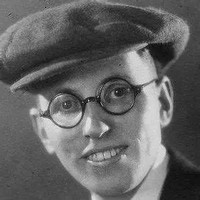 |
Elmer Rice, 1892–1967. American playwright.
Born Elmer Leopold Reizenstein in NYC, Rice was the grandson of a German political activist who fled Germany after the failure of the revolutions of 1848. Perhaps influenced by his grandfather, Rice became a staunch atheist, refusing a bar mitzvah or attendance at Hebrew School. Of his roughly three dozen plays, the most successful were his early melodrama On Trial (1914), the Expressionist dystopian drama The Adding Machine (1923), and the Pulitzer-Prizewinning ultra-realist Street Scene (1929), which he later adapted into an opera with Kurt Weill.
|
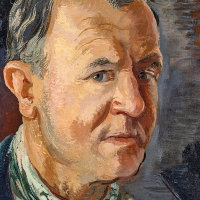 |
George Grosz, 1893–1959. German-American painter.
Born Georg Ehrenfried Groß in a Lutheran family, the artist anglicized his name in 1916 as a protest against German nationalism. He was a prominent member of the Dada scene after WW1, and produced numerous paintings and prints satirizing the inequalities of the Weimar Republic in styles that ranged from the clinically objective to the grotesque. Fearing almost certain condemnation by the incoming Nazi regime, he emigrated to the US in 1933.
|
 |
Bertolt Brecht, 1898–1956. German dramatist.
Brecht's importance to musical theater rests mainly on his collaborations with Kurt Weill between 1928 and 1932: The Threepenny Opera, Happy End, Mahagonny, and The Seven Deadly Sins. A Communist, he fled the Nazi régime, but returned after the War to found the celebrated Berliner Ensemble in East Berlin.
|
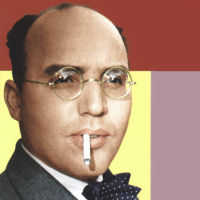 |
Kurt Weill, 1900–50. German American composer.
Weill became famous in Berlin for his collaborations with Bertolt Brecht, among them The Threepenny Opera (1928, a satirical adaptation of John Gay's The Beggar's Opera,) and the political opera The Rise and Fall of the City of Mahagonny (1930). Fleeing Nazi Germany, he eventually settled in New York in 1935, finding new fame on Broadway, but also writing more operatic fare such as Street Scene (1946, with Langston Hughes).
|
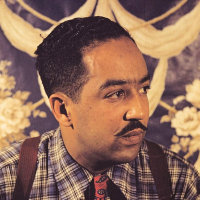 |
Langston Hughes, 1901–67. American poet and playwright.
Sometimes referred to as "the poet laureate of Harlem," Hughes was born in Missouri, but had an unsettled childhood, moving from place to place. He continued to travel (including to Africa, Europe, amd Russia) and work in odd jobs even after his first works were published in 1921. His 1926 collection The Weary Blues introduced a new genre of poetry in a vernacular idiom to a jazz beat.
|
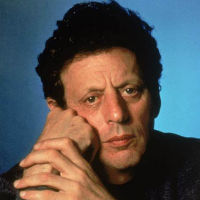 |
Philip Glass, 1937– . American composer.
Glass, who was born in Baltimore and studied at the Peabody Prep, is one of the founders of Minimalism and, with John Adams, its leading composer of opera. Prominent among his 15 operas is a trilogy about significant figures from history: Einstein on the Beach (1976), Satygraha (1979, about Ghandi), and Akhnaten (1983, about the Egyptian pharaoh of that name).
|
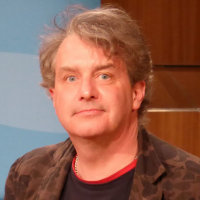 |
Phelim McDermott, 1963– . British director.
McDermott has acted onstage and in film, but his more recent activity has been especially focused on opera, including Philip Glass's Satyagraha and Akhnaten and Mozart's Così fan tutte at the Met. His productions often include a supporting "skills ensemble" of jugglers, puppeteers, or circus artistes to amplify the main action.
|
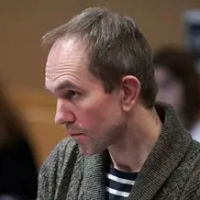 |
John Fulljames, 1976– . British director.
After completing a Cambridge degree in physics, Fulljames entered the opera field. He co-founded The Opera Group in 1997, became an Associate Director with the British Royal Opera 2011–17, and Director of the Danish Royal Opera 2017–22. In November 2022, Fulljames was appointed as the inaugural Director of Oxford University's Humanities Cultural Programme.
|


